
The brief from Roodepoort
The client was a book finisher in Roodepoort handling a year-end hard cover annual report job for a corporate print run. The finish had to look neat on the spine, hold up across a medium volume run, and stay consistent from the first cover to the last.
The brief was straightforward on paper but tight in practice. The spine area was narrow, the cover stock had a coated outer wrap, and the binding line needed a firm impression without cracking the board or marking the foil area. They also needed the dies turned around quickly because the job was already booked into a busy finishing schedule.
- Project type: spine blocking for hard cover annual reports
- Town: Roodepoort, Gauteng
- End use: bindery and print finishing
- Main goal: clean spine detail with repeat accuracy
What had to be controlled on this job
Hard cover annual report work leaves very little room for error. The text area on the spine must sit true, the blocking pressure must be even, and the die face must match the book build exactly. If the counterforce is out even a little, the impression can look dull on one unit and too heavy on the next. We checked all of that before engraving started.
The other challenge was production timing. Johannesburg traffic, site loading times and courier cut-offs can all slow a job down, so the finishers wanted a supplier who could keep the artwork moving without rework. They also needed the die to survive repeated heating cycles and hold detail cleanly across the run, which is where brass was the better fit.
- Constraint 1: narrow spine area with close register
- Constraint 2: repeat impression across a full run
- Constraint 3: fast dispatch into Roodepoort
- Constraint 4: durability for heated use on finishing equipment
How we prepared the die set
We started with the artwork and checked the spine copy, line weights, and placement against the final board size. Megan handled the prepress review, then Johan prepared the engraving path so the characters would hold sharp edges at finished size. For this type of work we favour brass because it gives a cleaner face for fine detail and lasts well when the same die is used again later.
The set was produced as a spine blocking die with matching counterforce, so the pressure would distribute properly across the board build-up. We also checked the impression depth against the expected cover material and the foil process. When needed, we can advise on sample impressions before final production, but in this case the artwork was stable and only minor spacing adjustments were required.
- Material supplied: brass hot-stamping die and matching counterforce
- Detail type: spine text and line blocking
- Production method: engraved to suit heated finishing use
- Checks completed: artwork, spacing, pressure fit, repeat use
Turnaround and dispatch
The order moved from artwork check to engraving in just over one working week, with final review and packing completed in week two. Because the client was in Roodepoort and needed the die on a firm production date, Sibusiso arranged packing so the set was protected for courier transit and easy to receive on site. The finished pieces went out with clear job identification, which helps when a finishing floor is busy and multiple signatures are in play.
We keep the dispatch side practical. Dies are wrapped to protect the face, secured so edges do not mark each other, and labelled for the finisher who will install them. That saves time when the team is working under load-shedding or juggling several bound jobs at once.
- Artwork review and approval: 2 days
- Engraving and finishing: 3 to 4 working days
- Packing and courier dispatch: same day as final sign-off
- Total turnaround: about 2 weeks
The result on the finished books
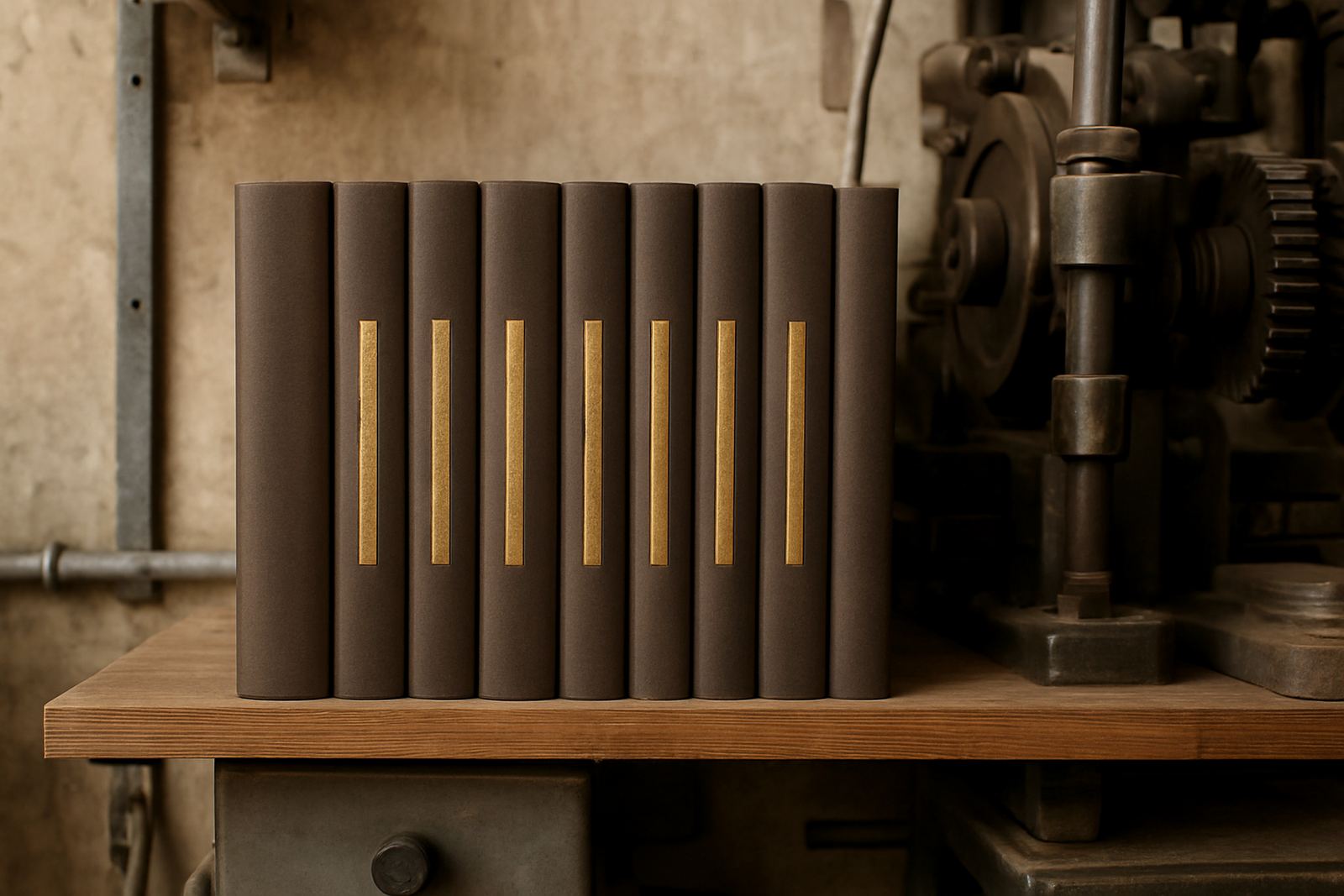
The spine blocking came out clean and even, with the text sitting clearly across the hard cover spine and no visible drift from copy to copy. The finisher reported that the die seated well during setup and did not need repeated correction, which cut down on wasted sheets and saved time on the finishing line.
On jobs like this, the best result is not only a sharp mark but a calm production run. The team could keep moving through the annual report stack without stopping to re-adjust the pressure every few copies. That is usually what clients want from us: a die that behaves the same way on every press pass.
- Cleaner spine impression
- Less setup waste on the run
- Consistent blocking across the full job
- Better time use on a busy finishing floor
What we would do again for a similar Roodepoort job
If we were repeating this kind of annual report work for another Roodepoort finisher, we would follow the same process: confirm the board build early, check the spine copy at actual size and keep the counterforce matched to the finished cover thickness. That is the part that keeps production steady, especially when the job has to move through different hands before it reaches binding.
We would also keep the courier plan tight so the die lands before the finishing window opens. For local Gauteng jobs that matter on a specific date, good packing and clear job notes save real time. If the same title came back for a repeat run later in the year, we would file the job and use the original spec to speed up re-ordering and any small alterations.
- Confirm spine build and cover thickness before engraving
- Match counterforce to the same impression depth
- Keep artwork and job notes filed for repeat ordering
- Plan dispatch around the finisher's production slot
Key facts
| Project | Hard cover annual report spine blocking |
|---|---|
| Client type | Book finisher |
| Town | Roodepoort, Gauteng |
| Product supplied | Brass hot-stamping die with matching counterforce |
| Turnaround | About 2 weeks |
| Service mix | Artwork checks, die design, engraving production, packing dispatch |