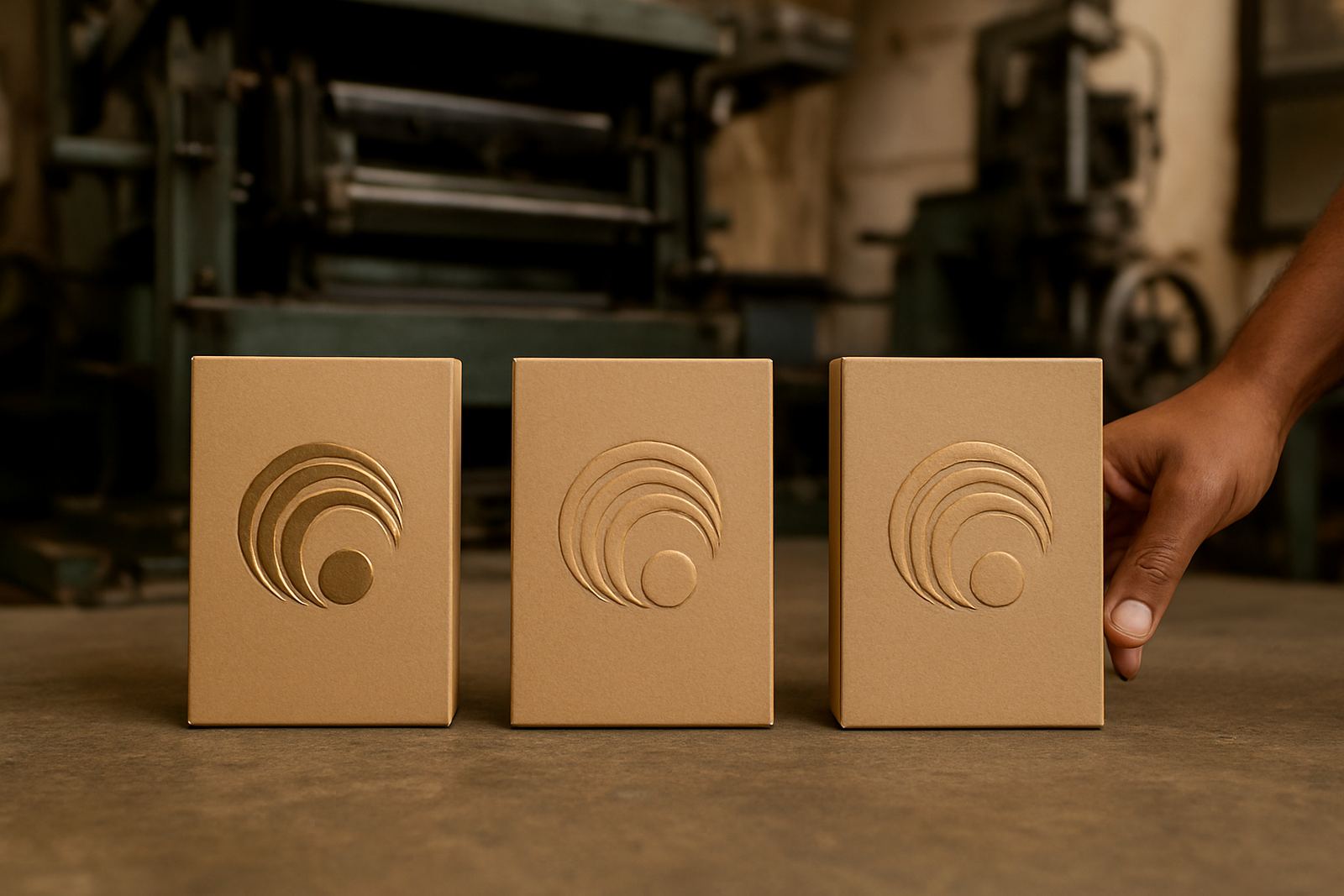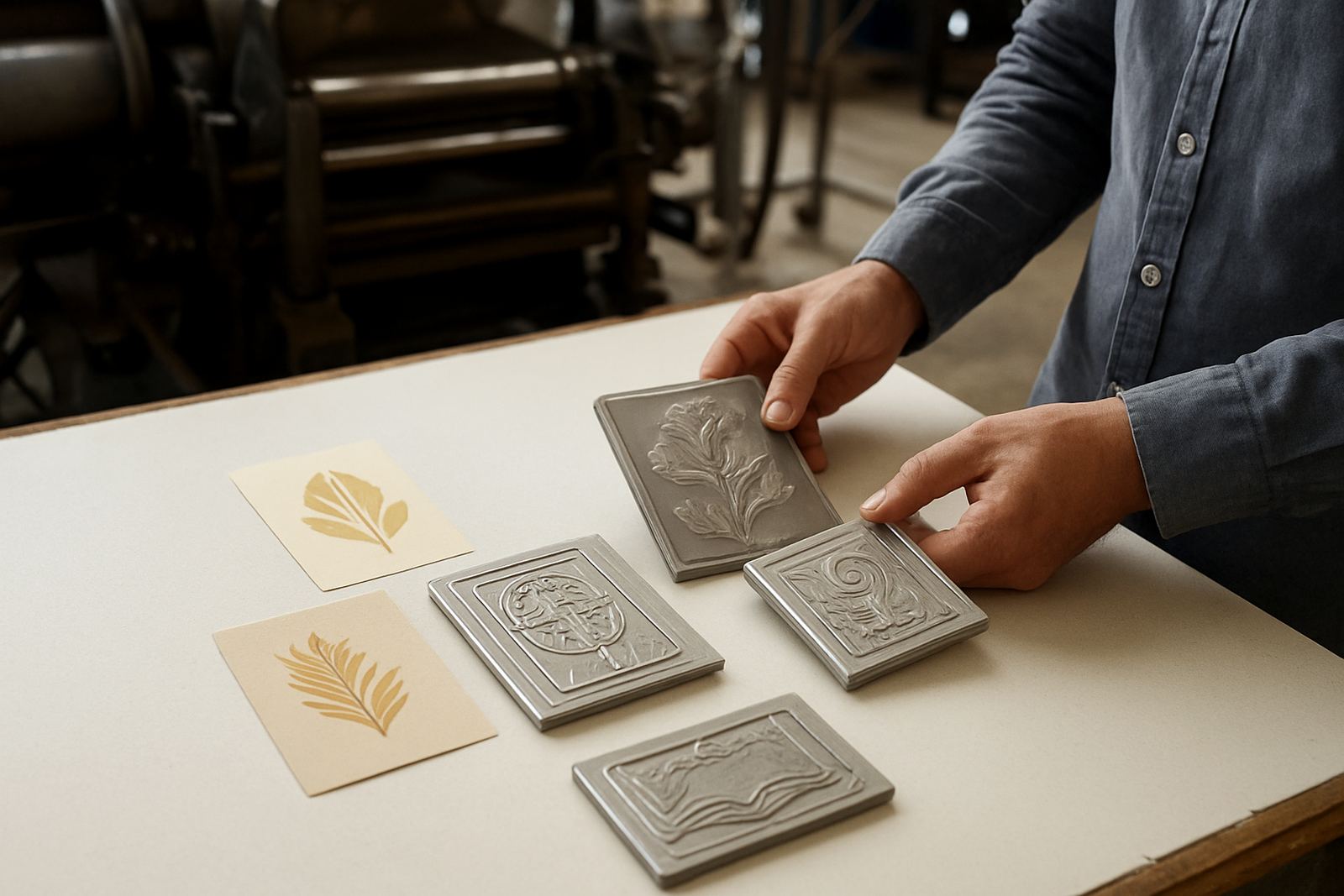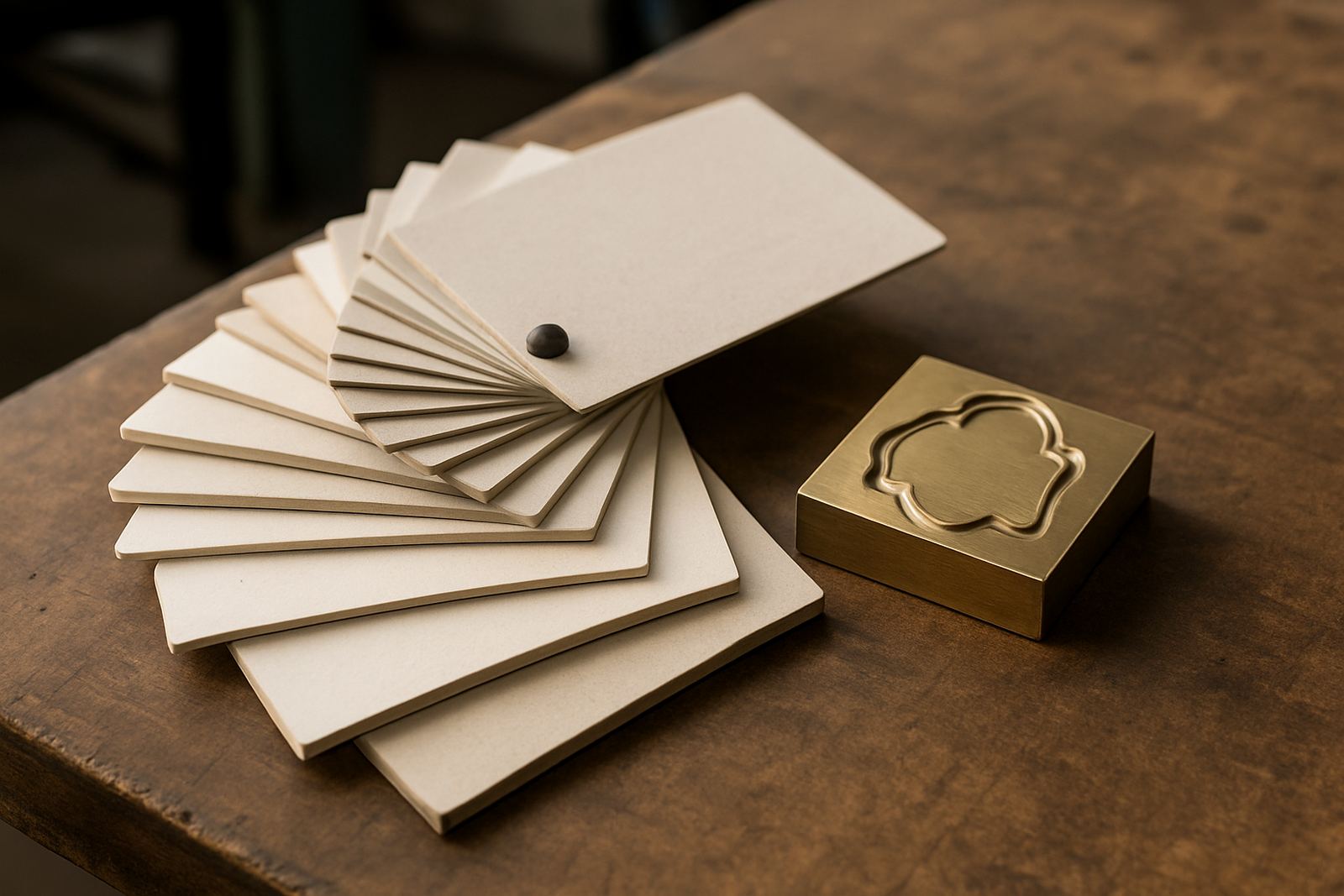
Start With the Finish, Not Just the Board Name
The surface on the board tells you a lot about how the die will behave. A smooth, coated sheet usually gives a sharper foil edge and a cleaner emboss, while a rough or open surface can soften fine detail and leave the impression looking uneven. If the job calls for tight type, fine lines or small logos, surface quality matters as much as the artwork itself.
In Johannesburg and the other major print centres, we often see jobs where the stock was chosen for appearance but not for finishing. That can cause cracking on deep embossing, patchy foil transfer, or a light strike on coated board if the pressure is not set correctly. Before you place the order, confirm whether the stock is gloss coated, matt coated, uncoated, textured or laminated, because each one needs a slightly different approach.
- Coated surfaces suit crisp foil detail and tighter line work.
- Textured stocks need stronger relief and more forgiving artwork.
- Laminated boards often need careful heat control to avoid marking.
- Uncoated stocks can absorb more pressure, but may show fibre lift.
Check Thickness and Caliper Before the Die Is Cut
Board thickness affects how deep the die can travel and how much counterforce is needed behind it. A 300 gsm sheet behaves very differently to a rigid folding carton board, even if the printed size is the same. When thickness varies across the run, the finish can move from a light impression to a hard crush, which is where the pack fails during folding or gluing.
Use the actual caliper, not only the gsm on the spec sheet. Two boards with the same weight can feel very different under the press. If you are working with mixed board lots or imported stock, ask for a sample impression before final production. That saves time on press and helps us match the die depth and counterforce properly.
- Thicker board usually needs a stronger die face and deeper relief.
- Thin board may need a lighter touch so the fibres do not split.
- Where caliper varies, expect adjustments to counterforce or packing.
- For repeat orders, keep the same stock reference where possible.
Match the Artwork to the Stock Behaviour
Some artwork is forgiving, while other layouts need very exact stock choices. Bold logos, large open areas and wider foil shapes can handle a bit more movement in the board. Fine serif text, small reverses and tight pattern work need a stable sheet that holds detail under heat and pressure. If the stock flexes too much, the impression may look blurred at the edges, especially on repeated passes.
When you send artwork for checking, include the stock details if you already have them. That lets our prepress team spot issues early, such as line weights that are too fine for the chosen board or emboss depths that may crack the surface. It also helps if you tell us whether the job is for retail packaging, invitation work, presentation folders or a short run promotional item, because the finish expectations are different.
- Small type needs clean stock with stable surface hold.
- Large solid areas need even pressure across the sheet.
- Deep embossing needs enough fibre strength to avoid cracking.
- Reverse stamping on textured board may need artwork simplification.
Use the Right Counterforce for the Stock Type
Counterforce is not a one-size-fits-all decision. The backing material behind the die must suit the stock, the press and the finish required. Soft board may need less resistance to allow the image to form cleanly, while firm board often needs a better matched backing to stop the impression from going flat. If the counterforce is wrong, the job can look dull even when the die itself is correct.
For embossing and hot stamping, a test impression gives the best reading of how the board is reacting. We can advise on sample pulls, slight alterations, and whether the sheet needs a different pressure setup. On faster turnaround work, especially where the job has to move from Johannesburg to Durban or Cape Town by courier, it is worth confirming the stock early so the first pass is closer to the final result. That cuts waste and keeps the press moving.
- Soft stock usually needs gentler backing support.
- Firm board may need stronger counterforce to hold detail.
- Test pulls show whether the foil is anchoring properly.
- Incorrect backing can flatten the image or over-crush the sheet.
Ask for a Sample Impression Before Full Production
A sample impression is the simplest way to avoid costly rework. It shows how the stock reacts to heat, pressure and die depth before the full run starts. If you are unsure about board finish, print varnish, lamination or thickness, one sample can tell you more than a long spec sheet. It also helps the finisher see whether the job needs a cleaner foil edge, a deeper emboss or a lighter touch.
For packaging houses and print finishers working to tight launch dates, sample approval is often the point where delays are either avoided or created. If the approval stock is different from the final stock, let us know. Even a small change in surface coating or caliper can alter the result. A quick check now is easier than correcting a run later, and it keeps the packing and dispatch side moving on time.
- Send the exact stock if possible, not a similar substitute.
- Confirm whether the final board will be printed, varnished or laminated.
- State if the job needs a light, medium or deep impression.
- Keep one approved sample for repeat ordering and reference.
Order, File and Repeat With the Same Stock Reference
Once a die is matched to a board, keep the stock reference on file for repeat work. That makes reordering faster and reduces the chance of a mismatch between the original impression and the next run. If the client changes to a different supplier, different coating or different thickness, tell us before production starts. It sounds like a small thing, but it often saves a press pass and a lot of back-and-forth.
We file the job details so repeat orders, die alterations, cleaning and damage assessment can be handled with the original finish in mind. That is useful for clients across Pretoria, Polokwane, Mbombela and beyond who need couriered dies to arrive ready for the next run. Good filing means the next order starts with the right board notes, the right engraving history and the right production setup, not guesswork.
- Keep the board name, caliper and finish on record.
- Note any lamination, varnish or coating changes.
- Store approved impressions with the job file.
- Flag urgent repeats early if the production window is tight.