
Start With The End Result You Want To Feel
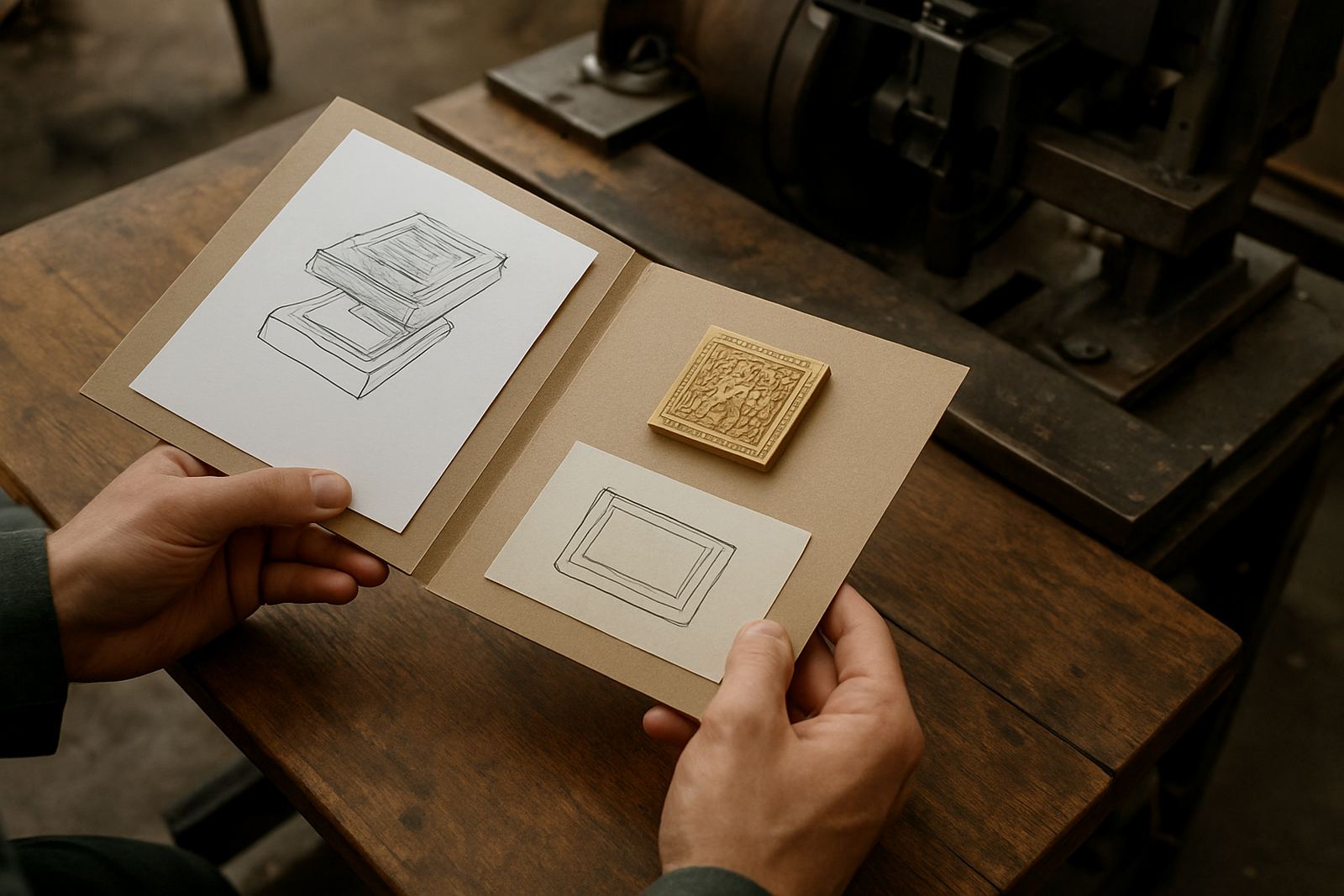
When you ask for an embossing plate or die, begin with the effect, not the tooling. Say whether you want a light raised detail, a firm finger-pressed relief, or a deep sculpted impression that can be seen from across the room. That simple description helps our team choose the right build, the right counterforce and the right amount of detail in the engraving.
In South African print finishing, depth is always linked to the stock. A 300 gsm coated cover, a textured uncoated board and a laminated carton will all react differently. If you only say it must be "nice and deep", the result may be too soft on one stock and too heavy on another. Be clear about the exact item, whether it is a folder, carton, label, wine pack or presentation cover, and mention if the job must run in Johannesburg, Durban, Cape Town or at another finishing house with its own press setup.
Give Us The Numbers And The Stock Details
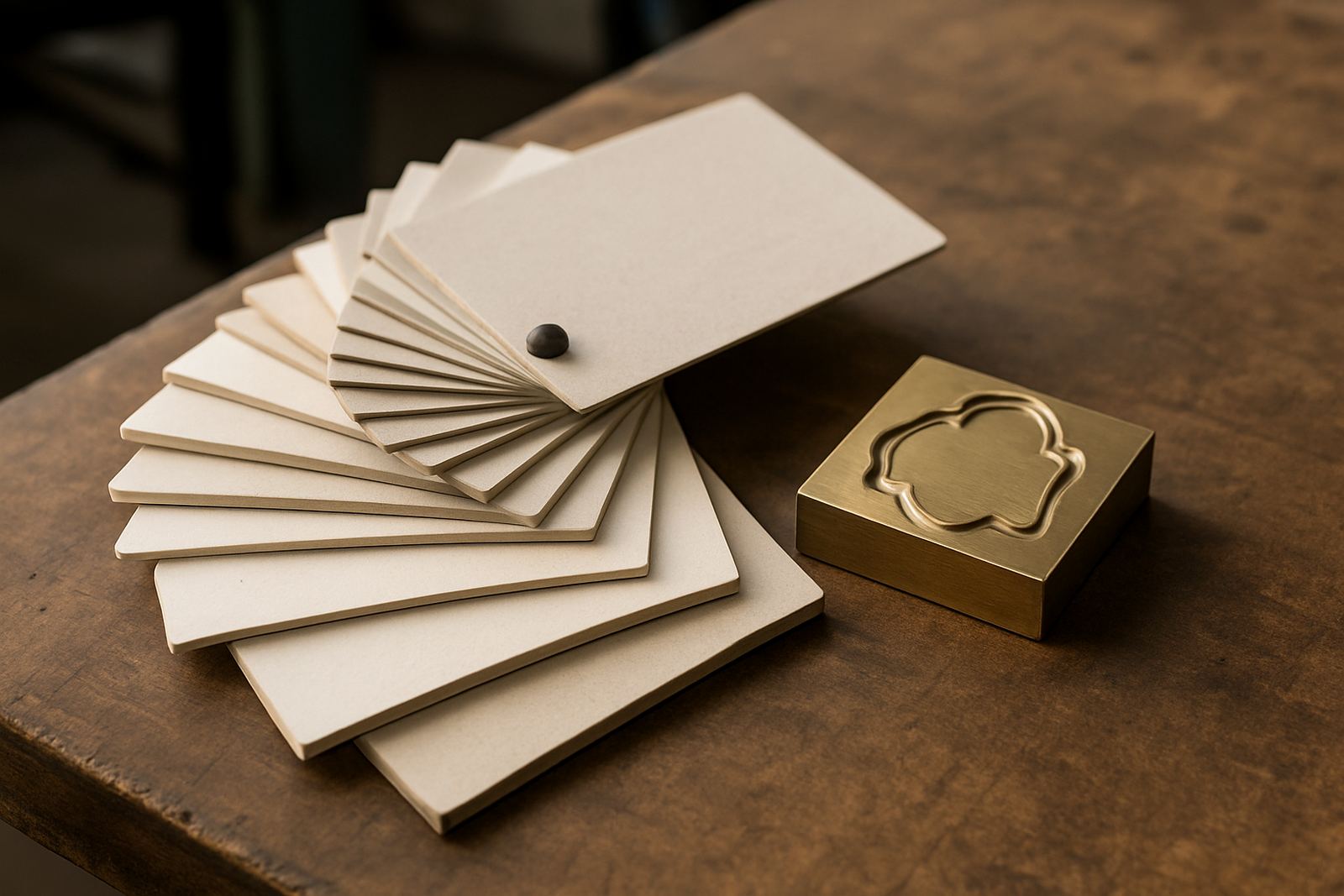
The most useful brief includes measurable details. Tell us the sheet size, board thickness and any coatings or textures already on the printed piece. If you know the estimated caliper in microns or the board weight in gsm, include that too. If the design needs to sit close to a fold, a cut line or a crease, say so. That affects the depth we recommend and whether the impression should be spread wider or kept tighter.
For packaging jobs, even small changes matter. A 2 mm change in depth can alter how the carton closes, where the light catches the emboss, and how the counterforce sits inside the press. If the job is sensitive to cracking, tell us. If the stock is imported and behaves differently in humid weather in Durban or Gqeberha, mention that as well. It helps us judge whether a deep emboss is practical or whether a shallower but cleaner result will hold better.
- Stock type and finish: coated, uncoated, textured, laminated or foil stamped
- Board weight or thickness
- Approximate emboss depth wanted, even if only a guide such as light, medium or deep
- Whether the design is near a fold, edge, cut-out or crease
- Where the job will be run and on what type of press if known
Match The Depth To The Artwork And Line Weight
Fine lettering and very small detail need different treatment from bold logos or large crests. Thin lines can collapse if the emboss is pushed too far, especially on softer paper or on jobs with a lot of ink coverage. Tell us which parts must stand out most. A logo mark may need more height than the surrounding frame, while small text may need a lighter touch so it stays legible.
If your artwork contains layers, mention the order of importance. For example, one area might need to read first by touch, while another area should only be visible when the sheet is angled in light. That distinction helps with die design and engraving production. It also matters for repeat ordering. If you want the same effect on a future reprint, we can keep the job filed with the key settings, the counterforce match and the notes from the first run, which saves time later.
- Point out the most important part of the image or logo
- Say if the effect must be felt by hand or mainly seen by light reflection
- Flag tiny text, hairline rules and sharp corners
- Tell us if the same die must work on more than one stock
- Ask for sample impression advice if you are unsure how far to push the depth
Use A Practical Depth Brief For The Press Room
A press room brief should be simple enough for the operator to follow quickly, especially when time is tight and load-shedding has already interrupted the shift. State the required depth in practical terms, like shallow, medium or deep, and add a comparison if useful. For example, "deeper than the last folder sample" or "about the depth of a strong finger press". That is more useful than a vague request for more impact.
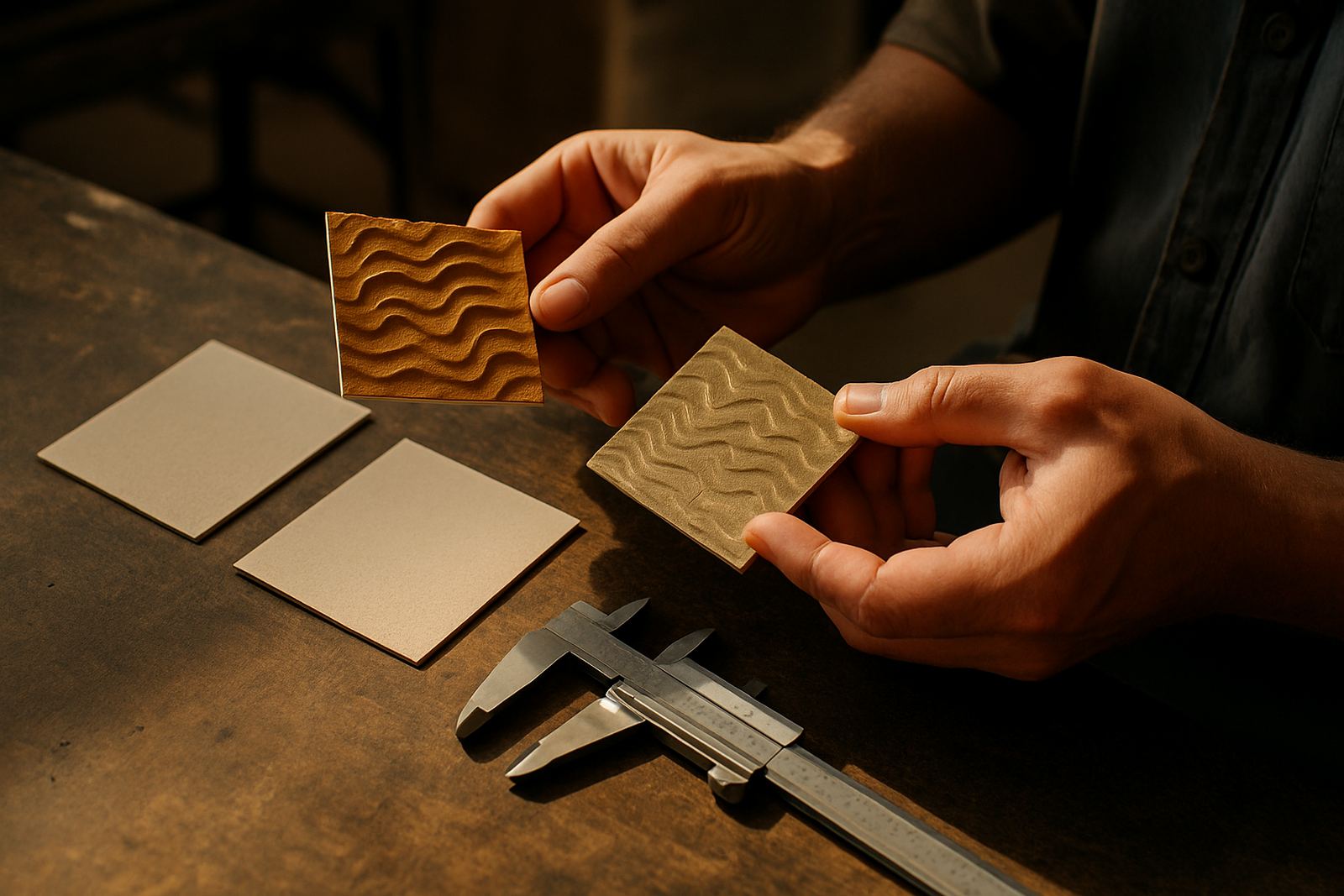
If you are unsure, ask for a sample impression before the full run. A sample can show whether the emboss is too aggressive, too flat or uneven across the sheet. It also lets the finishing team check if the die needs alteration before the full batch is started. This is especially useful for urgent turnaround work where there is no room for a second pass. In many cases, one clear sample saves a lot of paper and keeps the job moving cleanly.
- State the preferred feel in plain language
- Ask for a sample impression where the stock or artwork is sensitive
- Confirm whether a single hit or stronger press pressure is needed
- Note if the job must survive courier handling, stacking or retail display
Allow For Counterforce, Packing And Courier Travel
Emboss depth does not end at the die. It must also suit the counterforce and the way the finished item will be handled. A deep impression on a delicate carton may look strong on press but lose shape during packing or transit from Industria to Pretoria, Bloemfontein or further afield. If the job will be couriered nationwide, tell us how the pieces will be packed, stacked and stored after finishing.
Moisture can also influence the result, especially in coastal areas. Paper that arrives soft from humidity may take a deeper impression than paper stored in a dry warehouse inland. For that reason, it helps to mention where the stock is printed and where it will be finished. If you have a preferred packing method, say so. We can guide packing dispatch so the die and the finished pieces arrive ready for the next stage, not crushed at the corners or scuffed along the raised detail.
A Clear Brief Makes Alterations And Repeats Easier
Good emboss depth notes are worth keeping. If the first run was slightly too high or too light, the change is easier to make when the original brief records the stock, the press behaviour and the final result. That makes die alterations more accurate and repeat ordering much faster. It also helps if the same product line is produced in different sizes or for different provinces, because the core settings stay traceable.
Before sending your request, use this quick checklist:
- Product name and size
- Stock type, thickness and finish
- Desired depth, feel and visual effect
- Artwork file, crop marks and any special notes
- Whether you need artwork checks, engraving production or sample impression advice
- Deadline, dispatch location and any urgent turnaround needs
For businesses in Johannesburg, Pretoria, Durban, Cape Town, Gqeberha, Bloemfontein, Polokwane and Mbombela, a well written depth brief means fewer back-and-forth questions and a better result on press. It keeps the job practical, accurate and ready for finishing.