What carton emboss dies do on folding cartons
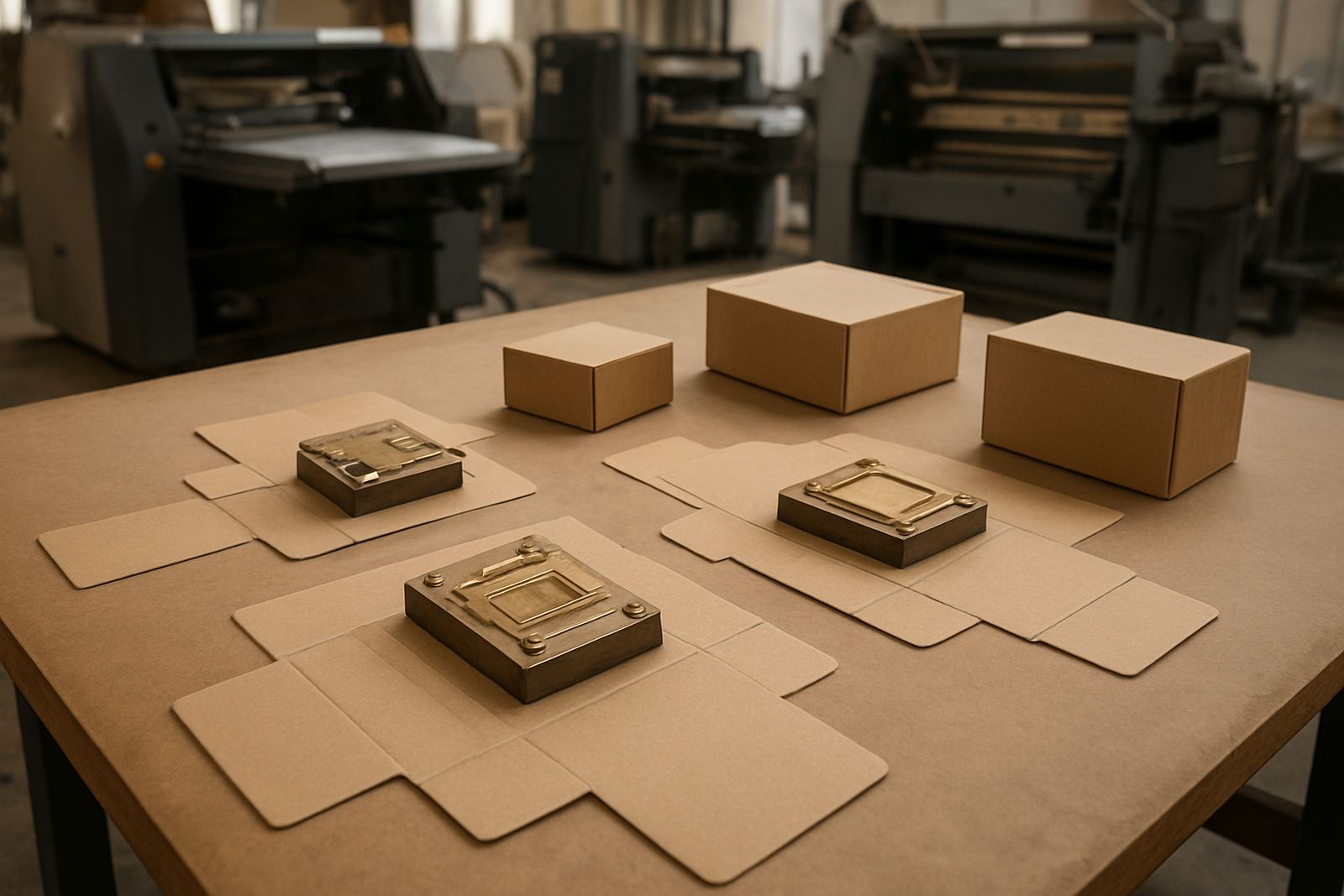
Carton emboss dies create a raised or recessed detail on printed board so the final pack has clearer branding, texture, and a more premium feel. They are commonly used on folding cartons, premium sleeves, carton lids, rigid box outer wraps and presentation packaging where the artwork must hold through creasing, gluing and filling.
For carton work, the die must match the board caliper, fibre direction and the way the carton will be cut, folded and converted after embossing. A good die gives clean edges without crushing the board too hard, and it keeps the impression even across the full sheet. That matters when you are running longer jobs on offset printed stock or shorter seasonal packaging runs with tight repeat control.
- Suitable for carton fronts, logos, text, border panels and blind emboss effects
- Made for registered print and finishing work where detail must sit accurately
- Works with boards used for cosmetics, liquor, gifting, food packaging and speciality cartons
Brass and magnesium options for different production runs
We make carton emboss dies in brass and magnesium, depending on the finish required, the volume of cartons and how fine the detail is. Brass is usually preferred for longer runs, deeper detail and repeated use, while magnesium is often selected for lighter duty work or faster turnaround where the artwork is more straightforward.
Brass dies give strong edge definition and hold up well where the press is running regularly and the same image must be repeated across multiple batches. Magnesium can be a practical choice for promotional packaging, test packs and shorter orders where the image area is smaller and the pressure on the board is not as heavy. We check the job with your artwork and advise what will suit best, because the wrong metal can cause poor release or unnecessary wear.
- Brass thickness options commonly used: 6 mm, 8 mm and 10 mm
- Magnesium tooling available for lighter emboss detail and shorter production cycles
- Suitable for single image dies, repeat patterns and linked carton panels
Sizes, relief and layout details to specify
Carton emboss dies are normally made to the finished panel size, with the image area set to suit the carton die line and the platen or cylinder size on the machine. We work from supplied artwork, dielines and sample packs where needed, and we can check whether the emboss should sit inside the panel, across a flap or over a wrap seam. For accurate production, the artwork must allow for board stretch, compression and any score lines nearby.
Where the pack has fine type or small marks, the relief height needs careful control. Too much height can crack the coating on some boards, too little and the detail will not show enough after laminating or varnishing. We also look at counterforce matching so the impression is clean from front to back, which is especially important on rigid box outer wraps and thicker cartons.
- Typical image areas range from small logo panels to full carton face embosses
- Relief depth is selected for the board, image coverage and press pressure
- Can be supplied as single-level or stepped emboss tooling where the design calls for it
Where carton emboss dies work best in South African print rooms
These dies suit offset print finishers, flexo converters and packaging houses handling premium board work in Johannesburg, Pretoria, Durban, Cape Town, Gqeberha, Bloemfontein, Polokwane and Mbombela. They are widely used on cartons for beauty products, stationery, liquor sleeves, gift packs, medical cartons and retail packaging where the raised detail helps the pack stand out on shelf.
In coastal areas, humidity can affect board feel and make fine emboss work less forgiving, so the die setup and stock choice matter even more. In inland plants, dry winter conditions and load-shedding can interrupt press schedules, so repeat ordering and job filing help keep the same tooling ready when the line is back up. We courier dies nationwide from Industria, Johannesburg, packed for safe handling and easier storage in the finisher’s tool room.
- Used on carton face panels, lids, sleeves, flaps and rigid wrap areas
- Suitable for premium packaging, short-run campaigns and repeat production
- Can be filed for reorders, alterations and future artwork revisions
Installation, press setup and power requirements
Carton emboss dies themselves do not need electricity or gas, but they are used on press or finishing equipment that must be set correctly for heat, pressure and dwell time. The installation side is about mounting the die securely, checking the make-ready, aligning the counterforce and confirming that the board will not buckle or crush under pressure. For hot processes, the press operator must have the right heating controls and a stable working set up.
We can give sample impression advice where needed, especially on jobs that combine embossing with foil or other finishing steps. If the carton uses a coated sheet, laminated board or a thick rigid wrap, the pressure setting may need to be adjusted to suit the substrate. A small test run is always worth doing on higher value packaging, because it saves board and stops rework later.
- No direct power or gas supply required for the die itself
- Press settings depend on board type, image depth and the final pack construction
- Testing is recommended before full production on premium cartons
Care, cleaning and repeat ordering of carton tooling
Good care keeps emboss dies sharper for longer and helps preserve detail on repeat jobs. After use, the tooling should be cleaned of adhesive, board dust and any finish residue before storage. If a die is dropped or shows signs of wear, it should be assessed before the next run so the impression stays even and registration problems do not creep in.
We offer die cleaning, damage assessment, die alterations and repeat ordering support for carton work that returns season after season. If the artwork changes, we can review the old die and advise whether a clean-up, remake or partial alteration is the smarter route. Keeping the job file up to date also makes reordering quicker when the same carton is needed again. In busy plants, that can save a fair bit of time.
- Store flat, dry and clearly labelled by job number or carton code
- Keep away from moisture, heavy stacking and rough handling
- Ask for cleaning or damage checks before reusing older tooling
What to check before you send artwork or place the order
When ordering carton emboss dies, send the finished artwork, dieline, board details and the intended press method. If you have a printed sample, mock-up or previous tool, include that as well. The more accurate the information, the less chance of a mismatch between the die and the carton line. For new packs, it helps to note whether the emboss must register to print, foil or a structural fold.
We also need to know the size of the image, whether the emboss is blind or combined with another finish, and whether the job is for a short run or repeat production. If the pack will move through different plants, tell us so we can plan packing and dispatch accordingly. Our team in Johannesburg checks the artwork, confirms the tool details and keeps the job moving from approval to dispatch without unnecessary back and forth.
- Send artwork in the final layout, not a loose logo only
- Include board type, carton size, quantity and required turnaround
- State any special note such as counterforce, repeat order or urgent dispatch
Key facts
| Product type | Carton emboss dies for folding cartons and rigid box outer wraps |
|---|---|
| Materials | Brass or magnesium tooling |
| Typical thickness | 6 mm, 8 mm, 10 mm |
| Use cases | Premium cartons, sleeves, lids, gift packs and rigid wraps |
| Dispatch area | Nationwide courier from Industria, Johannesburg |
| Support services | Artwork checks, counterforce matching, alterations, cleaning and repeat ordering |