What a certificate seal die does on the press
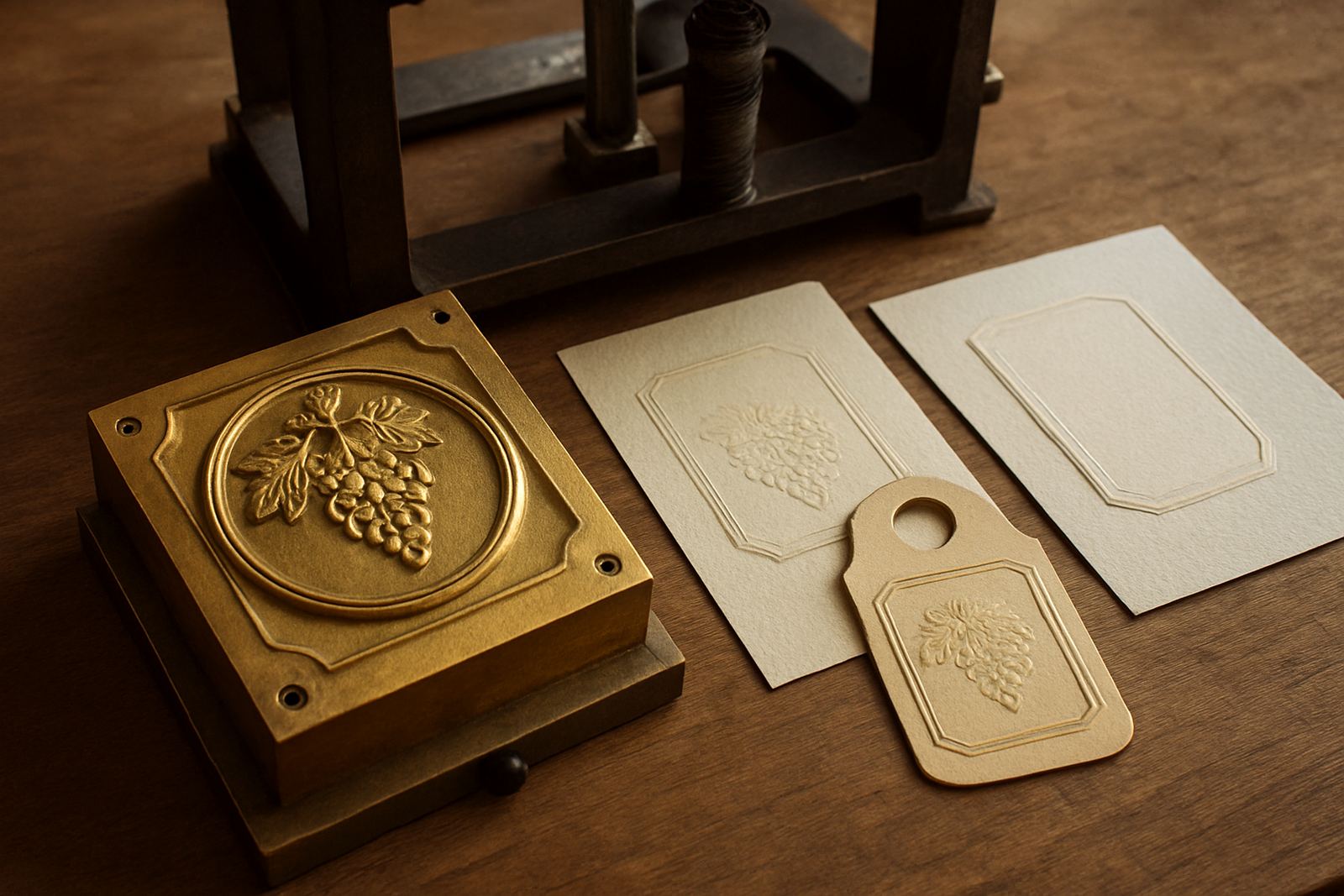
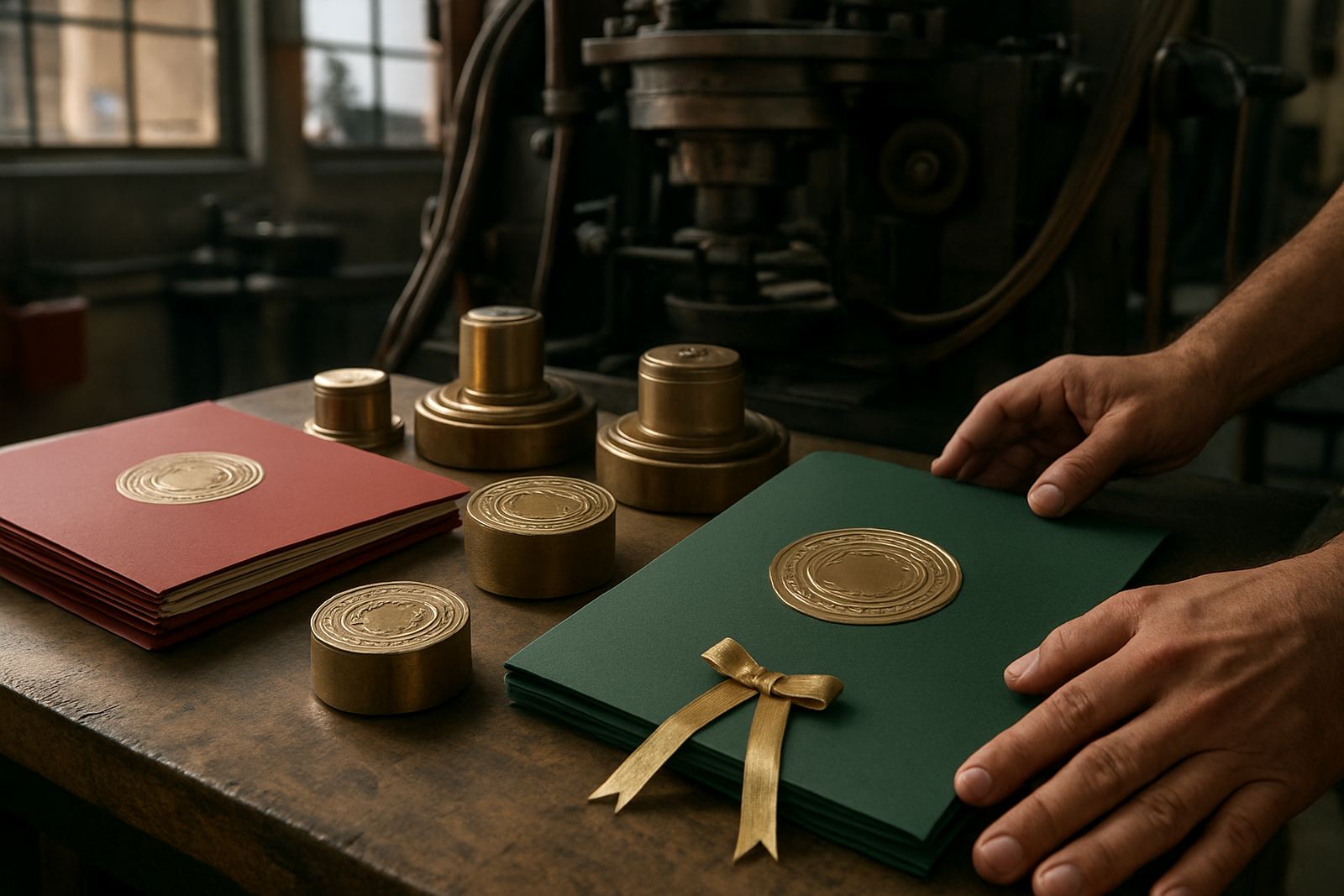
A certificate seal die is the engraved tool used to press a raised or recessed seal into paper stock, board or laminated presentation material. It is commonly used for certificates, letters of appointment, awards, membership documents and official presentations where the seal must look crisp and deliberate. The die can also be used with foil if a metallic finish is needed, but many customers use it for blind embossing only.
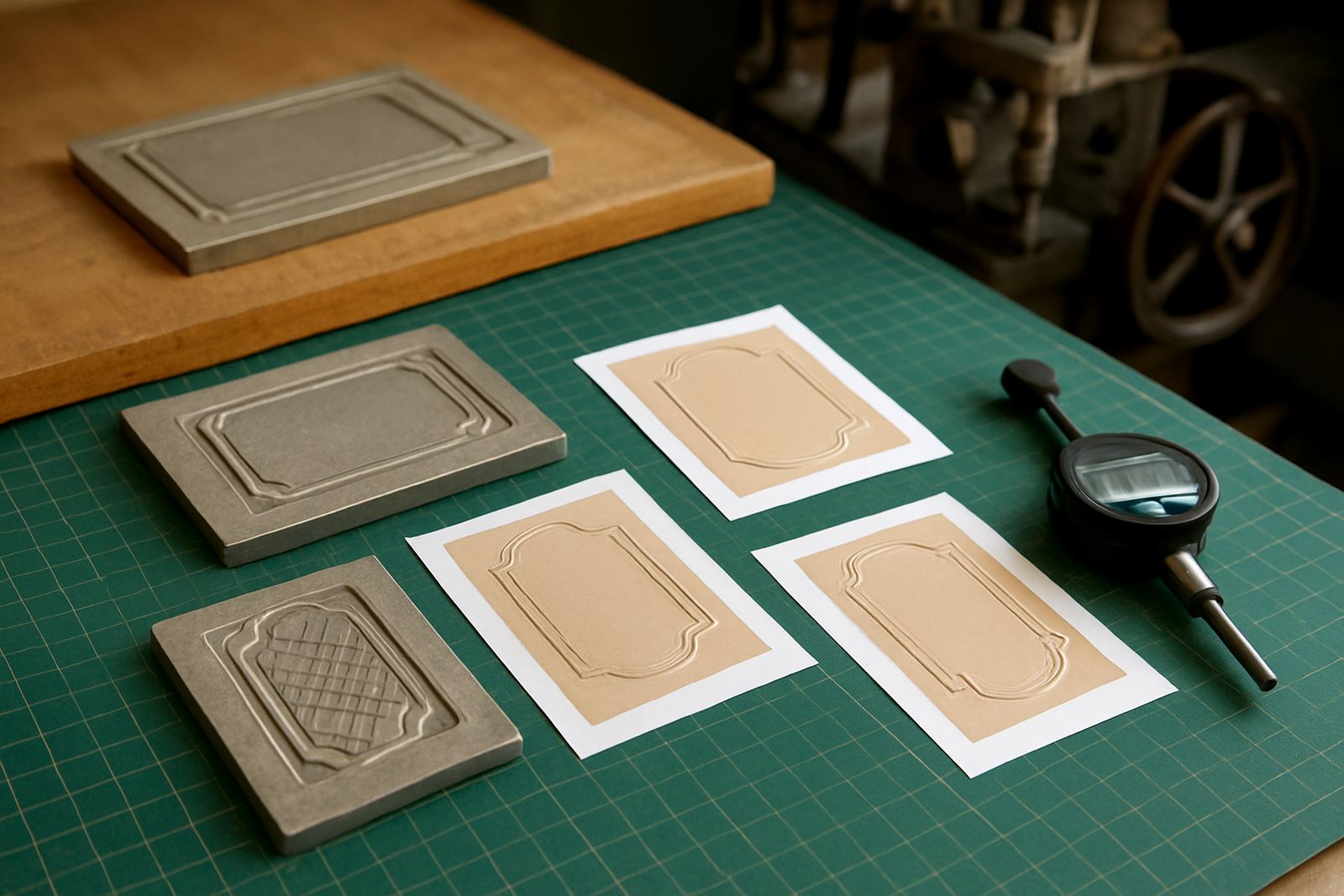
For this kind of work, detail matters. Fine lines, borders, crests and small lettering must stay clean across the full impression, especially when the document is handled often or framed. We check the artwork for line weight, spacing and depth so the final seal holds up on heavier paper and coated stock. A poorly cut seal can crush fibres or fill in small features, so the engraving must match the artwork properly.
These dies are made for repeat use, whether you are producing 20 certificates for a local ceremony or a larger run for schools, training providers and professional bodies. If the seal changes often, for example with different year marks or branch names, we can keep the core layout on file for repeat ordering and later alterations.
Brass and magnesium options, sizes and finish choices
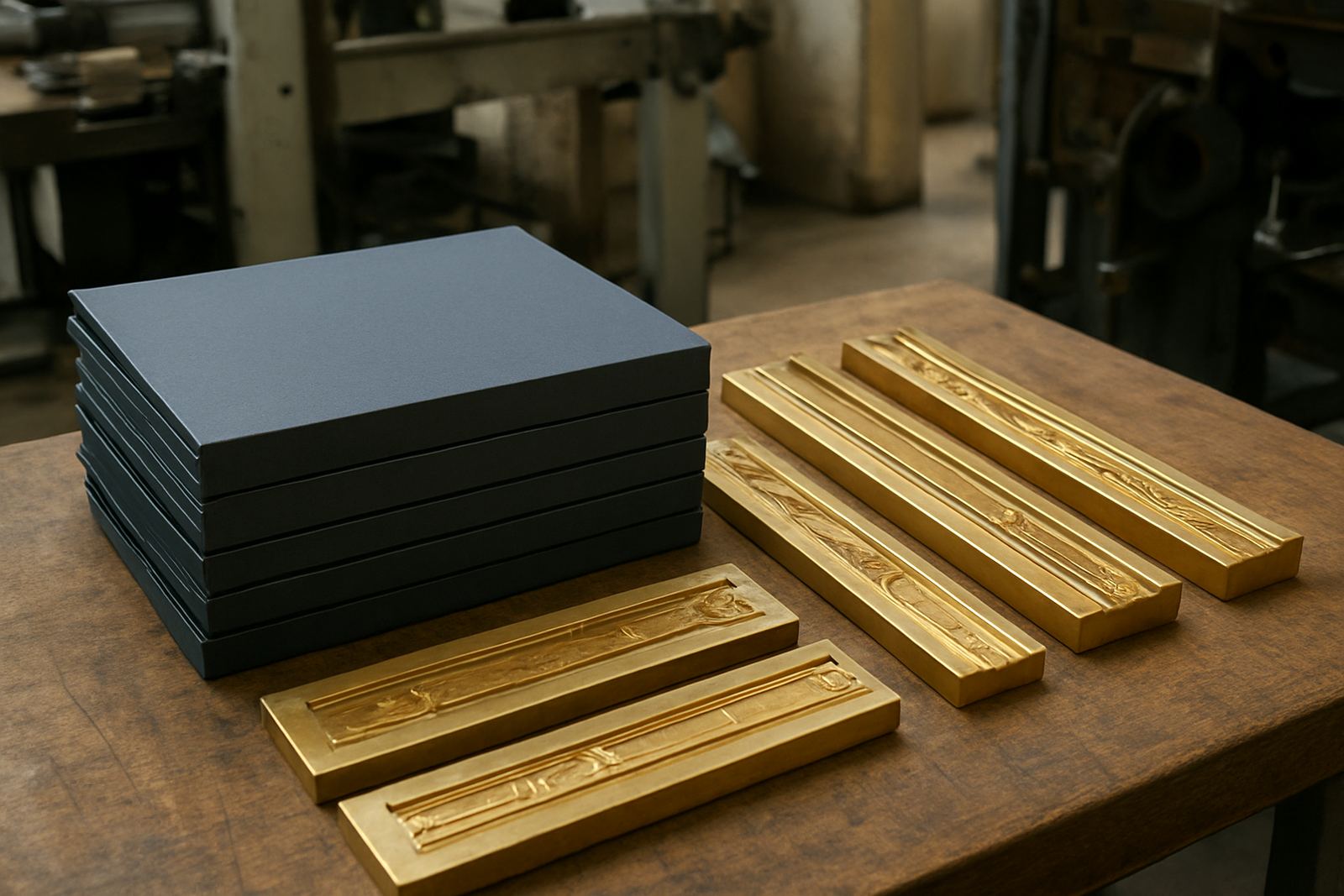
We supply certificate seal dies in brass and magnesium, depending on the job, the press setup and the amount of use expected. Brass is the better choice for longer life, heavier pressure and fine engraved detail. Magnesium is suitable for lighter duty work and faster turnaround when the artwork is straightforward and the press conditions are controlled.
Common seal sizes include 40 mm, 50 mm, 60 mm and 75 mm round formats, as well as square and custom shapes where the document layout calls for it. Most certificates use a centre seal with a border, crest or seal text around the edge. We also make custom sizes for schools, faith organisations, societies and corporate award programmes. If the seal must fit inside a printed frame, we can work to the exact opening size, not just a standard diameter.
- Round, oval, square and custom outline options
- Fine-line engraving for crests, emblems and typography
- Blind embossing or foil stamping use
- Single seal or matching set for multiple document types
- Repeat production from approved artwork for consistent output
Finish matters too. A seal with a very tight border may need a slightly deeper cut to keep the impression clear on textured stock. For glossy or coated paper, we normally advise sample testing first because surface slip can affect how the fibres lift. If the certificate paper is very heavy, the press and counterforce setup must be matched carefully so the seal reads cleanly and does not flatten out.
Where certificate seal dies suit best
Certificate seal dies suit print finishers, award houses, corporate publishers, educational institutions and packaging teams that produce official presentation material. They are especially useful where the seal needs to communicate authority and care, such as graduation certificates, professional registrations, loyalty awards, shareholder documents, commemorative prints and signed presentation pieces.
Because we are based in Industria, Johannesburg, we regularly supply customers in Pretoria, Durban, Cape Town, Gqeberha, Bloemfontein, Polokwane and Mbombela, as well as smaller towns that need courier delivery rather than waiting for a local cutter. Orders are packed securely for transit so the engraved face does not pick up damage in the box. For urgent work, we can also advise on realistic turnaround based on artwork readiness and current production load.
These dies are also useful in environments where the document must survive handling. A properly pressed seal is harder to copy cleanly and gives a visible finish that sits well with formal printing. If your team works with municipal notices, legal-style certificates or award documents for end-of-year events, the seal should be planned early so the paper, press and emboss depth all match.
Press setup, installation and power or gas needs
Certificate seal dies are fitted into the relevant embossing or hot-stamping press, and the setup depends on whether you are using a hand press, foot press or mechanical unit. The die must be aligned with the counterforce so the paper is pressed evenly. If the impression is off-centre even by a few millimetres, the seal can look untidy and the border may not close properly.
For hot-stamping applications, you need stable heat and even pressure. Electrical supply should be checked, especially in areas where load-shedding or fluctuating power can affect press temperature. If your production line relies on a heated unit, allow enough warm-up time before starting the run so the first impressions are consistent. Gas is not usually required for standard certificate seal work, although some finishing setups use gas for other processes in the same room.
- Press face and counterforce must match the seal size
- Paper weight should suit the intended emboss depth
- Heated units need steady temperature control
- Test pulls help confirm alignment before the full run
- Bench space should allow safe handling of finished documents
When a customer is not sure about setup, we can advise on the practical side before production starts. That includes checking whether the current press can handle the impression depth, whether the artwork is too detailed for the chosen size, and whether the stock is likely to crack or flatten. A small adjustment at this stage can save a lot of rework later.
Care, cleaning and repeat use
With normal care, a certificate seal die will give many clean impressions. Brass dies can be kept in service for a long time if they are cleaned after use and stored dry. Magnesium dies should also be wiped down and protected from knocks, because edge damage can affect the quality of the impression. If the seal is exposed to humidity, especially in coastal areas, it is worth keeping the storage area dry and the die wrapped properly between jobs.
For regular production, the press should be cleaned around the die area so paper dust and adhesive residue do not build up. If foil is used, any excess transfer should be removed before the next run. A damaged seal face can sometimes be corrected with die alterations, but if the engraving is badly worn or the artwork has changed, a new die may be the better option.
We also offer damage assessment, sample impression advice and job filing for repeat customers. That helps when a seal is used seasonally, for example at graduation time or year-end award cycles. If you send the same job back later, we can check the file, confirm the previous size and make sure the repeat order matches the earlier impression without guesswork.
What to send with your order
The clearest orders arrive with artwork that already shows the exact wording, border and layout needed for the seal. If the seal must match an existing document, send a clean scan or photo of the previous impression and note the finished size. If you need a new design, include the text exactly as it should appear, including capitals, abbreviations and punctuation. A missed line or a wrong spelling can be expensive once the die is engraved.
Before you place the order, check the following points:
- Finished diameter or width and height
- Whether the seal is blind embossed or foil stamped
- Paper stock weight and surface type
- Exact wording, crest, logo or border details
- Orientation and position on the certificate
- Any deadline for a ceremony, audit or launch
If you are unsure about the artwork, our prepress checks can flag issues before engraving starts. That includes line thickness, tiny reverse text, weak borders and areas that may disappear in the press. For urgent work, send the order as early as possible so we can plan the engraving and dispatch correctly, without a last minute scramble.
Key facts
| Product type | Certificate seal dies for embossing and hot stamping |
|---|---|
| Materials | Brass or magnesium |
| Common sizes | 40 mm, 50 mm, 60 mm, 75 mm and custom sizes |
| Use cases | Certificates, awards, official letters, presentation documents |
| Support services | Artwork checks, die design, engraving, alterations, sample impression advice |
| Dispatch | Couriered nationwide from Industria, Johannesburg |