What Folder Cover Dies Do On A Finished Folder
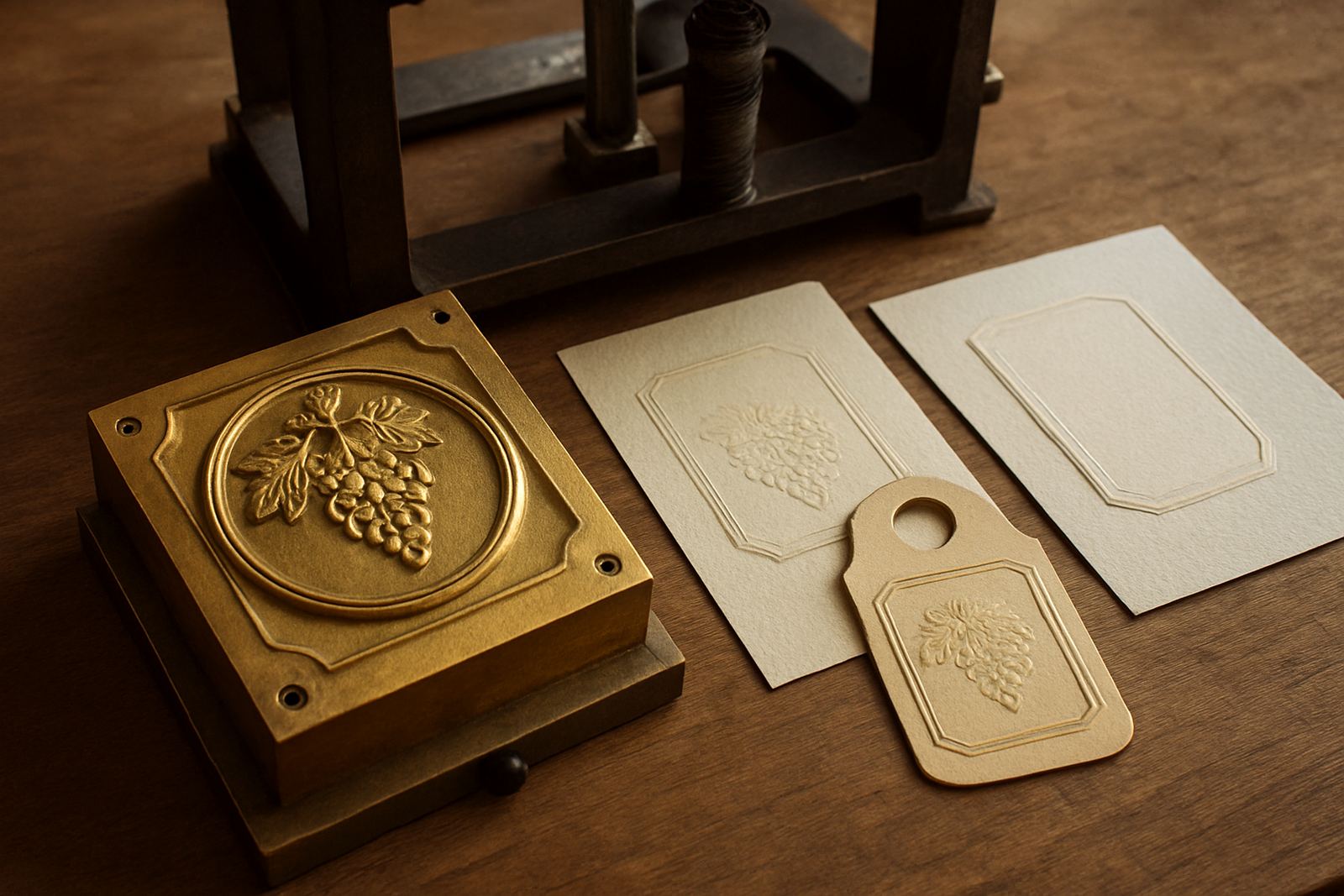
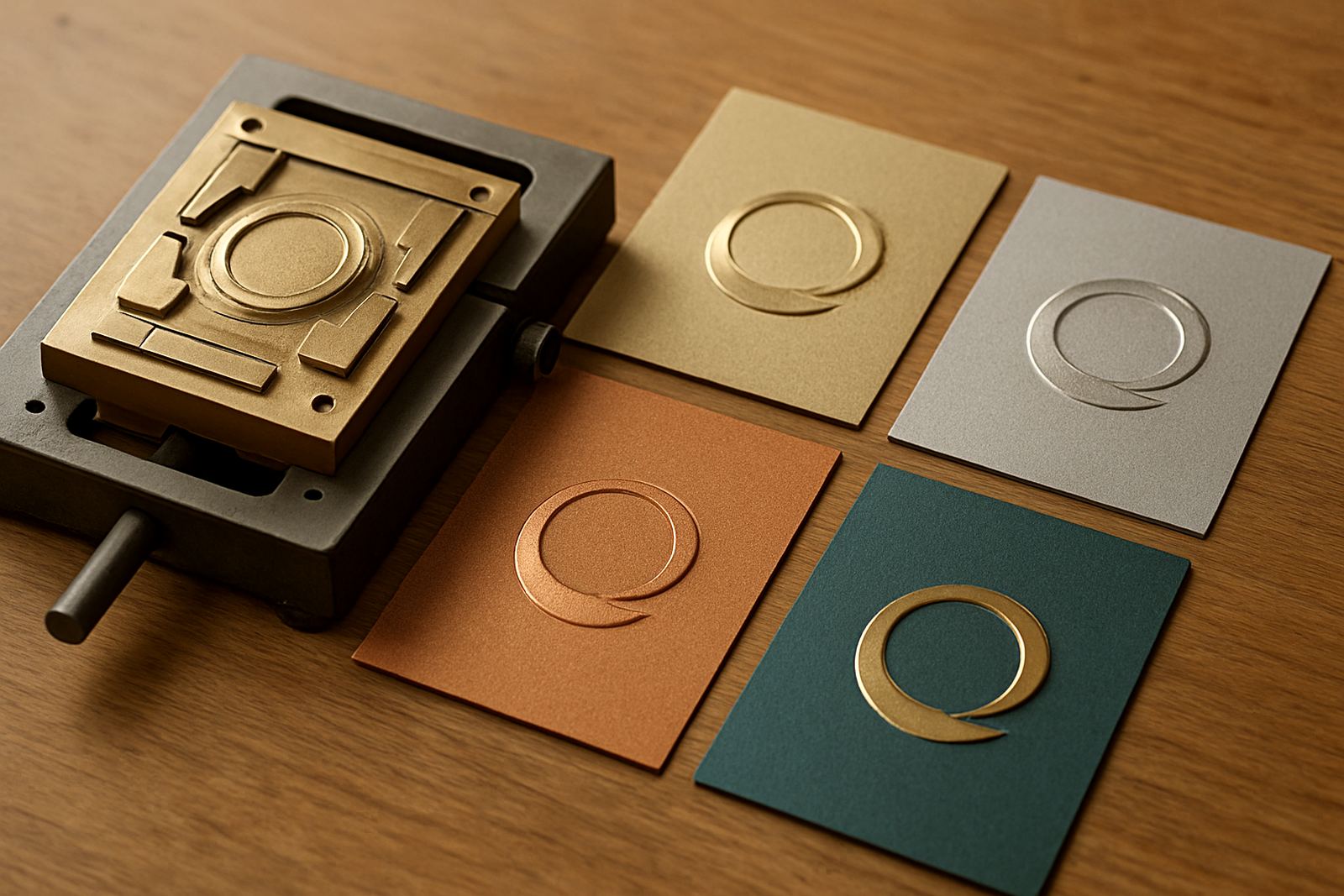
Folder cover dies are used to press foil, create an embossed mark, or add a crisp raised detail to presentation folders, proposal covers and welcome packs. They are cut to the artwork and mounted for hot-stamping or embossing work, so the logo, title or pattern lands cleanly on coated board, laminated stock, textured paper and many presentation materials.
In practical terms, this is the part that gives a folder a proper front cover presence. A client can feel the mark as well as see it, which is useful when the folder is being used for tenders, property packs, corporate onboarding packs or product launches. The finish has to be tidy at the fold line, and it must line up with pockets, flaps and spine allowances.
We make folder cover dies for short runs, repeat work and frequent re-order jobs. If you already have artwork that has been used before, we can work from your file history and match the previous setup more closely, saving time on repeat production. Small changes to placement, line weight or border spacing can make a big difference on the final piece, so we check those details before cutting.
Brass And Magnesium Options For Different Run Sizes
For folder covers, the choice between brass and magnesium depends on run size, detail level and how often the die will be used. Brass is the better fit for longer life, finer detail and repeat production. Magnesium is lighter and often suitable for shorter runs or faster turnarounds where the artwork is not overly deep or intricate.
- Brass dies: best for high wear, sharp line work and regular repeat orders
- Magnesium dies: suitable for lighter production needs and quicker lead times
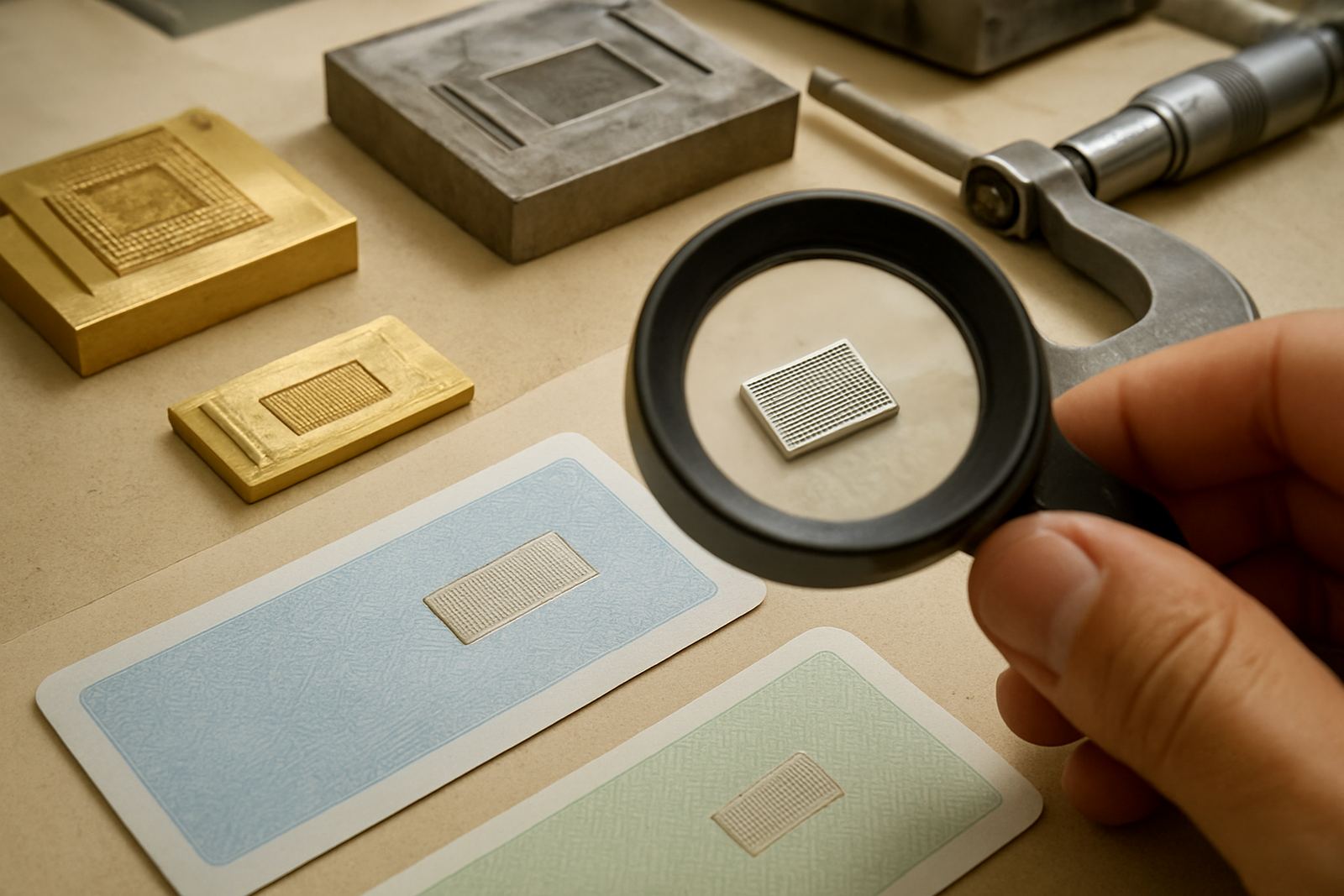
- Embossing plates: used where a raised or sunken impression is needed with a matched counterforce
- Counterforce matching: helps the cover close cleanly without crushing fibres or flattening the impression
For many folder jobs, the cover is trimmed after finishing, so the die must be set with enough margin from the edge. We look at the board thickness, foil coverage and whether the item is being hot-stamped flat or with a slight panel rise. On heavier presentation covers, a stronger counterforce may be needed to keep the pressure even across the whole panel. A poor match can leave a soft impression in one area and a harsh hit in another.
Common Sizes, Artwork Limits And Placement
Folder cover dies are not one-size-fits-all. The right size depends on the panel dimensions, the safe area from folds and the amount of foil or embossing space available. A standard folder cover job may be a logo alone, a title block, a border detail, or a full front panel design with multiple elements.
Typical options include small logo dies around 40 x 40 mm, medium branding plates in the 80 x 120 mm range, and larger cover dies that can run up to several hundred millimetres across depending on the press setup. For bigger covers, we check the press bed size, chase size and how the artwork will sit on the product. If a design is too close to a fold or pocket line, it can distort when the cover opens and closes.
- Measure the finished cover, not just the flat artwork file
- Keep key text away from folds, corners and glued pockets
- Allow for trimming after finishing if the printer works with bleed
- Tell us whether the job is foil, blind embossing or combined work
If the folder includes a coated or laminated finish, the impression often needs a little more pressure than plain board. That means we will ask about the stock type and surface finish up front, because a neat impression on one stock may need a different depth on another. The same applies to textured covers, where the grain can soften fine lettering if the die is too small. It is better to flag that early than rework the job later.
Where Folder Cover Dies Work Best
Folder cover dies suit print finishing shops, packaging houses, commercial printers and branding suppliers that produce client presentation material. They are commonly used on proposal folders, sales folders, welcome packs, report covers, event packs and launch kits. In Johannesburg, Pretoria, Durban, Cape Town, Gqeberha, Bloemfontein, Polokwane and Mbombela, we see regular demand for these jobs because businesses still want physical packs that look organised and professional.
They also work well where a folder is being handed over in person and needs to leave a strong first impression. Municipal tenders, legal documents, property brochures, training packs and franchise packs often need a clean branded cover. On coastal work, especially in Durban and Gqeberha, humidity can affect board and foil behaviour, so the finishing team should store stock properly before stamping. In dry inland conditions, especially during load-shedding periods, static and heat variation can also affect handling, so consistent storage matters.
We courier dies nationwide from our Industria base in Johannesburg, so the final location of the printer is not a problem. If a folder job is urgent, we can discuss turnaround before production and advise what can realistically be done without risking a poor finish. A rushed die that is not checked properly can cost more in wasted sheets than the time saved.
Installation, Press Setup And Power Needs
Folder cover dies are installed on hot-stamping or embossing equipment, and the setup should be handled by an operator who knows the press and the stock. The die must sit flat and secure in the chase or mounting area, with pressure set evenly across the print surface. If the folder has a large panel or multiple raised areas, the counterforce and temperature need to be balanced carefully. Too much heat can close up fine detail, while too little pressure leaves a weak mark.
Most hot-stamping work needs a stable power supply for heating and consistent temperature control. In South Africa, load-shedding can interrupt this if there is no backup power or controlled shutdown process. A sudden stop during a run can affect alignment and waste foil, so it is worth planning the job around the power schedule if possible. Gas is not normally required for these dies, but the press operator should still check the machine’s heating system, mounting method and safety clearances before starting.
- Check that the chase or mounting area suits the die size
- Confirm temperature, pressure and dwell time before a full run
- Use suitable backup power where production cannot stop mid-job
- Allow test pulls to confirm fold clearance and impression depth
Care, Cleaning And Repeat Use
A well made folder cover die can last through many repeat jobs if it is handled properly. After use, the die should be cooled down, cleaned of foil residue and stored flat in a dry place. Brass dies can handle repeat production well, while magnesium dies should be kept free from knocks and moisture. If a die is packed away still warm or dirty, the next run can pick up residue and show marks on the cover.
We offer die cleaning, damage assessment and die alterations where the original job needs a change. That might be a new date line, a revised company name or a shifted position after the folder design changes. If the die has worn edges or minor damage, we can assess whether it can be repaired or whether a replacement will give a better result. For busy finishing rooms, repeat ordering and job filing help keep the correct version easy to find when the same folder is needed again.
Good care also means protecting the die during dispatch and receiving. Folder cover dies are packed for courier movement so the edge detail stays intact, and our dispatch team handles packing carefully to reduce damage in transit. Once it arrives, the finisher should inspect the face, check the mounting side and compare it to the approved artwork before the first run. That step saves time and avoids mistakes on expensive stock.
What To Send Us When Ordering A Folder Cover Die
When you place an order, send the approved artwork file, the finished folder size, the stock type and the planned print method. If the folder includes pockets, inserts or a glued spine, include that too. The more accurate the information, the closer the die will be to the production result.
- Finished folder dimensions and panel layout
- Artwork file or clear layout showing exact placement
- Foil stamping, blind embossing or combined finish
- Stock type, coating, lamination and thickness
- Press size, if known, and any fold or pocket restrictions
- Deadline and whether urgent turnaround is needed
If you are not sure whether the artwork is suitable, we can do an artwork check before cutting. That helps spot fine text, weak lines, tight spacing or placement issues before production begins. For folder covers, small details matter a lot, because the final result must still look clean after folding, trimming and handling. A good order brief makes the whole job easier from the first check through to dispatch.
Key facts
| Material options | Brass and magnesium |
|---|---|
| Common applications | Presentation folders, proposal covers, welcome packs, report covers |
| Finishing methods | Foil stamping, blind embossing, combination work |
| Typical size range | Small logo dies to large cover plates, subject to press limits |
| Support services | Artwork checks, die design, counterforce matching, alterations, cleaning |
| Dispatch | Couriered nationwide from Industria, Johannesburg |