
What counterforce dies do on press
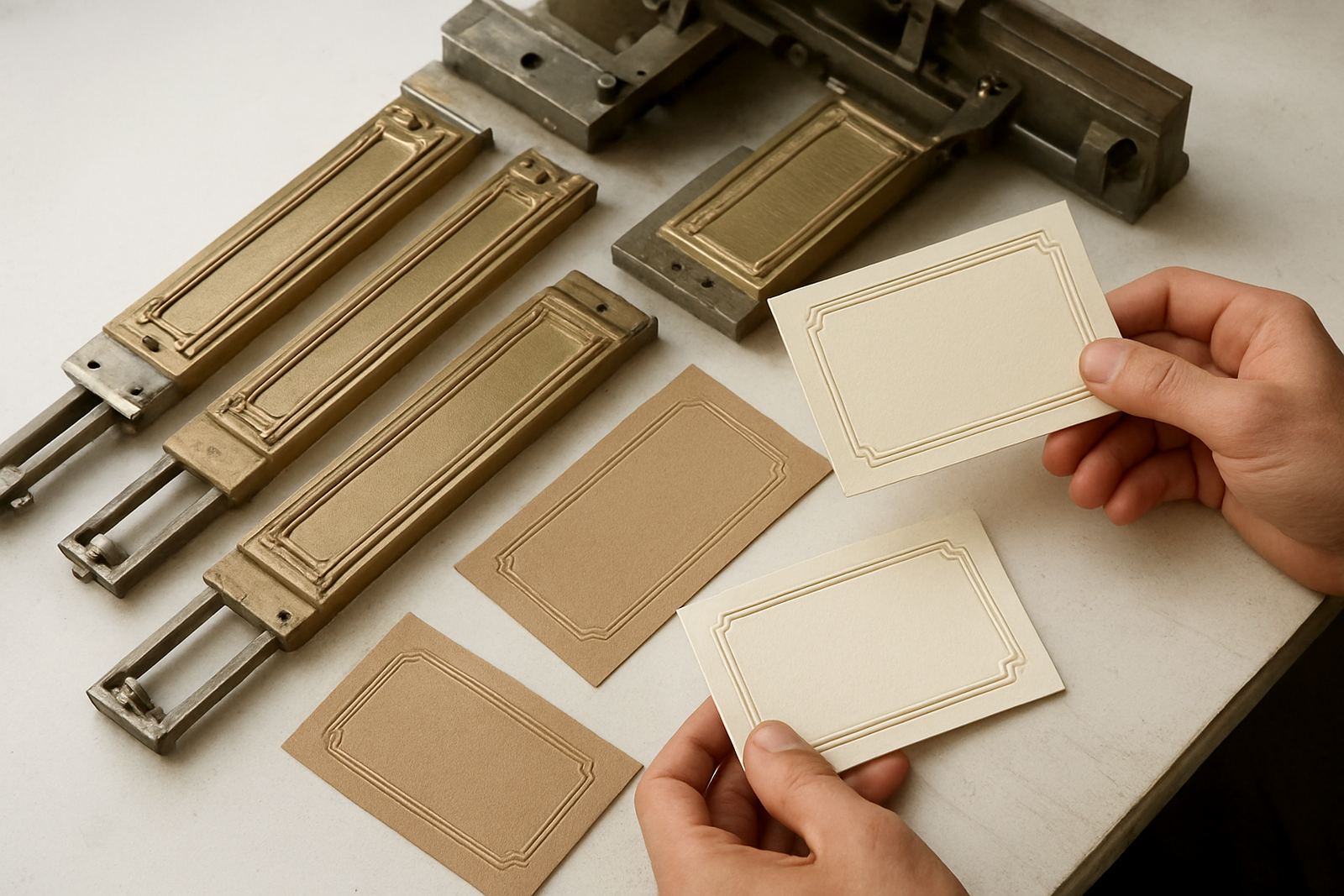
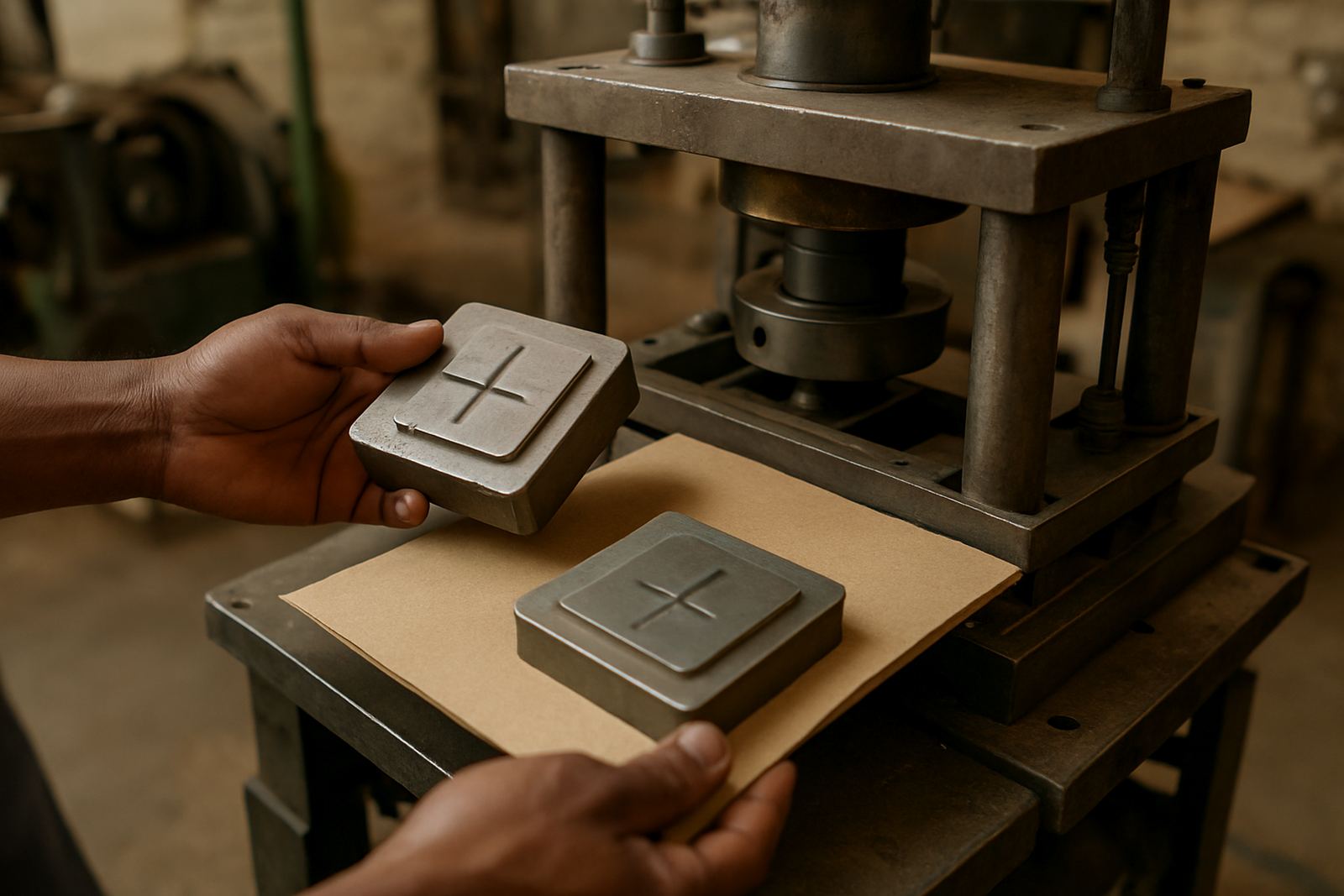
Counterforce tooling sits opposite the embossing or stamping face and helps spread pressure evenly during the strike. That gives you a cleaner raised or recessed finish, less crushing on the board, and better definition on fine detail such as borders, lettering and textured panels.
For print finishers, packaging houses and specialist label work, the main value is consistency. When the counterforce is matched correctly, the press does not overwork one area while another area stays under formed. This matters on heavy board, laminated stock, metallic substrates and jobs with tight registration.
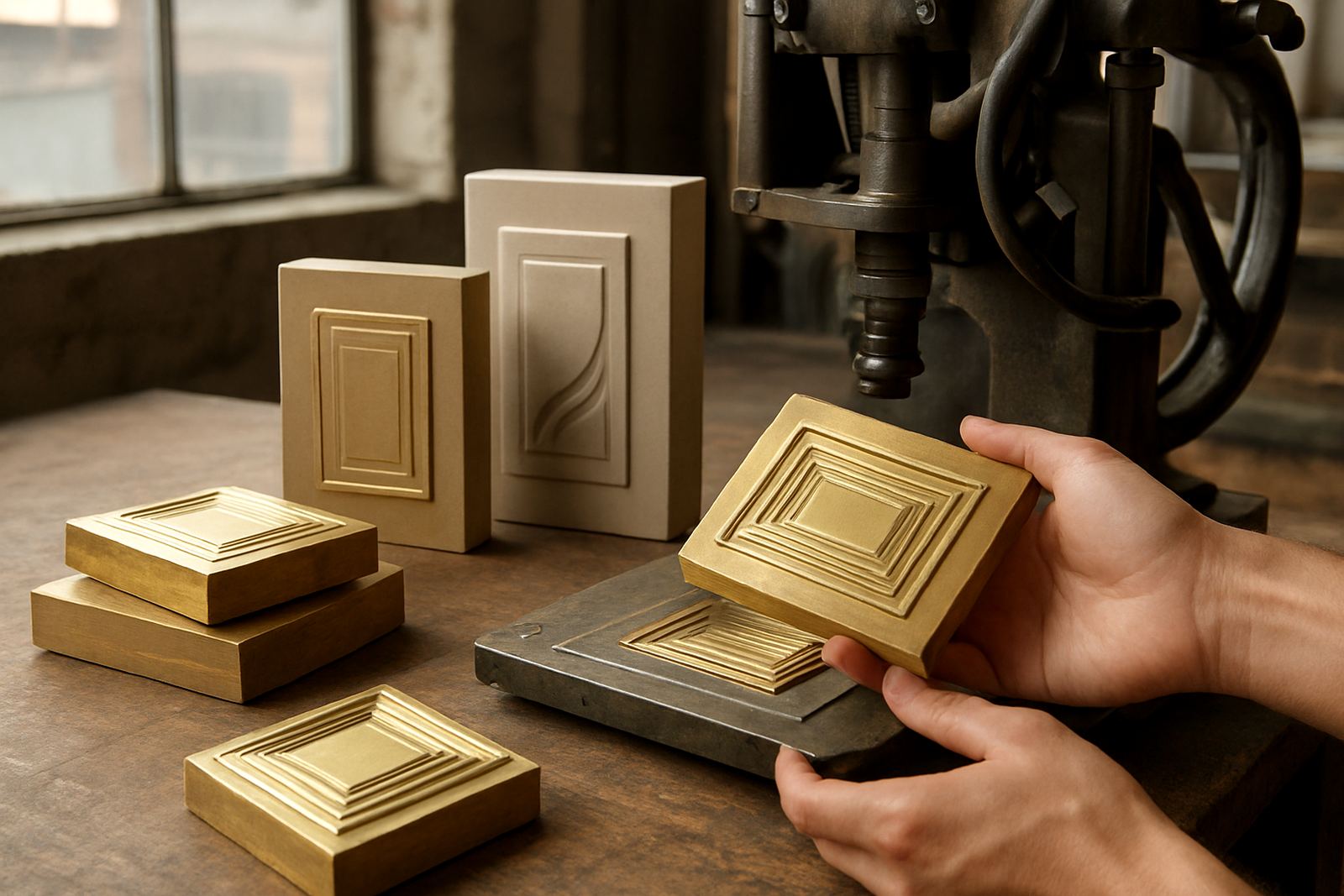
We produce counterforce dies for brass and magnesium tooling setups, depending on the application and expected run length. The right match depends on the embossing depth, the press bed, the paper or board grade, and whether the job is a simple blind emboss or paired with hot stamping.
Sizes, thicknesses and matching options
There is no single standard size for counterforce dies because the tooling must suit the job and the press. We cut to the artwork size, allowance for trimming and the machine size at your plant or finishing house. Smaller insert pieces work well for localised motifs, while full-sheet counterforce sets are better for larger packaging runs.
Typical options include flat counterforce plates, recessed matching areas and segmented sections for awkward shapes or oversized sheets. Thickness is selected to suit the impression depth and the board used. On heavier cartons or deep embossing jobs, the counterforce may need a firmer build to hold shape under repeated pressure.
- Small logo inserts for single-panel embossing
- Panel-sized counterforce for cartons and sleeves
- Full-sheet matching for large-format finishing
- Segmented layouts for irregular artwork or multi-panel work
- Options for brass face tooling and magnesium face tooling
Where counterforce tooling suits best
Counterforce dies are widely used in offset finishing, flexo finishing and packaging production where appearance and feel both matter. They suit premium cartons, presentation folders, labels, hang tags, stationery sets and any job where raised detail must feel crisp without marking the surrounding stock.
They are especially useful on coated board, folded cartons and short-run work where each impression has to be reliable. On some jobs the counterforce also helps keep the image stable when the press speed changes or when ambient humidity shifts during a Johannesburg winter morning or a damp coastal delivery week.
- Luxury packaging and cosmetic cartons
- Wine and spirits labels
- Presentation folders and branded sleeves
- Foil-stamped cards and stationery
- Embossed seals, monograms and fine line work
Installation, press fit and power needs
Counterforce tooling itself does not need power or gas. It is a mechanical component fitted to the press or matched to the embossing station, so the main requirement is correct setup on the machine. If the job uses a heated stamping process, that heat comes from the press system, not the counterforce plate.
Before installation, check that the press bed is clean, the packing is even and the chase or mounting area is aligned. A good fit saves time on make-ready and reduces the chance of patchy pressure. If the press operator sees signs of uneven bite, a sample impression should be checked before the run starts in full.
- No direct electricity or gas requirement for the counterforce plate
- Needs correct mounting and accurate registration
- Works best with clean press beds and level packing
- Sample pull recommended before full production
Care, cleaning and repeat use
Counterforce tooling lasts longer when it is kept clean and stored properly between jobs. Remove adhesive build-up, paper dust and residue after use, then inspect the surface for dents or pressure marks. If the tooling is stored while still warm or damp, corrosion and surface distortion can become a problem, especially in humid conditions.
For repeat jobs, keep the original job file and any approved sample impression. That makes repeat ordering quicker and helps us match the pressure profile more closely. If a plate has been dropped, bent or marked during packing, send it in for damage assessment before it goes back on press.
- Wipe down after each production run
- Store flat in a dry area away from moisture
- Keep job references and approved samples together
- Book die cleaning if residue has built up
- Check the plate before reuse after transport or long storage
What to send when ordering counterforce dies
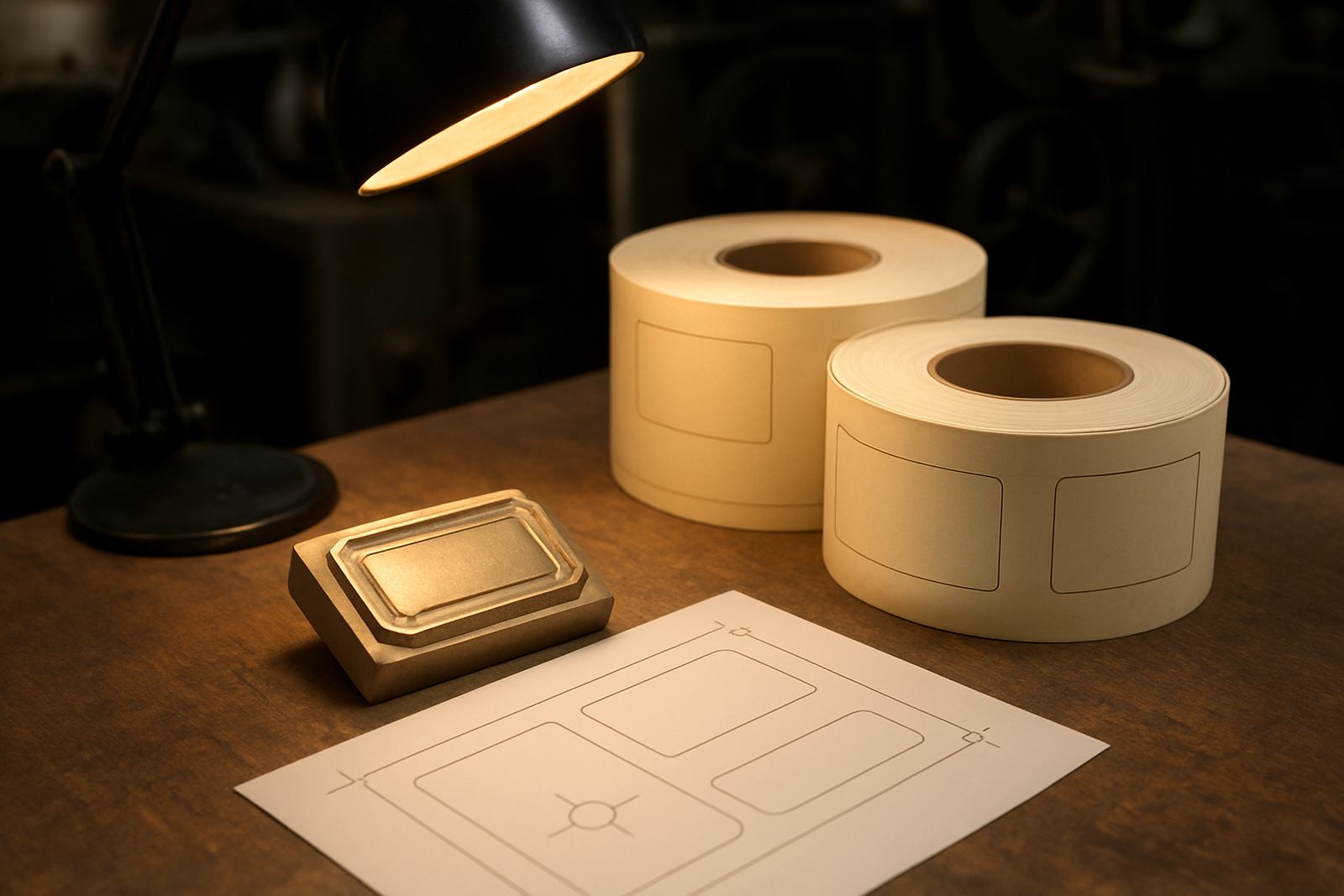
To quote and produce the correct counterforce, we need clear artwork, the finished size, the stock type and the press details. If the job is already running elsewhere, send the sample impression or a photo of the current result. That helps us see where the pressure is too light, too heavy, or uneven across the image.
Please also mention whether the job is for embossing only or paired with hot stamping, and whether the finished piece must fit into a carton, sleeve or folded component. On jobs with fine detail, please include the smallest line weight and any blind spots that must remain uncrushed. That detail saves time and avoids guesswork.
- Artwork in a clean, print-ready format
- Finished size and trim size
- Stock type, thickness and coating
- Press model or bed size if known
- Depth required and whether the job is blind emboss or foil plus emboss
- Sample impression, if there is one
Why printers choose matched counterforce from Industria
From our Industria base in Johannesburg, we supply matched tooling to print finishers and packaging houses across South Africa, including Pretoria, Durban, Cape Town, Gqeberha, Bloemfontein, Polokwane and Mbombela. The aim is simple: make the fit correct first time, then courier the job safely and on schedule.
Our team handles artwork checks, die design, engraving production, counterforce matching and packing dispatch under one roof. That means fewer handovers and better control over repeat work. If the job needs an urgent turnaround, we will say what is realistic and what details are still needed, so the press floor can keep moving without confusion.
For many clients, the value is not only the plate itself but the support around it. A precise counterforce can save stock, reduce spoilage and keep the finish looking the same from the first sheet to the last.
Key facts
| Material options | Brass or magnesium matched to the job |
|---|---|
| Typical use | Embossing counterforce for print finishing and packaging |
| Finish type | Flat, recessed or segmented matching |
| Artwork requirement | Clear print-ready file with finished size |
| Power or gas | Not required for the counterforce plate itself |
| Supply area | Couriered nationwide from Industria, Johannesburg |