What Debossing Dies Do for Print Finishing
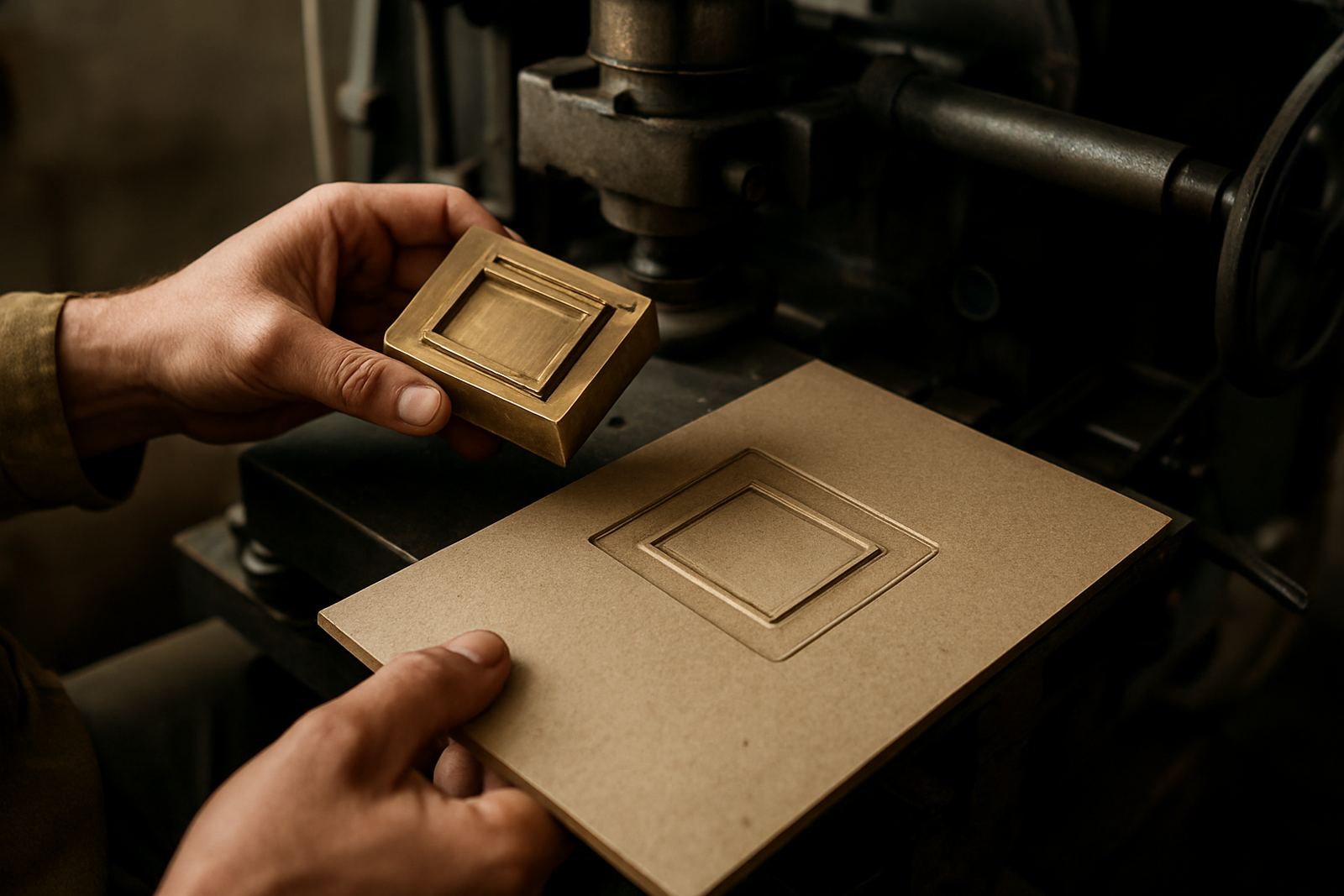
Debossing dies press a design into the surface of the stock to form a sunken image or pattern. The effect is subtle but very noticeable in hand, which makes it a good choice for brands that want a refined finish without heavy ink coverage or foil. On the right stock, a good deboss will give clear depth, neat edges and a consistent impression across the sheet.
We make dies for short runs, repeat jobs and production work in Johannesburg and for dispatch to print finishers nationwide. If you are working on packaging, presentation pieces or premium inserts, the tooling needs to match the paper thickness, the press setup and the final appearance you want. That is where proper artwork checking and counterforce matching matter.
Material Choices, Sizes and Finish Options
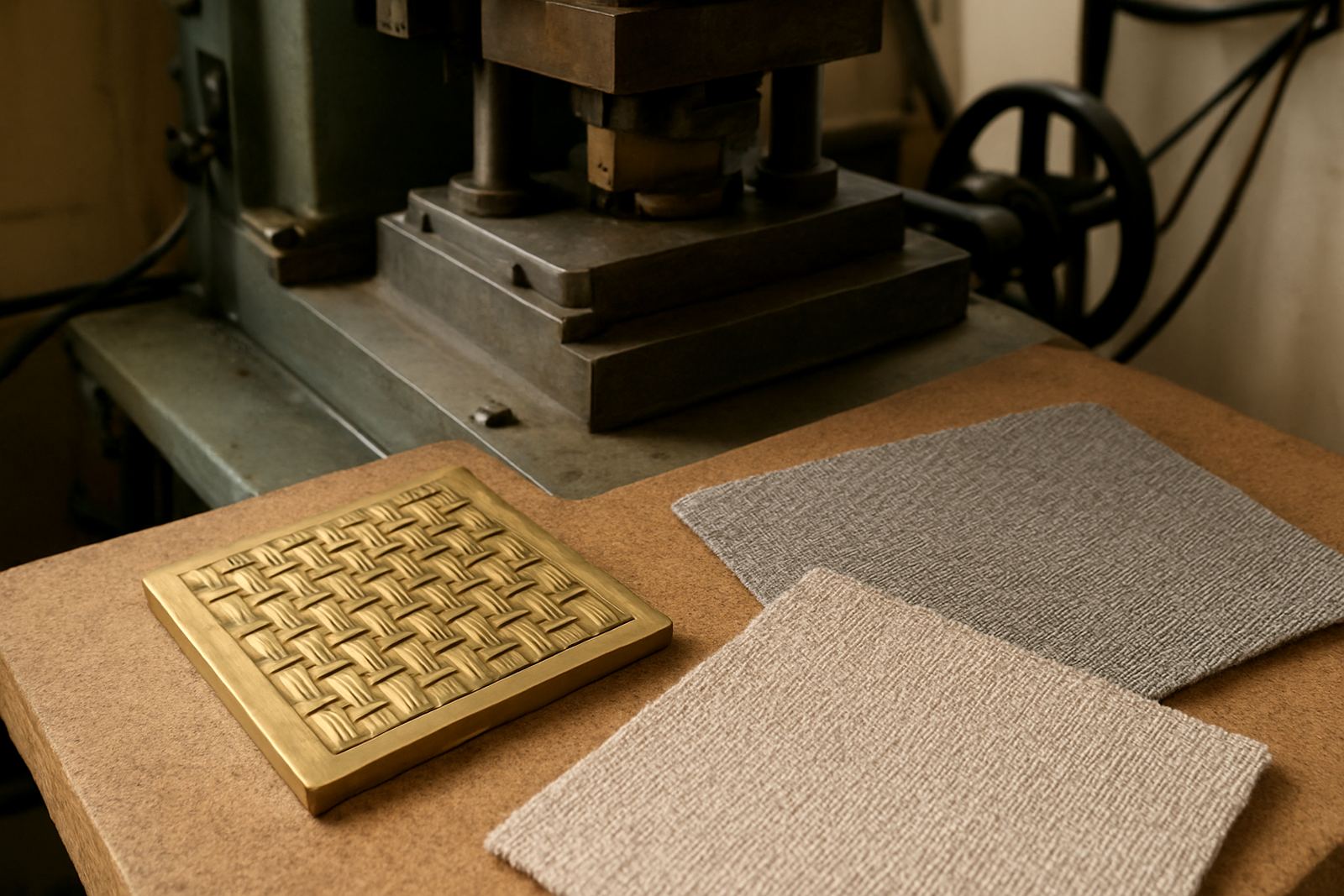
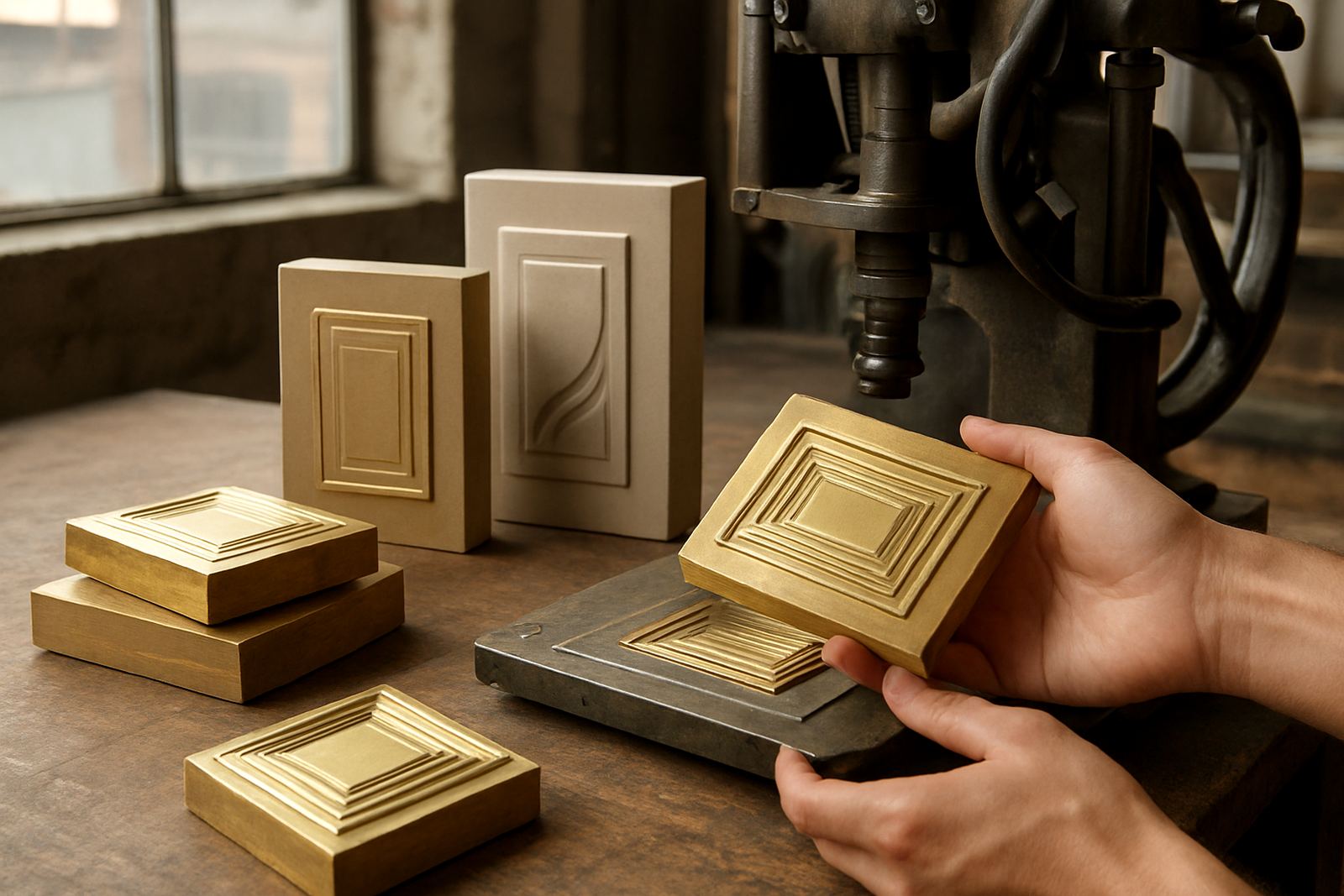
Debossing dies can be made in brass or magnesium depending on the job, the expected run length and the amount of detail in the artwork. Brass is commonly chosen for longer life and finer line work. Magnesium is often used where turnaround is important and the job volume is lighter. We also supply matching counterforce where required so the impression is even and the stock does not crush unevenly.
- Common face sizes: from small logo marks of about 20 x 20 mm up to large panel work above 300 x 400 mm
- Line detail: suitable for fine type, border work and textured fills when artwork is supplied clearly
- Depth control: tailored to the stock, with lighter impressions for soft papers and deeper work for rigid board
- Mounting format: supplied to suit the press and tooling method used by the finisher
- Repeat orders: job filing helps us match previous settings and keep the same look on reprints
If the job has closely spaced text or tiny line rules, we will check whether the detail can hold in a recessed finish before engraving starts. That saves time and reduces costly remakes.
Where Debossing Works Best
Debossing suits packaging and print work where the client wants a premium look without a gloss finish. It is often used on invitation cards, presentation folders, carton lids, labels, slip sheets and point of sale pieces. In Johannesburg, Pretoria and Durban, many packaging houses use debossing for limited edition sleeves and carton panels where touch quality is important.
It also works well on heavier uncoated stock, cotton based papers and some coated boards if the impression is planned correctly. For humid coastal conditions in places like Gqeberha and Durban, stock behaviour can change with moisture, so we check the paper choice and press conditions before production starts. If the material is too soft or too damp the result can lose definition, so proper storage matters too.
- Premium cartons and folding box panels
- Corporate stationery and presentation packs
- Luxury labels and tags
- Announcement cards and event print
- Brand marks on inserts, sleeves and wrap pieces
Press Setup, Installation and Power Requirements
Debossing dies are fitted to the equipment used by your finisher, whether the job is on an offset line, flexo line or a dedicated finishing press. The die must be seated correctly and aligned with the counterforce or backing material. If the setup is off by even a small amount, the impression can shift, crush the stock or leave a shadow around the image.
No gas supply is required for the die itself. Power needs depend on the press or finishing machine used by the printer or finisher. In South Africa, load-shedding means it is wise to plan urgent work early and allow time for machine warm-up, tooling checks and final impression setting once power is restored. For best results, the press should be clean, stable and properly calibrated before the job runs.
We can advise on sample impressions, die placement and whether your design needs alteration before it goes into production. If the artwork has reverse type, fine counters or a large solid area, those details can affect the pressure and make-ready time.
Care, Cleaning and Reorder Support
Debossing dies last longer when they are cleaned after use and stored flat in a dry area. Dust, adhesive residue and paper fibres can affect the next run, especially when the same job is repeated months later. If a die is damaged, nicked or showing wear, we can assess it and advise whether it needs cleaning, repair or full replacement.
For repeat ordering, keep the job reference, size and artwork version on file. This makes it easier to match the original die and reduce delays. We also offer job filing, die cleaning and die alterations where the design has changed slightly. That helps when packaging artwork is updated or when a client wants a smaller line thickness, different border or a new layout for the next batch.
- Wipe down after each run to remove fibres and residue
- Store in a dry place away from moisture and stacking pressure
- Check the face for dents before the next job
- Send clear notes if the artwork has changed since the last order
- Ask for sample impression advice if you are changing stock or press settings
What to Check Before You Order
Before ordering a debossing die, send clear artwork, the finished size and the stock specification. Tell us the paper weight, board thickness and whether the job is going to be printed, foiled or left plain. If the design includes a border, small lettering or multiple levels, mention that early so we can check whether the detail will hold in the final impression.
It also helps to confirm the number of impressions needed, the press type and the delivery destination. We courier dies to print finishers and packaging houses across South Africa, including Johannesburg, Pretoria, Durban, Cape Town, Bloemfontein, Polokwane and Mbombela. For tight deadlines, urgent turnaround can be arranged where production and dispatch capacity allow, but the artwork must be ready and approved. A small file issue now can cost a full day later, so it is worth checking before engraving begins.
If you are unsure about the right die format, our team can review the artwork and guide you on the best setup for your job.
Key facts
| Tool type | Debossing die for recessed print finishing |
|---|---|
| Material options | Brass or magnesium |
| Typical size range | Small logos to large panel work, from about 20 x 20 mm upward |
| Suitable substrates | Uncoated paper, selected coated board, carton stock and premium packaging papers |
| Production support | Artwork checks, die design, engraving, counterforce matching and repeat ordering |
| Dispatch area | Johannesburg base with courier delivery nationwide |