
What a menu cover die does on the job
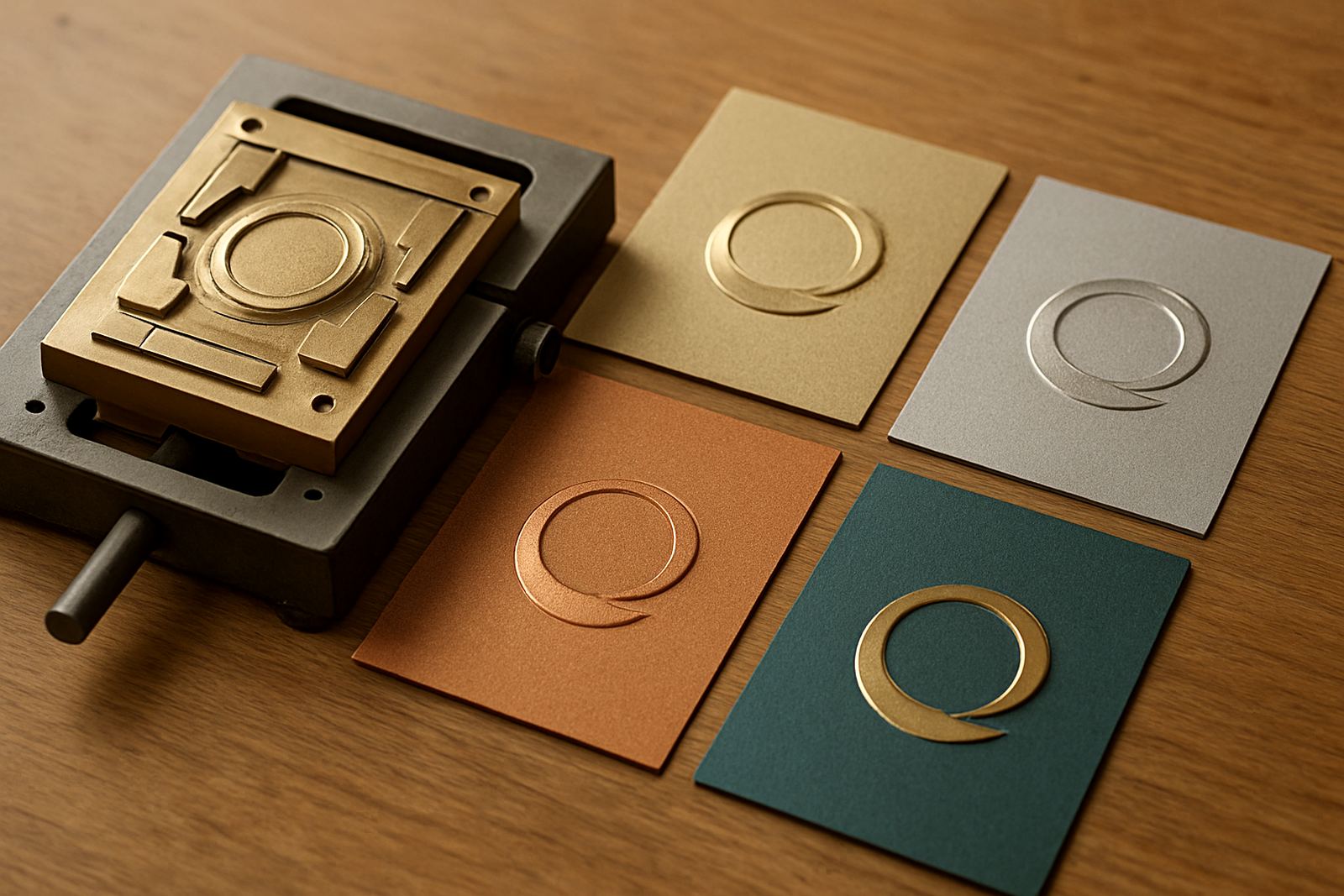
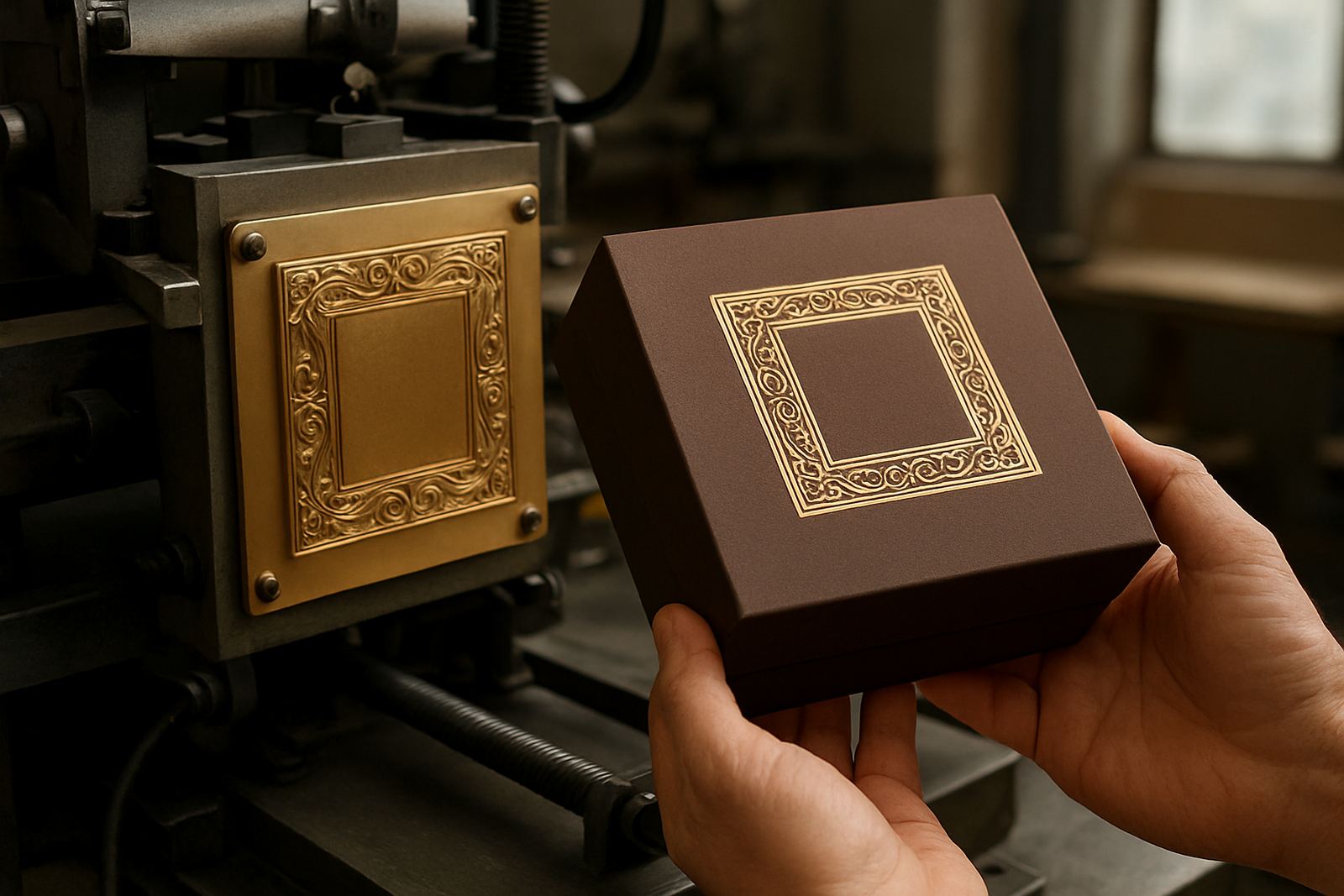
A menu cover die creates a pressed image or raised impression on a cover before the final fitting stage, usually for hotel dining books, wine lists, café menus, conference folders and event presentation covers. The die can be used for hot stamping, embossing, or a combination of both when the cover needs foil, blind detail or a deeper tactile mark. For busy hospitality work the result must be clean at the first run, because cover stock varies from soft PU to board wrapped in printed laminate and one bad mark means wasted material.
We produce dies in brass for longer runs and magnesium where lighter duty work, quicker turnaround or lower press pressure is needed. The right choice depends on the cover material, the press temperature, the depth of impression required and how often the same design will be repeated. For restaurant groups and hotels with many locations, it helps to standardise the die file so reorders stay consistent across branches.
Sizes, materials and finish choices
Menu cover dies are usually sized to suit the visible panel, the logo position and the clear space needed around text. Common working sizes range from small crest marks around 40 x 40 mm to larger cover panels up to 300 x 200 mm, although custom sizes are made to match the artwork. We can also produce multiple-up plates for repeated motifs, corner devices and border work when the cover design has several elements.
- Brass dies: best for detailed artwork, deeper engraving and longer production runs.
- Magnesium dies: lighter, quicker to machine and suitable for shorter repeat jobs.
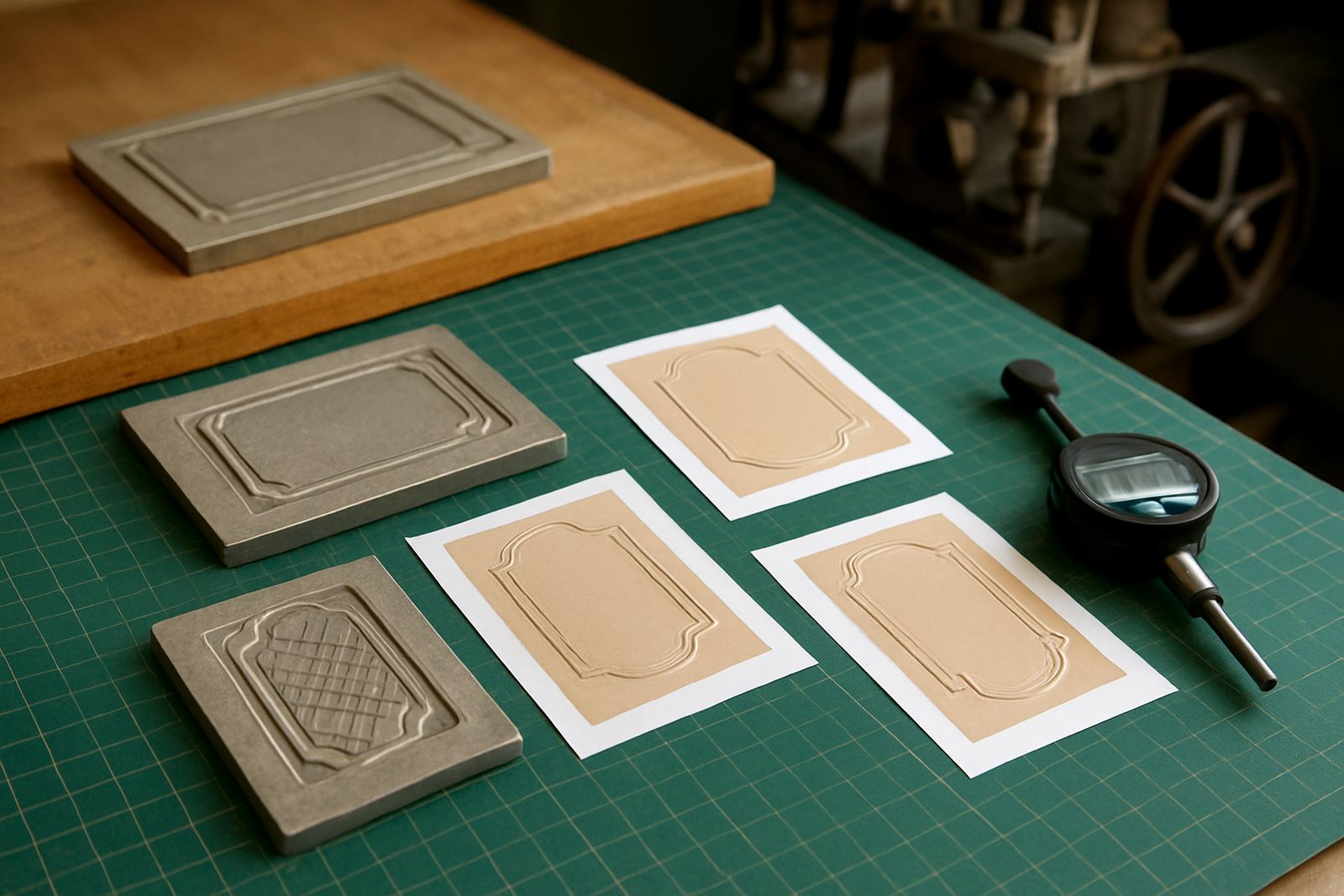
- Embossing plates: used where a raised image or paired male and female impression is needed.
- Counterforce matching: important for thicker covers and layered material so the press pressure stays even.
Fine serif text, small logos and line borders need careful prepress checking. If the artwork is too thin or too close to the edge, the mark can break up after a few uses. We check line weight, open counters, bleed and the final press area before engraving starts.
Where menu cover dies suit best
These dies are used by print finishers, binders, hospitality suppliers and packaging houses that make covers for restaurants, lodges, hotels, conferences and weddings. In Johannesburg and Pretoria they are often used for corporate boardroom folders and high-end menu sets, while coastal clients in Durban, Cape Town and Gqeberha often need materials that cope better with humidity and handling. In Polokwane, Mbombela and Bloemfontein the same die may be used for many branches, so repeat accuracy is important.
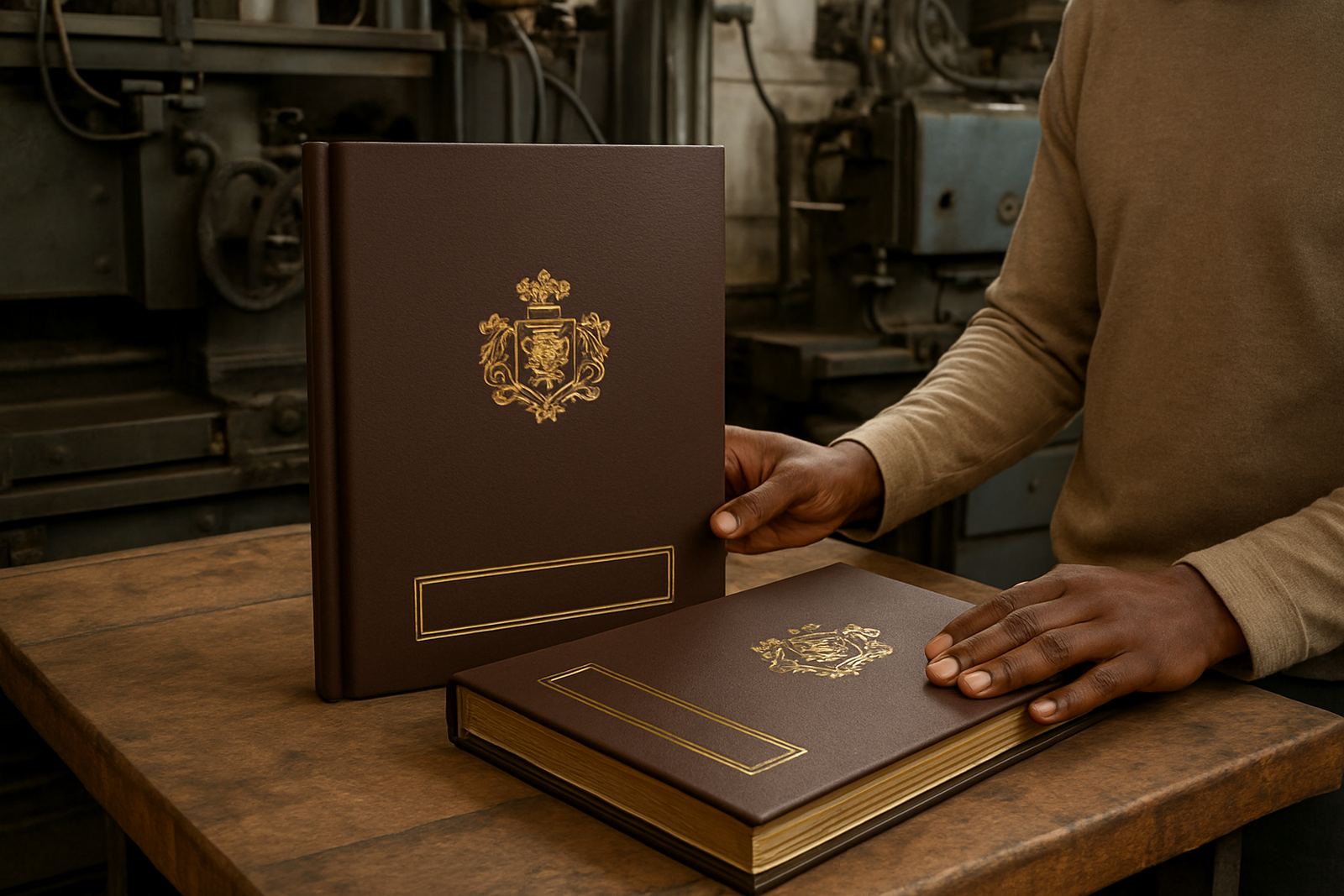
Menu cover dies suit covers that need a neat branded front without bulky add-ons. They are useful where the client wants a smart, washable surface with a long service life. If the menu is handled many times a day, the die must keep its edges sharp and the impression must not flatten too quickly. For that reason we often recommend brass when the same design will be used season after season.
- Restaurant menus and wine lists
- Hotel room service folders and dining books
- Event and conference presentation covers
- Catering portfolios and price list covers
- Leather look, wrapped board and coated menu covers
Press setup, power and fitting requirements
Menu cover dies are fitted to hot foiling or embossing equipment, and the setup depends on the press type, the heating method and the stock thickness. Most machines need stable power supply and enough warm-up time to reach working temperature, especially during load-shedding when production restarts after an outage. If the press is running in a busy finishing room, keep the die area clean and make sure the platen or bed is level before starting the first impression.
Power and gas requirements vary by machine. Some units use electric heating only, while others use a gas assisted heating system or a separate heated chase. We always advise clients to confirm the machine size, the chase dimensions and the fixing method before ordering. For manual presses, the die must fit the bed format properly. For automatic or semi-automatic equipment, the mounting holes and plate thickness need to match the press specification, otherwise the job can drift or pick up uneven pressure.
Where the menu cover stock has a soft surface, such as padded or wrapped material, the operator may need a matched counterforce plate to prevent over-crushing. That is especially useful on thicker hotel covers and premium event folders. A good setup saves time and reduces spoilage, which matters when the job is due for a function or launch the next day.
Care, cleaning and repeat use
With normal care, a well-made menu cover die can give many clean runs. After each production, let the die cool fully before handling it. Wipe off foil residue, dust and adhesive build-up with a soft lint-free cloth, and store the die flat in a dry place. In coastal cities, humidity can affect storage cabinets and mounting blocks, so keep dies away from damp floors and open windows where possible.
If the cover material changes or the artwork is being reused after a long gap, ask for a sample impression check before full production. Small changes in foil grade, press temperature or pressure can change the result. We also handle die cleaning, damage assessment and die alterations when a logo needs a minor update or a date line must be removed. Regular servicing keeps the image crisp and avoids rough edges on the next run. It is worth filing each job properly so the repeat order is easy to trace later.
What to send when ordering a menu cover die
Clear job information helps us get the die right the first time. When you send an enquiry through the contact form, include the final artwork and the practical details that affect production. If you are not sure about the press or cover stock, tell us what the finisher is using and we can advise on the safest build.
- Final logo, text and layout in a print-ready file
- Finished size of the menu cover or visible panel
- Material type, for example board, wrapped cover or leather look stock
- Whether you need hot stamping, embossing or both
- Required turnaround, including any urgent delivery date
- Any previous die reference for repeat ordering
It also helps to mention whether the menus are for indoor daily use, occasional events or high-humidity locations near the coast. That tells us whether brass, magnesium or an altered existing die is the better option. We courier finished dies nationwide from Industria, Johannesburg to print finishers and packaging houses in every major centre.
Key facts
| Material options | Brass or magnesium |
|---|---|
| Typical size range | From about 40 x 40 mm up to 300 x 200 mm, custom sizes available |
| Use cases | Restaurant menus, hotel folders, wine lists, event covers |
| Compatibility | Hot foiling, embossing and matched counterforce work |
| Supply area | Johannesburg, Pretoria, Durban, Cape Town and nationwide courier delivery |
| Support | Artwork checks, die design, engraving, repeat ordering and alterations |