
What Spine Blocking Dies Do on a Finished Spine
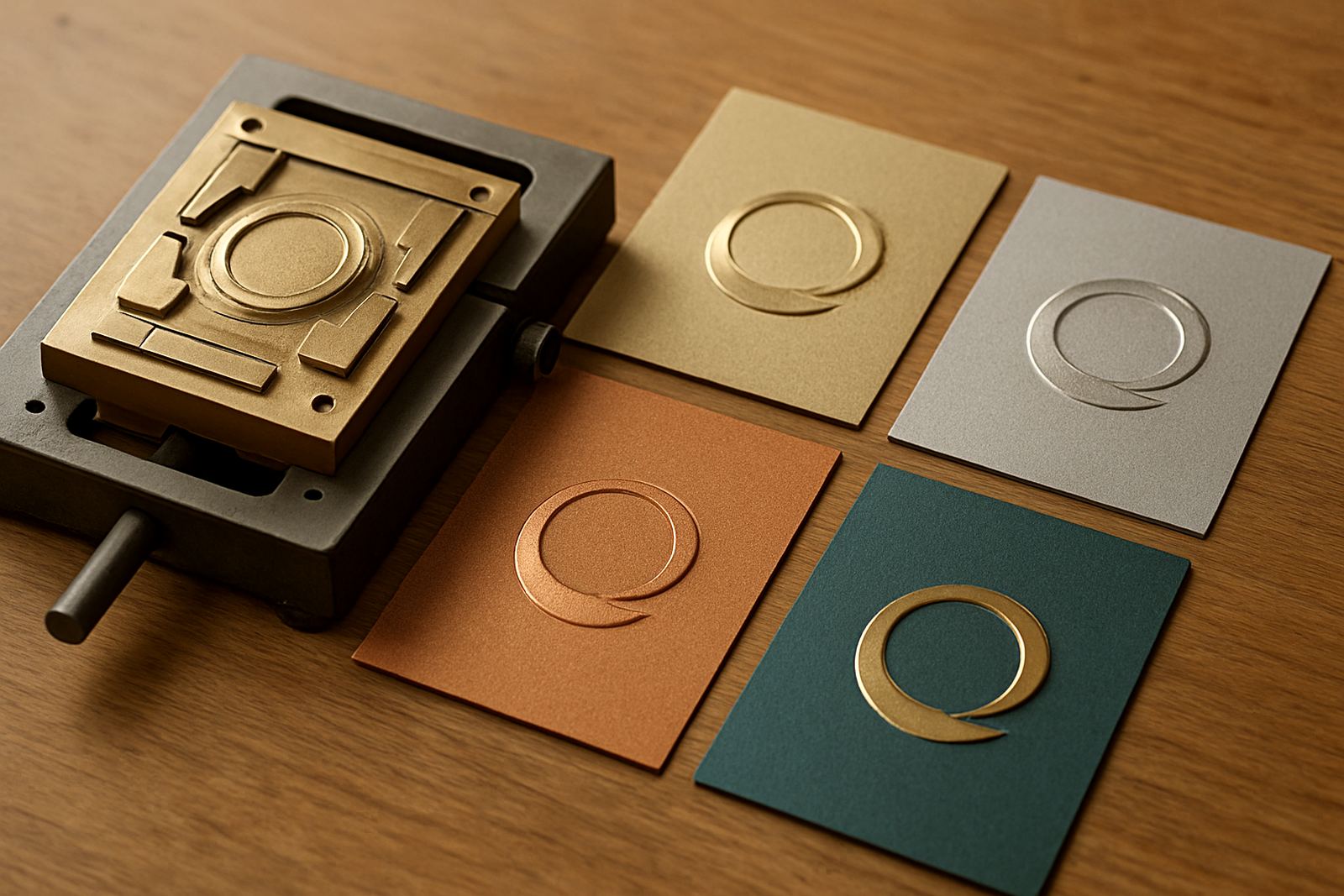
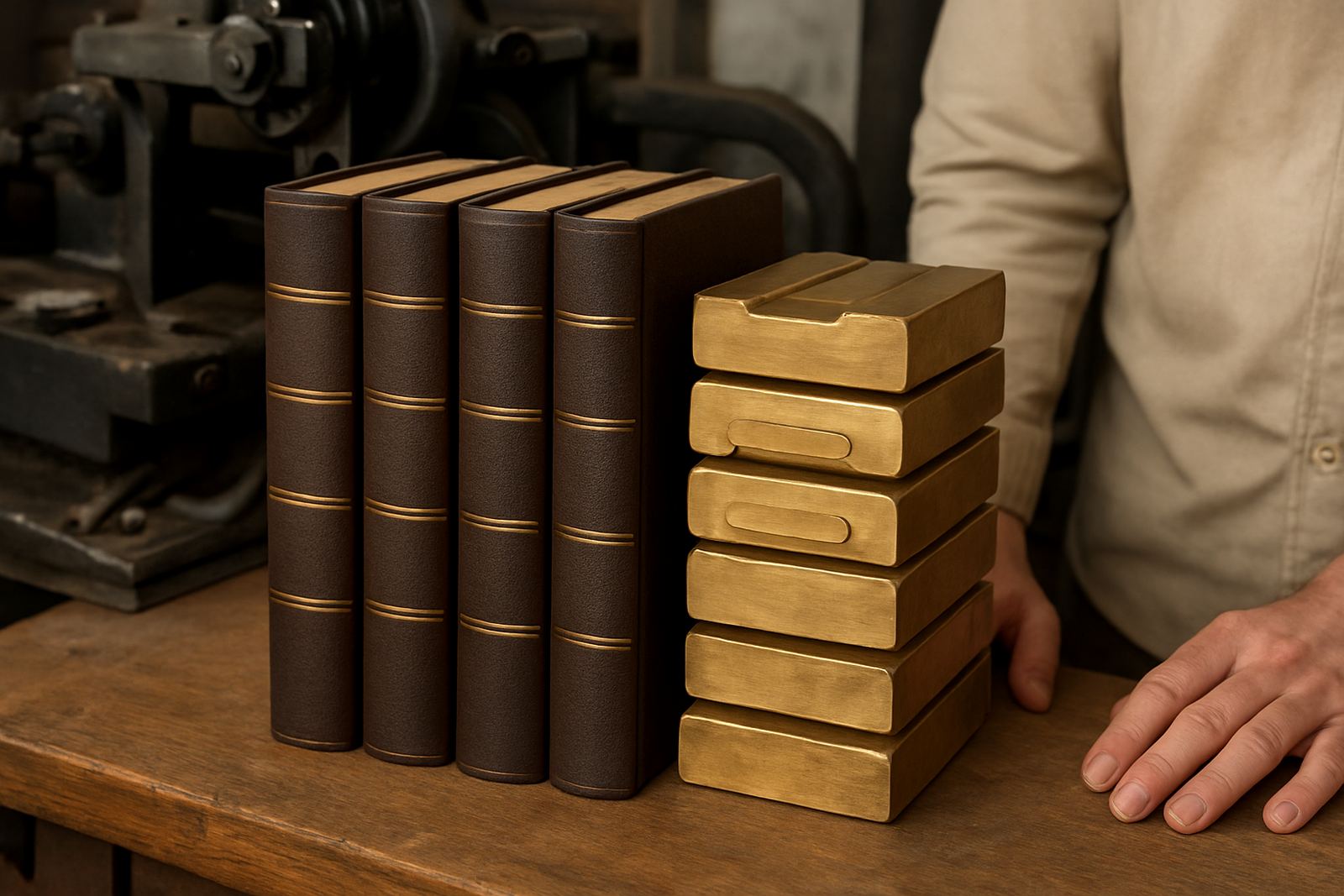
Spine blocking dies are slim hot-stamping tools used to apply foil, heat and pressure to the spine area of books, file covers, presentation covers and similar products. The working face is cut to suit the artwork, so you get a sharp mark along the spine without spreading onto the boards or cover stock. For printers and finishers handling short runs or repeated batches, that consistency matters because spine work is one of the first places where alignment shows.
These dies are commonly used for titles, logos, class names, filing labels and small decorative marks. They can be made for simple single-line blocking or more detailed lettering, depending on the available spine width and the finish you want. On narrow spines, the die has to be accurate to the millimetre, otherwise foil can crowd the folds or miss the centre line. We keep the process practical and straight to the point so the finished die matches the actual job on press, not just the artwork on paper.
Brass or Magnesium for the Job at Hand
We supply spine blocking dies in brass and magnesium, each suited to different production needs. Brass is the better choice for heavier use, higher heat and more detailed line work. It is often selected for jobs that come back month after month, or where the die will be running on thicker cover materials and longer press cycles. Magnesium is lighter and is well suited to shorter runs, fast turnaround work and applications where cost needs to be kept tight.
When we quote a spine die, we look at the stock, the press method and the expected repeat order pattern. If the job is for a bindery in Johannesburg, a packaging house in Durban or a finisher in Cape Town, the same artwork may need a different material choice because machine set-up and run length are not the same. For most spine work, the main decision is whether you need maximum life and detail, or a lighter die for quicker use and lower handling weight.
- Brass for longer life, finer detail and regular re-use
- Magnesium for lighter handling and shorter production runs
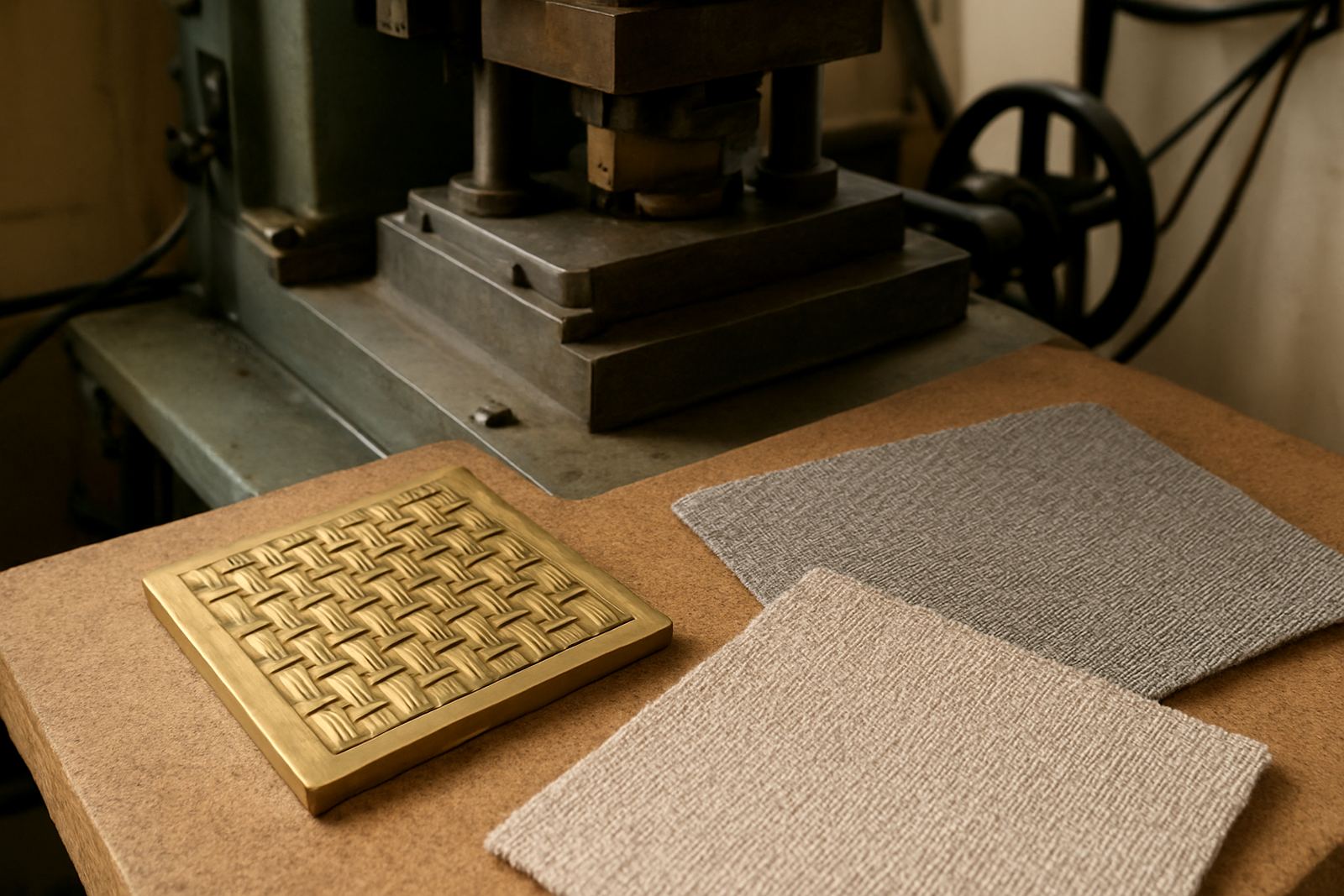
- Suitable for foil blocking, heat impression and embossing support
- Can be made for straight spine text, logos and small markings
Sizes, Spine Widths and Artwork Limits
Spine blocking dies are made to fit the actual spine width of the finished item. That means the working face is sized from the visible spine area, not from an estimated cover size. For books, file covers and ring binder spines, the usable width can vary once board thickness, paper wrap and hinge allowances are added. If the artwork is too wide, it will creep onto the shoulder. If it is too small, the title can look off-centre.
Common widths for spine work range from around 10 mm for narrow labels up to 60 mm or more for wider presentation items, depending on the structure. Length can run from short name marks to full spine titles of 200 mm or longer. Fine lettering must still be readable after heat transfer, so we always advise on minimum stroke weight and character height. As a practical rule, small serif text and very thin lines are harder to hold on narrow spines, especially when the substrate has texture or slight warp. A quick artwork check saves time later and avoids a re-cut.
- Minimum size depends on the press and foil detail required
- Best results come from clean vector artwork and measured spine widths
- We can work from supplied artwork or checked artwork files
- Counterforce matching is available where the job needs cleaner pressure balance
Where Spine Blocking Dies Suit Best
These dies suit book finishing, file manufacturing, stationery, presentation packaging and trade finishing work where the spine is the main branding point. They are used on hard cover books, soft cover presentation sets, archival files, lever arch style products, sample books and branded binders. In municipal and corporate work, spine blocking is often the cleanest way to keep titles visible when products are shelved upright.
They are also useful for clients who need repeat ordering over the year. Schools, printers, publishers and corporate stationery houses often reorder the same spine title with a new date or file code. We keep job filing in order so repeat work can be matched to the original spec without starting from scratch each time. That makes it easier to keep colour, size and placement consistent across different batches, even when the schedule is tight.
- Book spines and printed case wraps
- File covers and archival products
- Presentation folders and branded sets
- Short-run packaging and sample products
Installation, Heat, Pressure and Press Compatibility
Spine blocking dies are fitted to the hot stamping or foil blocking press being used on site. Installation is usually straightforward, but the press must be able to hold the die evenly across the spine area. Good pressure balance matters because the spine is narrow and slight misalignment can show immediately. On manual and semi-automatic equipment, the operator should test impression depth on offcuts before running the full job.
Power and gas needs depend on the machine, not the die alone. Most foil blocking presses use electric heating, while some production setups may use heated platens with additional air or pneumatic assistance. The die itself does not need gas, but the press should have stable temperature control and enough dwell time for the foil or embossing action. In areas with load-shedding, printers often ask for better planning on machine warm-up and job staging so there is less downtime. If your shop runs in a coastal area like Durban, moisture control also helps because damp stock can affect foil release and finish.
We can advise on sample impression checks before dispatch, so your team has a clearer idea of pressure, heat and foil behaviour before the full run starts. For new operators, that advice is often as important as the die itself.
Care, Cleaning and Servicing Between Runs
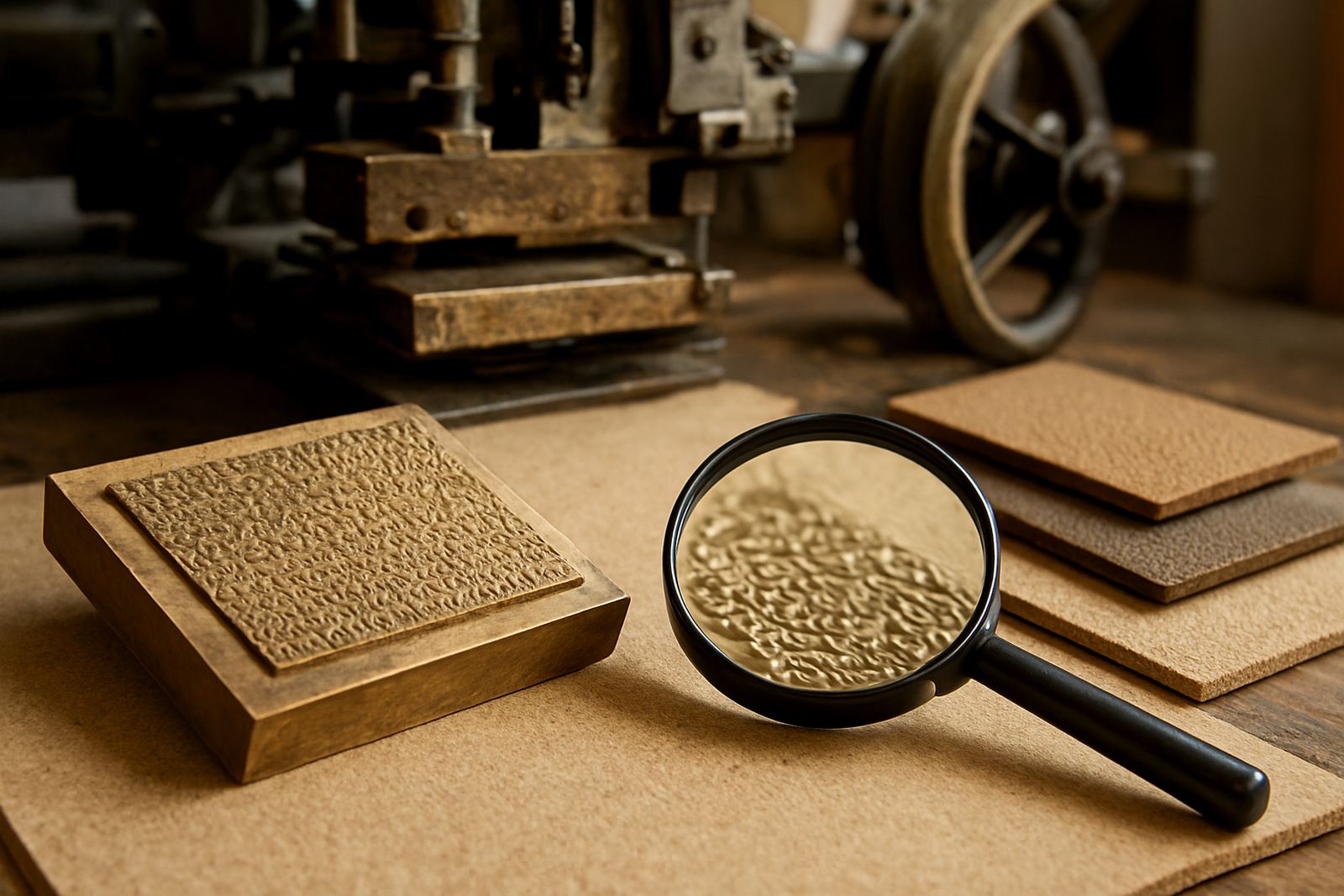
Die care is simple but important. After use, the die should be allowed to cool properly before cleaning. Foil residue, adhesive build-up and paper dust can all affect the next impression if left on the face. A soft cloth and suitable cleaning method will help keep the detail sharp. Do not scrape the working face with hard tools because that can damage the raised image or fine edges. If the die has been in storage for a while, check for oxidation, surface marks and any loose mounting points before use.
We offer die cleaning, damage assessment and die alterations for customers who need a die brought back into service. This is useful when a title changes slightly, when the layout needs a new file reference, or when a previously used die has picked up wear from long production runs. Stored well, brass and magnesium dies can last a long time, but they still need the right handling. Keep them dry, flat and clearly labelled. A bit of care now saves time later, especially when a rush job comes in and the correct die has to be found quickly.
What to Check Before You Order Your Spine Blocking Die
Before placing an order, confirm the exact spine width, the finished trim size, the text orientation and whether the job is for foil blocking only or also embossing. It helps to know the stock type, whether the spine is flat or rounded, and if the cover has a hinge or groove that changes the print area. If the spine will be foil blocked after binding, we need the finished dimensions, not the flat artwork size from prepress alone.
Useful order details include the quantity expected, the press type, the turnaround needed and whether you want the die packed for courier dispatch. We courier dies nationwide from Industria in Johannesburg to print finishers and packaging houses in Pretoria, Durban, Cape Town, Gqeberha, Bloemfontein, Polokwane and Mbombela. If there is a repeat order, share the previous job reference so we can match it properly. That small step avoids confusion and helps keep the next run on spec, on time and ready for production.
- Exact spine width and finished size
- Text, logo or mark to be blocked
- Material choice: brass or magnesium
- Press type, foil type and turnaround required
- Any artwork changes, file updates or repeat job reference
Key facts
| Material options | Brass or magnesium |
|---|---|
| Typical use | Foil blocking and embossing on book and file spines |
| Working width | From narrow labels to wider spine titles, job dependent |
| Finish | Cleanly engraved raised image for sharp foil transfer |
| Dispatch | Couriered nationwide from Industria, Johannesburg |
| Support | Artwork checks, counterforce matching, alterations and repeat ordering |