
Why a precision die needs more than a box
Brass and magnesium hot-stamping dies are not general freight. They have machined edges, fine line work, mounting faces and alignment points that must stay true from the moment they leave our workshop in Industria until they reach your press room. A small knock in transit can chip an edge, bruise a surface, or distort a plate enough to affect registration and foil laydown.
That is why courier packing is part of the job, not an afterthought. We treat every die as a working tool, not a loose metal item. The aim is simple: keep pressure faces protected, stop movement inside the carton, and make sure the parcel can handle stacking, vibration and the rough handling that sometimes happens between Johannesburg, Durban, Cape Town and the smaller routes in between.
South African courier networks move parcels through depots, trucks, sorting belts and handovers. A die may be fine for the first kilometre and then take a knock at a sorting point or during final delivery. Good packign absorbs that risk before it reaches your floor.
What proper packing looks like for hot-stamping dies
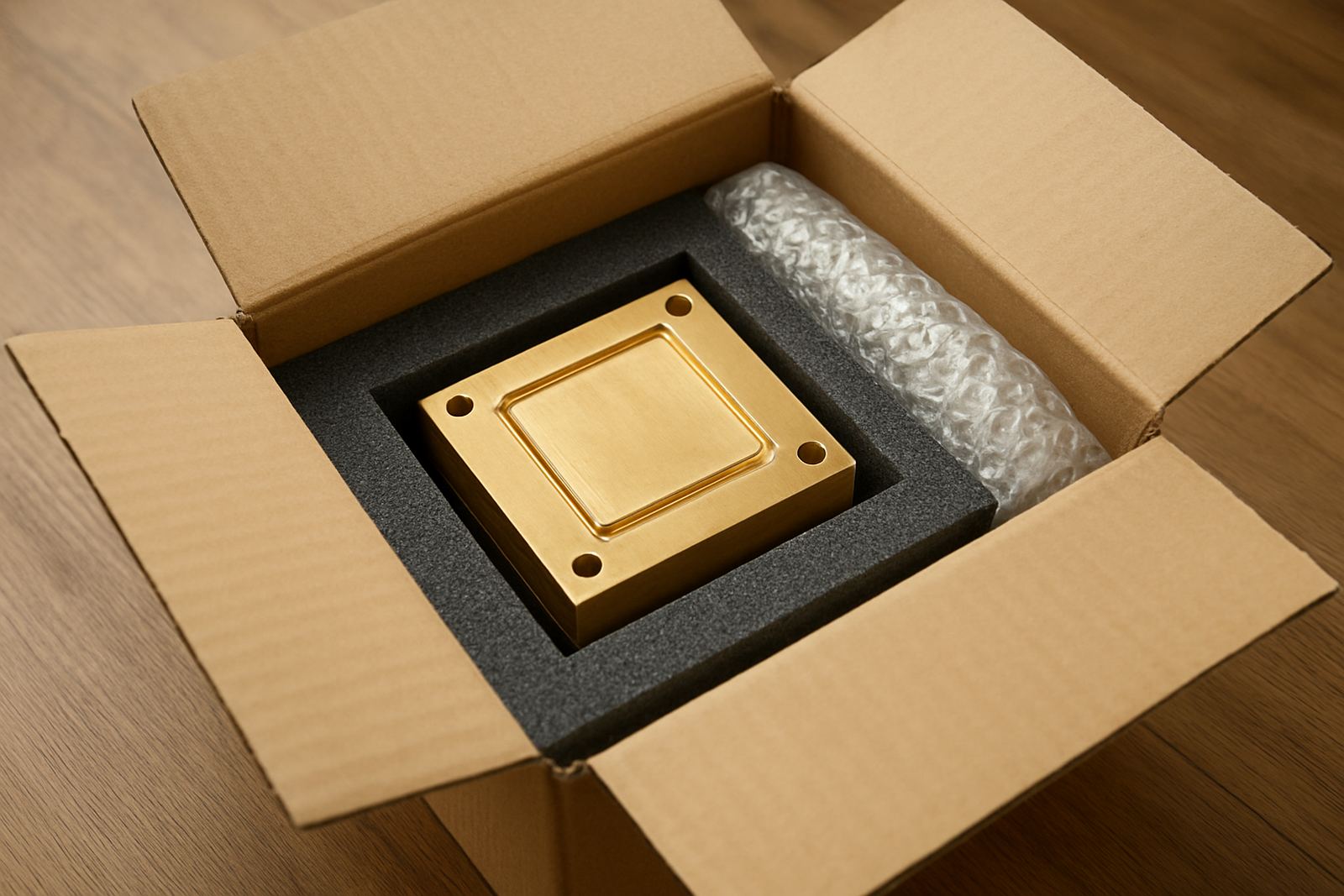
The right packing method depends on the die size, weight, shape and urgency. A small embossing plate does not need the same carton build as a large brass die for a packaging run, but both need stable support and clear handling instructions. We use practical packaging steps that suit the work and the route.
- Each die is wrapped to protect the working face from abrasion and dust.
- Edges are cushioned so they do not strike the carton wall.
- Void space is filled so the item cannot slide during transport.
- Boxes are sealed properly and marked for careful handling.
- Larger or heavier items are packed to prevent corner crush and base sag.
Moisture matters too. In coastal areas such as Durban and Gqeberha, humidity can affect exposed metal if it is left unprotected. In Gauteng, dust and dry air can still cause grime and fine debris to settle on the working surface. A clean, sealed parcel helps keep the die ready for use when it arrives.
How packing protects your turnaround time
When a die arrives damaged, the delay is usually bigger than the repair. Your press schedule changes, cartons wait, and another courier round may be needed. That is where the real cost shows up. Proper packing reduces the chance of avoidable damage and helps you keep to promised production dates, especially when a job is tied to a launch, a reprint or a seasonal packaging window.
For urgent turnaround work, packing must also support speed. A well packed parcel is easier to hand over to a courier, easier to book, and less likely to be delayed by claims or repacking. It also helps the receiving team at the print finisher or packaging house know exactly what they are opening and where it should go. Less confusion means less downtime.
For repeat ordering and die alterations, good packing makes the next step smoother. When a job comes back for cleaning, adjustment or a matching counterforce, the part can be moved safely and identified without unnecessary handling.
Local route example: Industria to Durban and the coast
Take a brass die leaving our Johannesburg base in Industria for a packaging house in Durban. The parcel may leave on a hot afternoon, spend the night in a depot, then move through humid air near the coast before final delivery. If the die is loose in its carton, the metal can shift, rub and take impact at each step. If the packing is tight, clean and stable, the risk drops sharply.
This matters on routes to Pretoria too, where same-day movement can still include several handlings, and on longer routes to Bloemfontein, Polokwane or Mbombela where road vibration becomes part of the journey. A precise die must arrive ready for the press, not needing a last-minute clean-up or straightening before use.
We also see this with jobs going to Cape Town and Gqeberha where sea air can be hard on exposed metal if the parcel is not properly sealed. Good courier packing keeps the working face in better condition and helps the receiving team get straight to setup.
Information that should travel with the parcel
Packing is not only about padding. It is also about clear identification. When a parcel reaches a busy receiving bay, the team must be able to link it to the correct job, artwork and production stage without phoning around. That is especially useful where a client has several jobs in motion at once.
- Job name or reference number on the outer pack
- Die type, such as brass, magnesium or embossing plate
- Any fitting notes, orientation marks or counterforce details
- Special handling notes for urgent turnaround or fragile edges
- Receipt and filing details for repeat ordering or alterations
Clear labelling saves time at both ends. It reduces misrouting and helps the receiving team match the item to the right press, operator or finishing line. It also supports proper job filing for future reorders, which is useful when a client needs the same format again months later.
The small checks that prevent big problems
Before dispatch, we look at the condition of the die itself and the state of the pack. If there is any sign of damage, the item needs attention before it goes out. If the artwork has changed, the job file must be updated so the next version is not confused with the last one. If a sample impression has already been approved, that note should move with the job record.
We also advise clients to open the parcel carefully and keep the packaging until the die has been checked on the bench. If there is a courier claim, the box and internal protection can be important evidence. More importantly, the outer pack often shows whether the item had a hard trip or not.
For businesses working around load-shedding, the goal is to avoid extra delays at the point of use. A damaged die means a lost setup window, while a well packed one can be lifted straight into production. That is why packing is part of quality control, not just shipping.