
Why the same die lasts longer on one job than another
Two jobs can use the same size die and still give very different life spans. A brass die on coated carton for premium packaging will usually hold detail longer than a die pushed hard into rough board, textured paper or a heavy laminate. The face of the material, the depth of the image and the heat used all affect wear.
In practice, die life starts with the job spec. If the artwork has fine serif text, close line spacing or narrow reverses, the die has less room for error. When the press operator has to increase pressure to chase a weak impression, wear rises fast and the die can start to round off at the edges.
- Smoother substrates usually protect detail better than rough or fibrous stock.
- Deep relief and very fine linework both increase the stress on the die face.
- Overheating can harden transfer film residue and shorten usable life.
Brass and magnesium behave differently on press
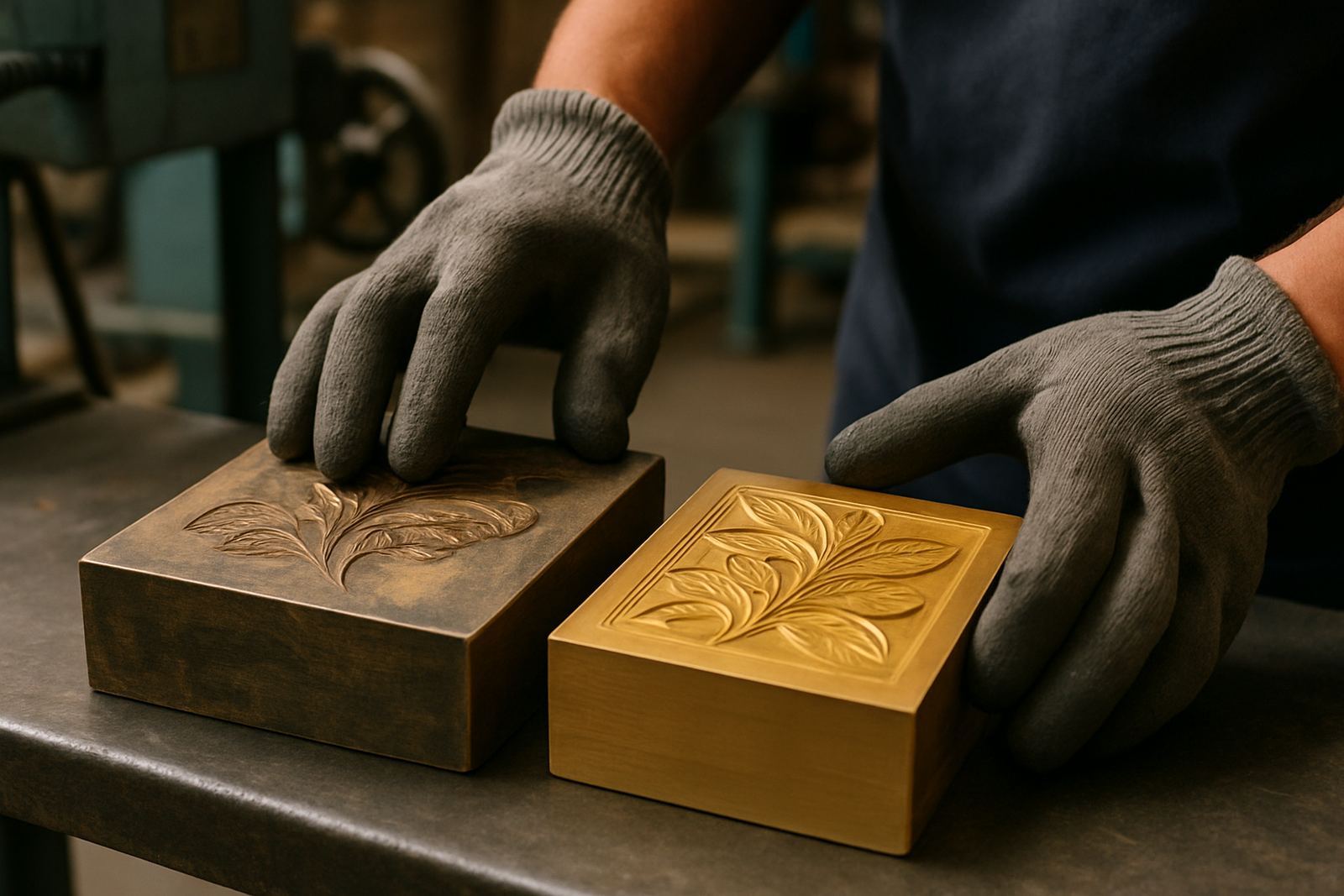
Brass dies are usually chosen for longer runs, higher detail and repeated use. They hold sharp edges well and suit work where the same image must return again and again, for example carton lines, labels and packaging with consistent branding. Magnesium is lighter and often more cost-effective for shorter runs or simpler work, but it is less forgiving if the setup is rough.
The choice is not only about cost. It is also about how many impressions the finisher needs and how carefully the die will be stored between jobs. If a magazine of dies is handled badly, or if the face is knocked during packing, even a strong die can lose accuracy. A small dent near a logo can change the result on every sheet.
- Use brass where repeat orders, longer runs or tighter detail are expected.
- Use magnesium where the run is shorter and the design is less demanding.
- Keep dies flat and protected so edges do not get bruised in transit.
Pressure, heat and counterforce: the three settings that matter most
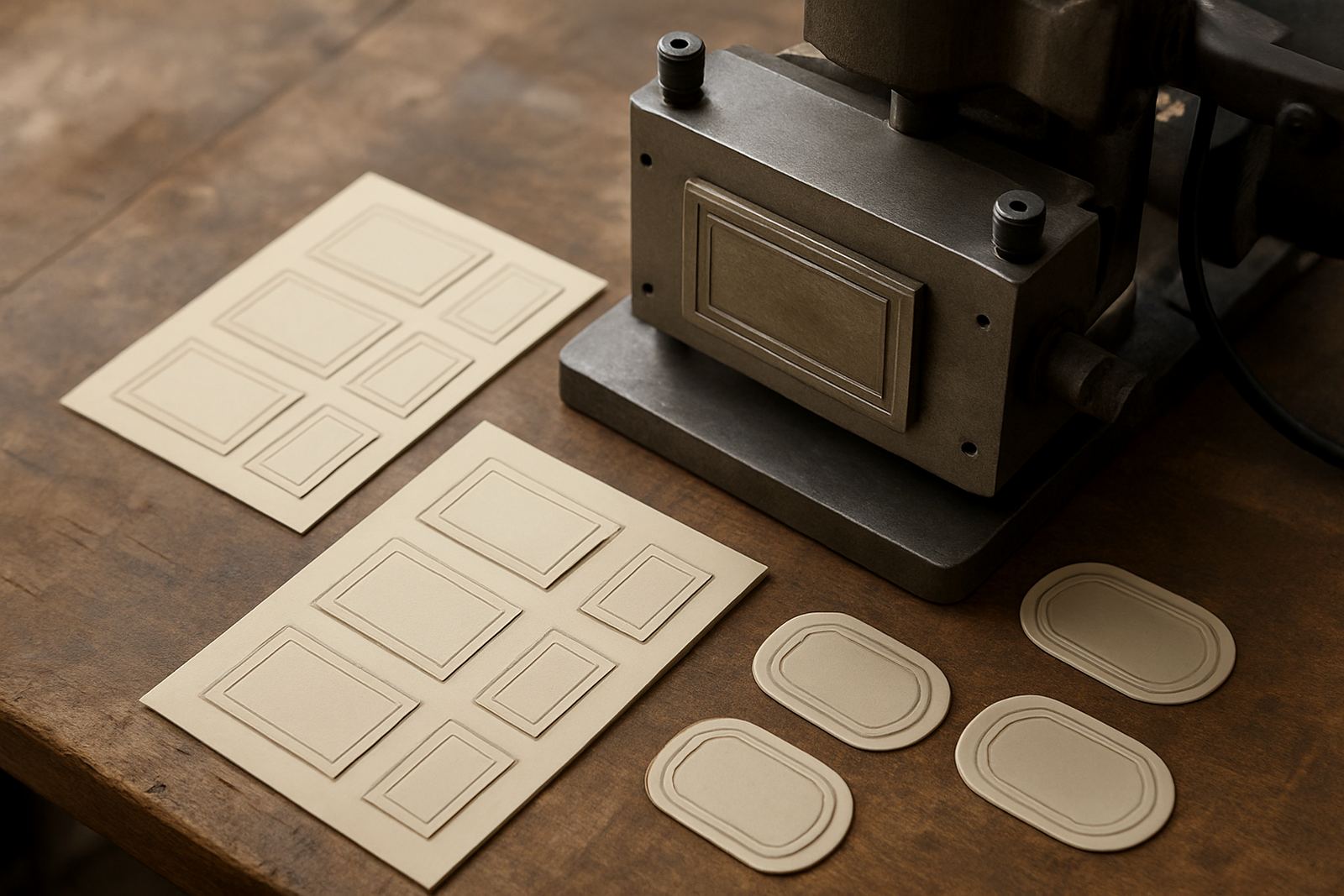
Most die wear comes from setup, not from the die itself. If the counterforce is too soft, the press crew may crank up pressure to get a stronger hit. That extra force compresses the image and can wear the shoulders of the die face. If the counterforce is too hard, the impression can become harsh and the stock may crack or mark, especially on coated cartons.
Heat also needs care. Too little heat and the transfer does not release cleanly. Too much heat and the die can overwork the material, especially on long runs where the press never cools properly. On busy finishing floors in Johannesburg or Durban, the team may run into load-shedding related starts and stops, which means the press should be checked again after power returns because conditions can shift quite a bit.
- Match heat to the foil, board and image depth.
- Check counterforce before blaming the die for weak or patchy output.
- After a power interruption, re-check setup before the run continues.
Artwork detail decides how much margin the die has
Some artwork looks good on screen but is hard on a die. Thin strokes, tiny type and tight negative spaces demand more from engraving and from the press set-up. If the artwork is not checked carefully before production, the die may be doing the best it can while the design itself is too cramped for clean stamping.
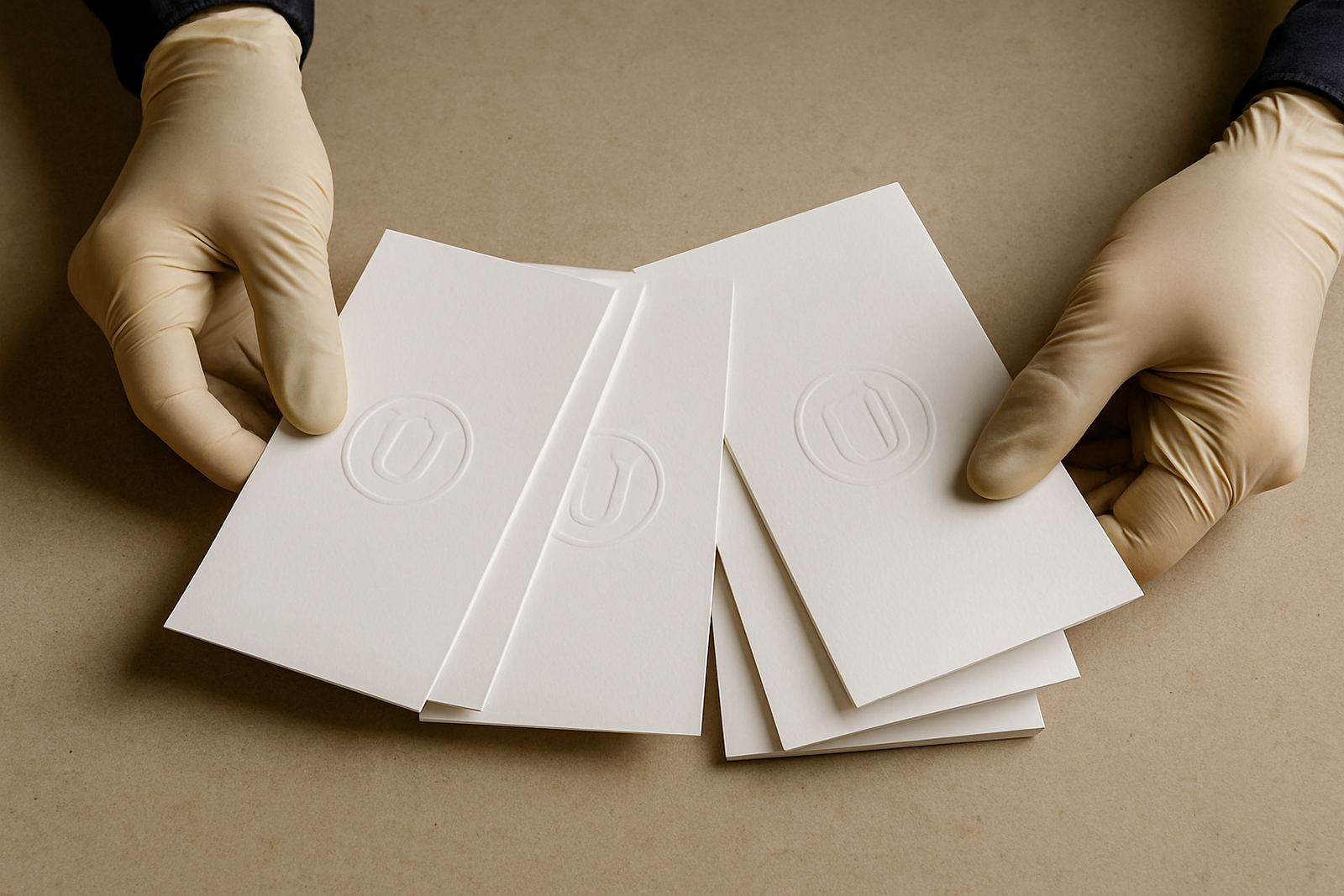
That is why artwork checks matter. Small corrections before engraving can save a lot of wear later. Slightly opening the spacing, thickening a fine rule or adjusting a reverse area can make a job far more stable across the full run. We often see this on packaging jobs going to Gauteng retailers, where the first few sheets look fine but the last part of the run starts to lose clarity.
- Fine type and hairline rules reduce die margin.
- Open reverses and close spacing before engraving where possible.
- A corrected layout often outlasts a forced one by a wide margin.
Run length and storage both change the real lifespan
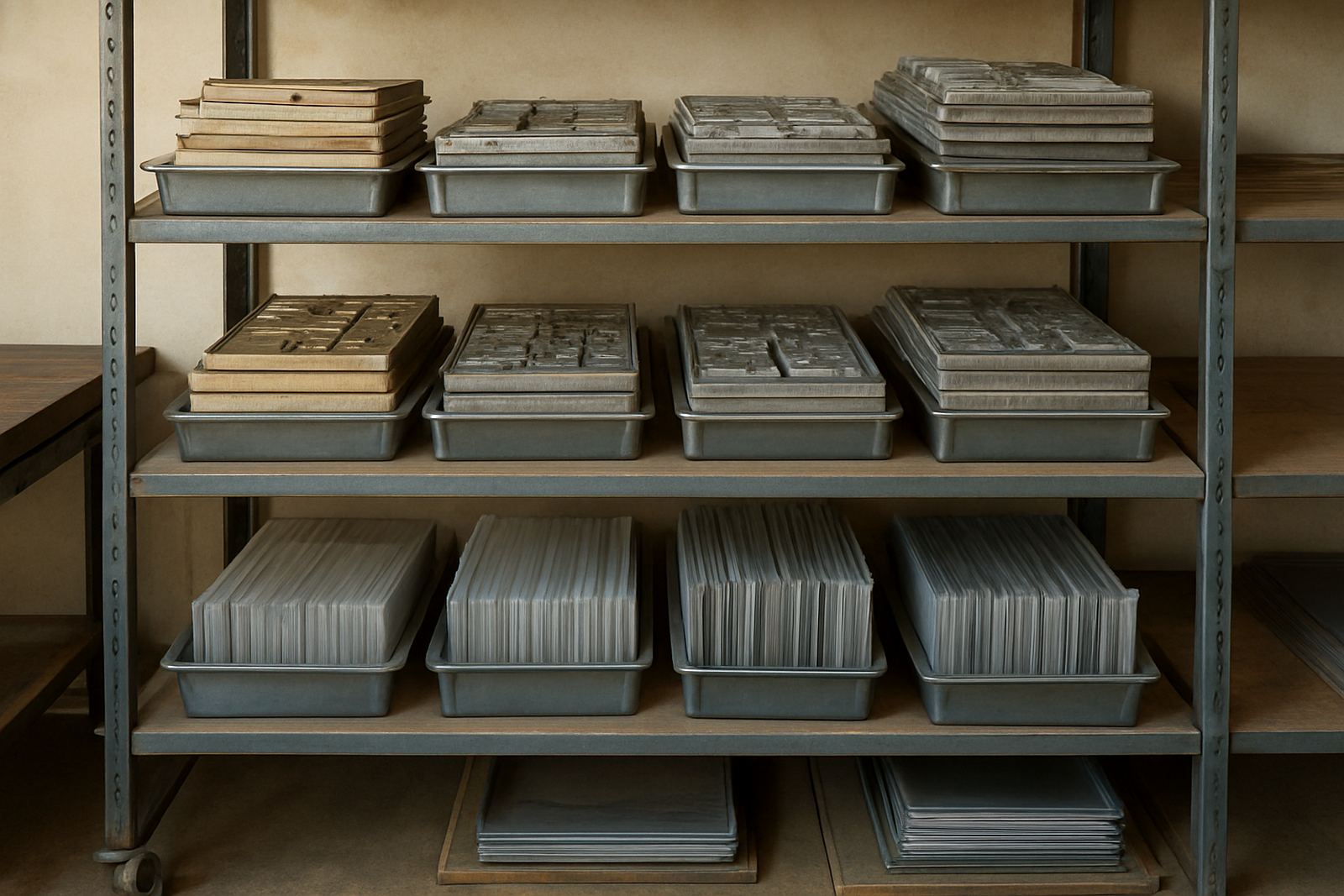
A die does not only wear on press. It also wears in storage if it is left exposed to dust, moisture or handling damage. Coastal humidity in places like Durban, Gqeberha and Cape Town can affect both brass and magnesium if the packing is poor. A clean die stored flat, labelled clearly and kept away from damp gives better service later.
Run length matters too. A die used for a few hundred impressions may still look perfect, while a long production run on a demanding stock can show wear after a single shift. That does not mean the die was faulty. It means the job was hard. For repeat ordering, keeping the original job file and sample impression helps us check whether the next run needs the same spec or a small adjustment.
- Store dies dry, flat and wrapped against dust.
- Keep sample impressions with the job file for repeat work.
- Ask for die cleaning after heavy use to remove residue and build-up.
A Johannesburg example: when small changes saved a packaging run
A packaging house in Industria sent through a repeat foil job for a premium carton range. The first batch ran well, but the second batch started to lose edge definition on one corner of the logo. The issue was not the die alone. The counterforce insert had softened slightly, the press pressure had been raised and the board supplier had changed the coating. A few small adjustments brought the image back and protected the die from further wear.
That is the point of good die management. When the setup is right, a die can keep performing through the run without forcing the operator to chase the impression. A careful check before dispatch, then sensible storage and repeat ordering with the same reference, helps finishers avoid unnecessary replacement costs and delays.