
Start With Artwork That Can Actually Hold Registration
Before any foil comes near the press, check the artwork at full size and confirm that the foil areas are not too fine for the stock and press conditions. Thin lines, tiny reversed text and close spacing can look sharp on screen but become risky once heat, pressure and paper movement are involved. On coated board the result is usually cleaner, while rough or fibrous stock can shift the image slightly and break small details.
Ask for the final artwork to be supplied with clear foil position marks and a separate layer if the job is being split between print and finishing. That makes it easier to check the referance points against the print sheet and die. If the foil image sits too close to a crease, trim or window cut-out, allow more tolerance than you would on a flat sheet. In practice, a little breathing room saves time at make-ready and reduces waste.
- Keep foil details bold enough for the chosen stock
- Leave enough margin around folds, cuts and edges
- Confirm the foil layer is separated clearly from print artwork
- Check all key marks before the die is approved for production
Choose The Right Die Construction For The Job
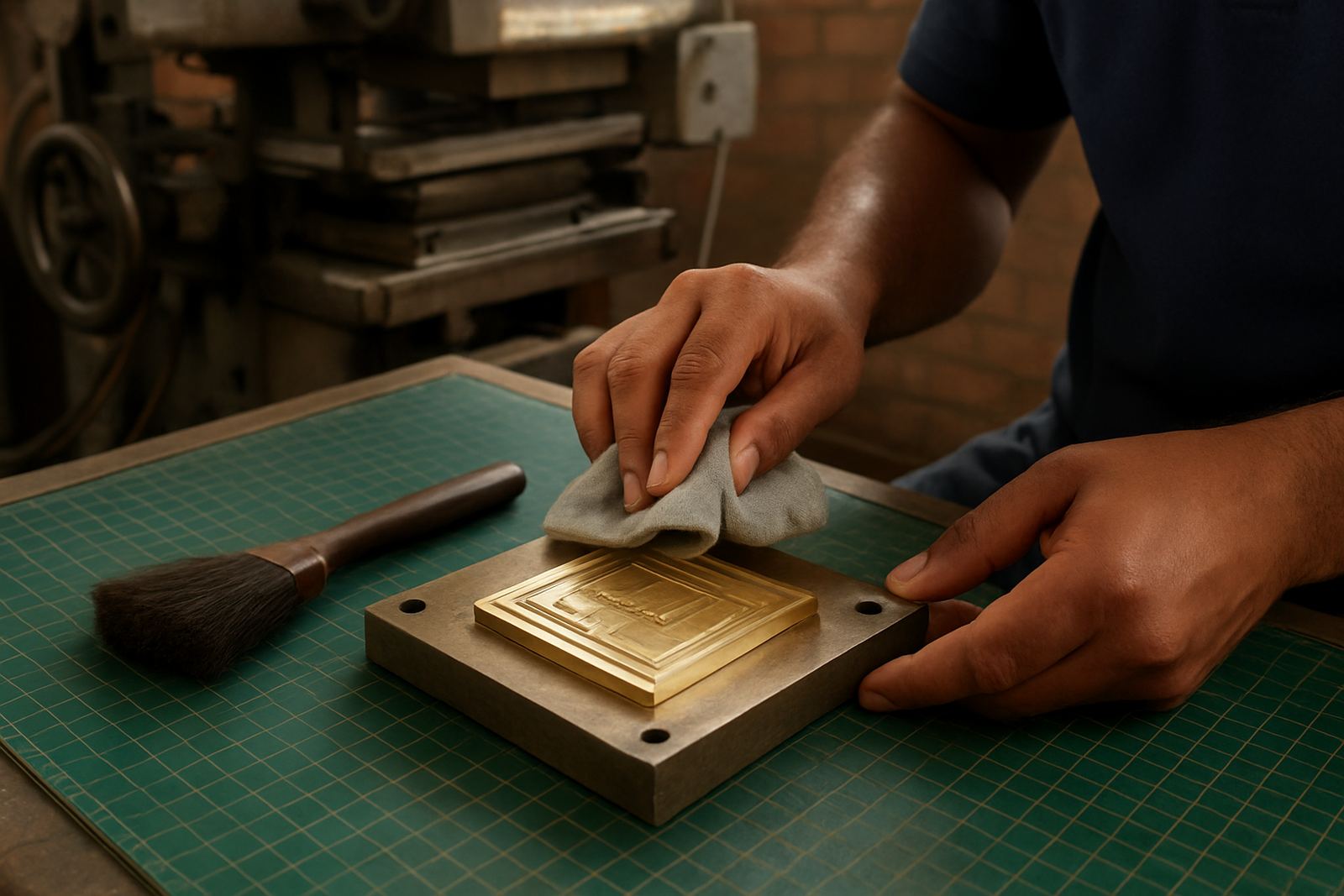
Registration depends heavily on the die itself. Brass dies hold finer detail and keep their shape well for longer runs, while magnesium dies are often used where a quicker turnaround is needed and the image is less demanding. The right choice depends on run length, artwork detail and the amount of repeat work expected from the client. A die that is too soft or not machined cleanly can introduce small shifts that become obvious once foil is applied.
For jobs with tight image placement, make sure the die face is machined accurately and that the counterforce matches the impression board properly. If the counterforce is off, the foil may look fine on one side and weak on the other. That is why a good die maker will look at the full set-up, not only the image itself. The goal is for the stamping pressure to stay even from corner to corner, not just in the centre.
- Use brass for finer detail and longer production life
- Use magnesium where speed and simpler detail are the main priorities
- Match the counterforce to the exact job setup
- Check that the die face is clean, true and mounted correctly
Set The Press Up Before You Chase The Foil
Many foil problems are actually machine setup problems. Temperature, dwell time and pressure need to be balanced for the foil type and substrate. Too much heat can make the image spread or appear cloudy, while too little pressure may leave the foil patchy or incomplete. The press operator should start with a controlled setting and adjust in small steps, rather than making large changes that move the job further out of register.
Also check sheet movement, gripper grip and feed consistency. If the sheet drifts even slightly, the foil can miss the printed image by a millimetre or two, which is enough to look untidy on packaging or presentation work. In Johannesburg winter air is dry and static can become a nuisance, while coastal humidity in Durban may change how the stock feeds. The same die can behave differently in each plant, so the setup needs to be tuned to the local conditions.
- Adjust heat, pressure and dwell time in small stages
- Check sheet feed and gripper stability before running quantity
- Watch for static in dry conditions and moisture changes near the coast
- Allow for stock movement on thicker or textured board
Use Sample Impressions To Lock In The Position
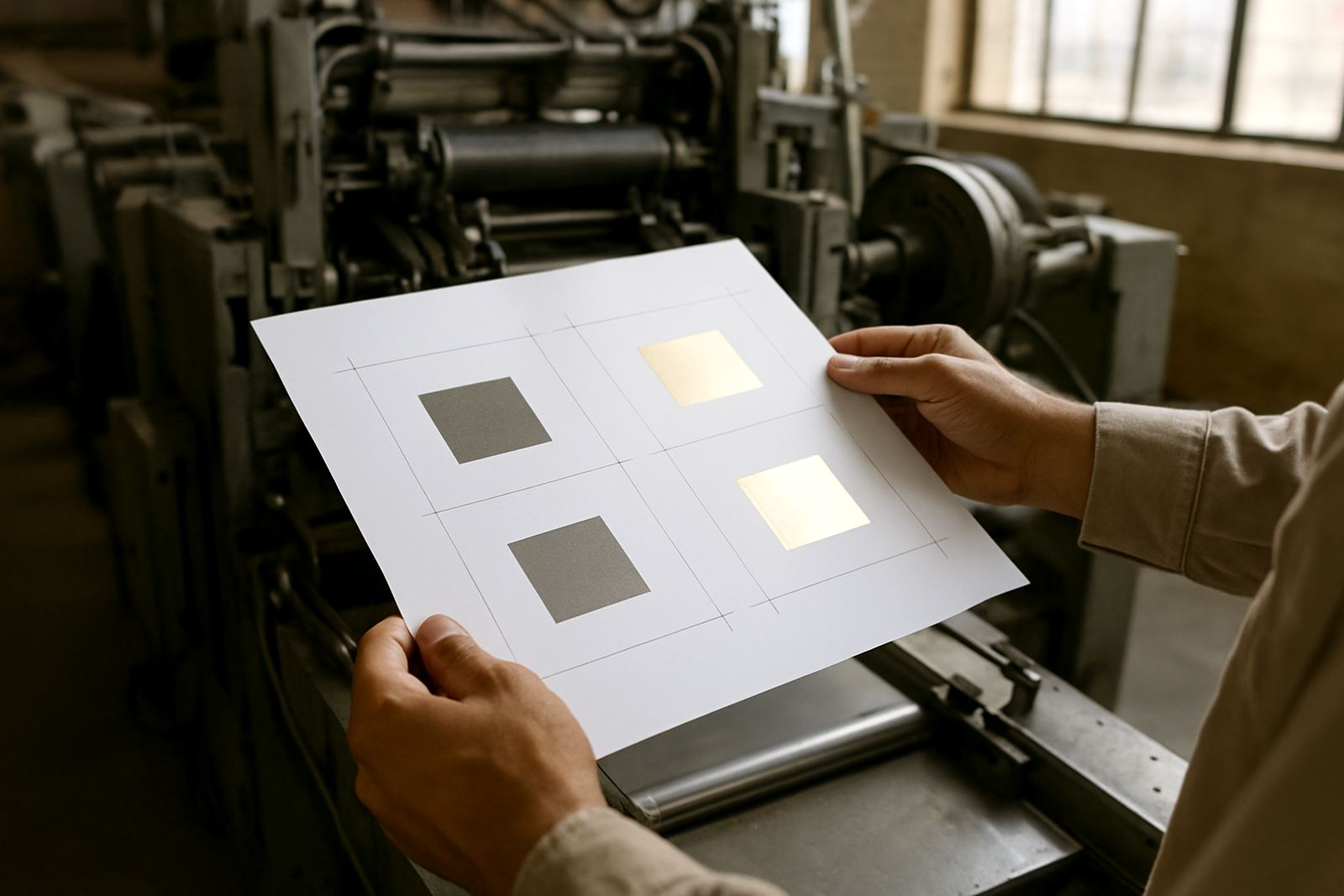
A sample impression is one of the quickest ways to spot a registration problem before a full run starts. Pull a few sheets, inspect the foil against the print and measure the key points from a fixed edge. If the foil is leaning to one side, drifting forward or sitting too low, stop and correct the cause before the job runs waste. That might mean adjusting the die mount, checking the chase, or reviewing the artwork position relative to the print.
When a sample is being checked, look beyond the obvious centre area. Corners, long edges and small elements near the trim are often where the first signs of error show up. It is also worth comparing the first sample to a later one, because some setups move once the press warms up. A job that starts well and then slips after 200 sheets usually needs a machine or stock review, not just a visual tweak.
If the job is part of a packaging line with multiple finishes, confirm the foil position against the final fold or glue pattern, not only the flat artwork. Once the carton is made up, a small shift on the flat sheet can become very visible on the finished pack.
Build In Tolerance For The Real World
Perfect registration on the first sheet is the goal, but practical production needs a bit of tolerance. Stock can move, trimming can vary and different operators may set the machine slightly differently from shift to shift. Jobs that are too tight on the artwork side often cause avoidable reruns. A small margin built into the layout gives the finisher room to hold a neat result without constant micro-adjustments.
For repeat orders, save the approved die notes and the exact setup details. That includes machine type, stock, foil reference, impression settings and any changes made on the day. When the same client returns three months later, those notes can save a full setup cycle and reduce the chance of another set of registration errors. It is a simple habit, but it pays off on busy production floors where time is limited and the next job is already lined up.
- Allow a sensible tolerance around the foil area
- Save the approved setup details for repeat work
- Check trim and folding allowances before approval
- Review the final pack format, not only the flat sheet
A Johannesburg Example That Saves Time At The Press
A packaging house in Industria might receive a carton job from a client in Pretoria on Monday and need it foil stamped by Wednesday. The artwork looks straightforward, but the foil sits close to a crease and the paperboard has a slightly textured finish. Instead of sending the die straight to press, the finisher checks the artwork, confirms the counterforce and asks for a sample impression advice check. The die is adjusted before the run starts, which avoids a late-night rework and a missed dispatch.
That is the practical value of proper foil registration. The press team gets a cleaner first pull, the finishing team spends less time chasing tiny shifts, and the client gets a pack that looks deliberate rather than patched together. In a market where jobs move between Johannesburg, Durban, Cape Town and other centres every week, that sort of preparation makes a real difference.
At Hot Stamping Dies, the same approach supports artwork checks, die design, engraving production and repeat ordering for finishers nationwide. A clear setup today means a cleaner impression tomorrow, and less chance of production headaches when the job is already on the machine.