When hard cover jobs need more than a standard foil die
Hard cover work is different from a flat print job because the pressure changes across the cover and the trim is rarely forgiving. A thesis book for a university in Pretoria, a branded presentation case for a law firm in Sandton, or a short run of annual report covers in Cape Town all need a die that marks cleanly without crushing the board or scuffing the finish.
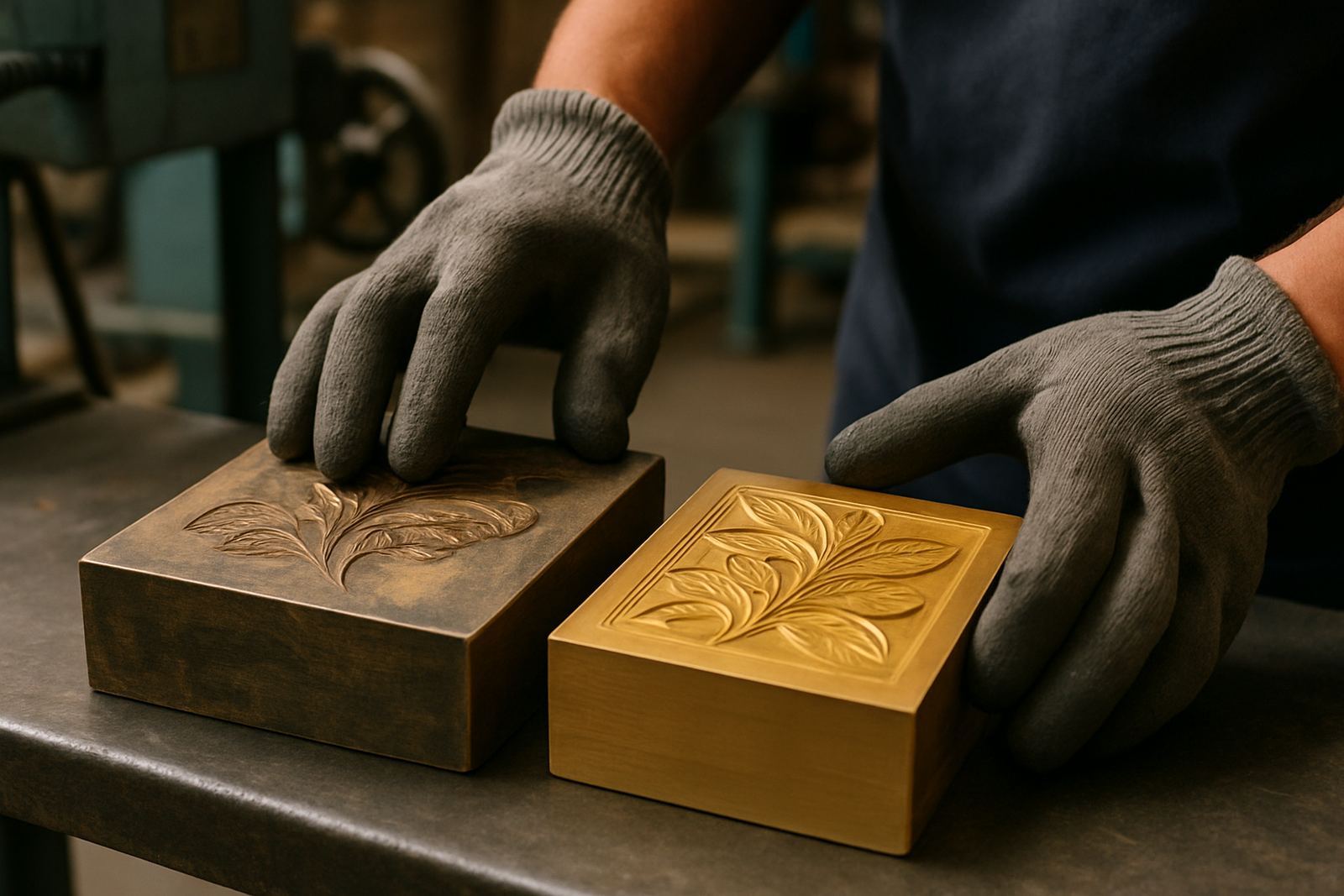
That is where brass and magnesium dies come in. Brass suits longer runs, finer detail and repeat use on hot stamping and embossing work. Magnesium is lighter and can suit shorter runs or quicker turnaround jobs where the artwork is straightforward. The right choice depends on the cover stock, the foil type, the press setup and whether the same job will be re-ordered later.
Choosing the right die for board, cloth and wrapped covers
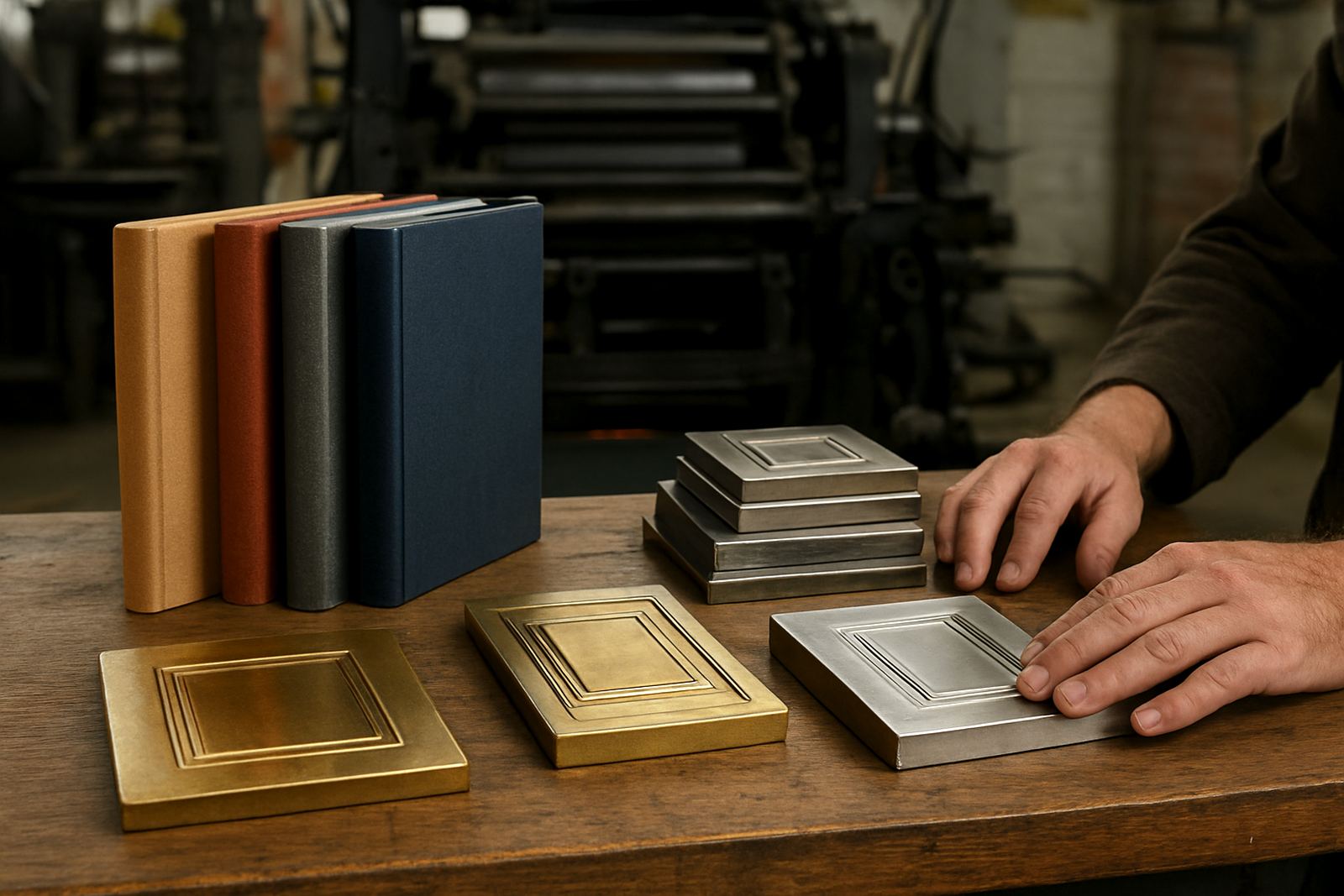
Bound covers vary more than many print buyers expect. One job may use heavy greyboard with a textured wrap, while another uses coated artboard with soft touch lamination and a foil blocked title. The die has to suit the finish, because the same artwork can behave very differently on each surface.
- Use brass for detailed logos, small text and jobs that need repeat consistency.
- Use magnesium for simpler artwork and faster production on short runs.
- Allow for the depth of the board so the impression does not sit too shallow.
- Check if the cover has a cloth spine, recessed panel or raised section before the die is made.
- Plan for the foil or embossing to sit square after casing in, not only on the flat sample.
For presentation cases and portfolio covers, the edges can also be the issue. If the artwork runs too close to a fold or corner, the finished piece may look sharp on screen but awkward on the press. A proper artwork check saves time and avoids a second round of corrections.
What our artwork checks look for before engraving starts
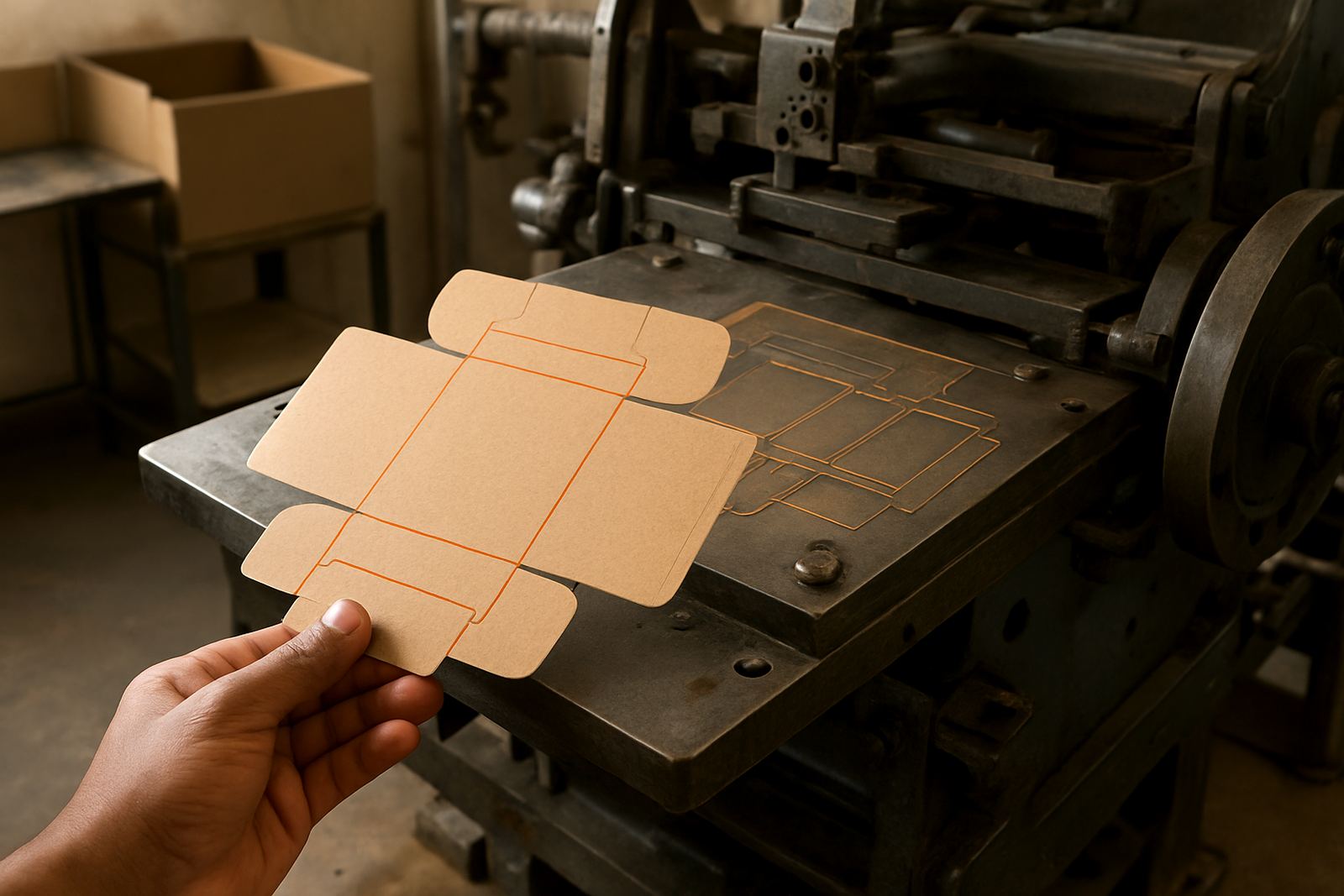
Before engraving, we look at the file size, line weights, spacing and whether the art will hold up at actual production size. Thin strokes can disappear on cloth grain, and small lettering can fill in when the press pressure increases. If the brief includes a crest, monogram or technical title page, we check that the detail will remain legible once heat and pressure are applied.
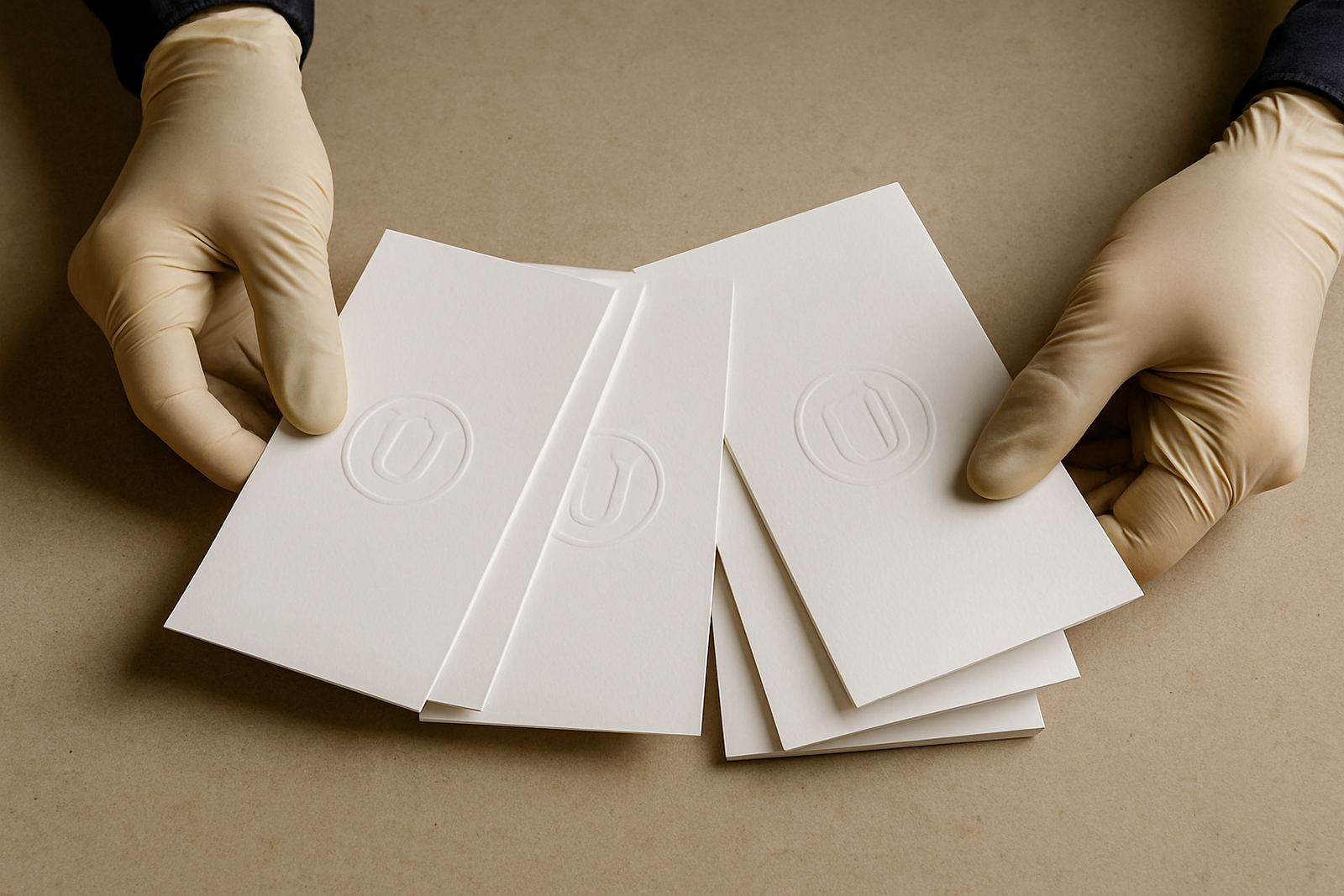
We also check counterforce requirements where needed. That matters on harder boards and thicker wraps, especially when the job has a deep blind emboss or a foil stamp paired with embossing. In those cases the matching counterforce must support the die properly so the image comes up cleanly and the board does not buckle.
- Confirm the final trim size before layout begins.
- Send the exact wording for thesis titles, names and dates.
- Tell us if the cover will be wrapped, laminated or cloth bound.
- Advise if the same die must work across several board thicknesses.
- Flag urgent jobs early, because cover finishing schedules can shift quickly.
Local production realities in Johannesburg and beyond
From Industria, Johannesburg, dies are packed for print finishers and packaging houses across South Africa. That means the die must travel well and arrive ready for use, because a press in Durban or Gqeberha cannot afford to wait on a damaged package or unclear job note. Good packing and clear job filing matter just as much as the engraving itself.
Load-shedding also changes the way finishing teams plan their day. If a bindery has a short production window, a delayed die can throw out the whole sequence. That is why urgent turnaround, dispatch coordination and repeat ordering support are so useful for hard cover work. When the die is correctly filed, a repeat run for a series of graduation books or annual reports can move much faster the second time round.
Common problems on thesis books and presentation cases
Hard cover finishing often fails for simple reasons: artwork that is too small, a title placed too near the edge, or a cover material that was not specified correctly. A good-looking proof can still fail in production if the board is thicker than expected or the foil does not bond well to the surface.
These are the issues we see most often:
- Titles that sit too close to a fold or hinge.
- Fine lines that disappear on textured cloth.
- Embossed marks that are too shallow for thick board.
- Foil blocking that shifts because the cover was not squared properly.
- Damaged dies that need cleaning or alteration before the next run.
If a job has already been pressed and something is off, damage assessment can show whether the die needs reworking, cleaning or a fresh counterforce. That is often quicker and more cost effective than starting over from scratch.
A practical example from a Pretoria thesis run
A university print unit in Pretoria might need 120 thesis covers with the student names and faculty title stamped in foil. The covers could be a dark navy cloth over board with a narrow spine area and a specific font size required by the institution. In that case the die has to be precise, easy to align and consistent across the full batch.
For that kind of work, brass is often the safer choice because the detail needs to stay sharp across the run. We would check the artwork, confirm the final wording, advise on the impression depth, then pack and courier the die to the finishing team. If the same school orders another batch next term, the job file is ready for repeat ordering and the new run can match the first one without guesswork.
Hard cover finishing is not only about the mark you see on the cover. It is about the way the die sits with the board, the way the press handles the pressure, and the way the finished book holds up after handling, filing and shelf use.