
When a book cover needs a cleaner finish
Book cover work usually comes in after the print is done and the board is already cut, wrapped or case bound. At that stage the client wants the title, logo or decorative mark to sit straight, read clearly and stay sharp on a surface that may be coated, laminated or textured. That is where the die choice matters. A hard cover for a corporate annual report needs different pressure and detail from a diary cover that will be handled every day.
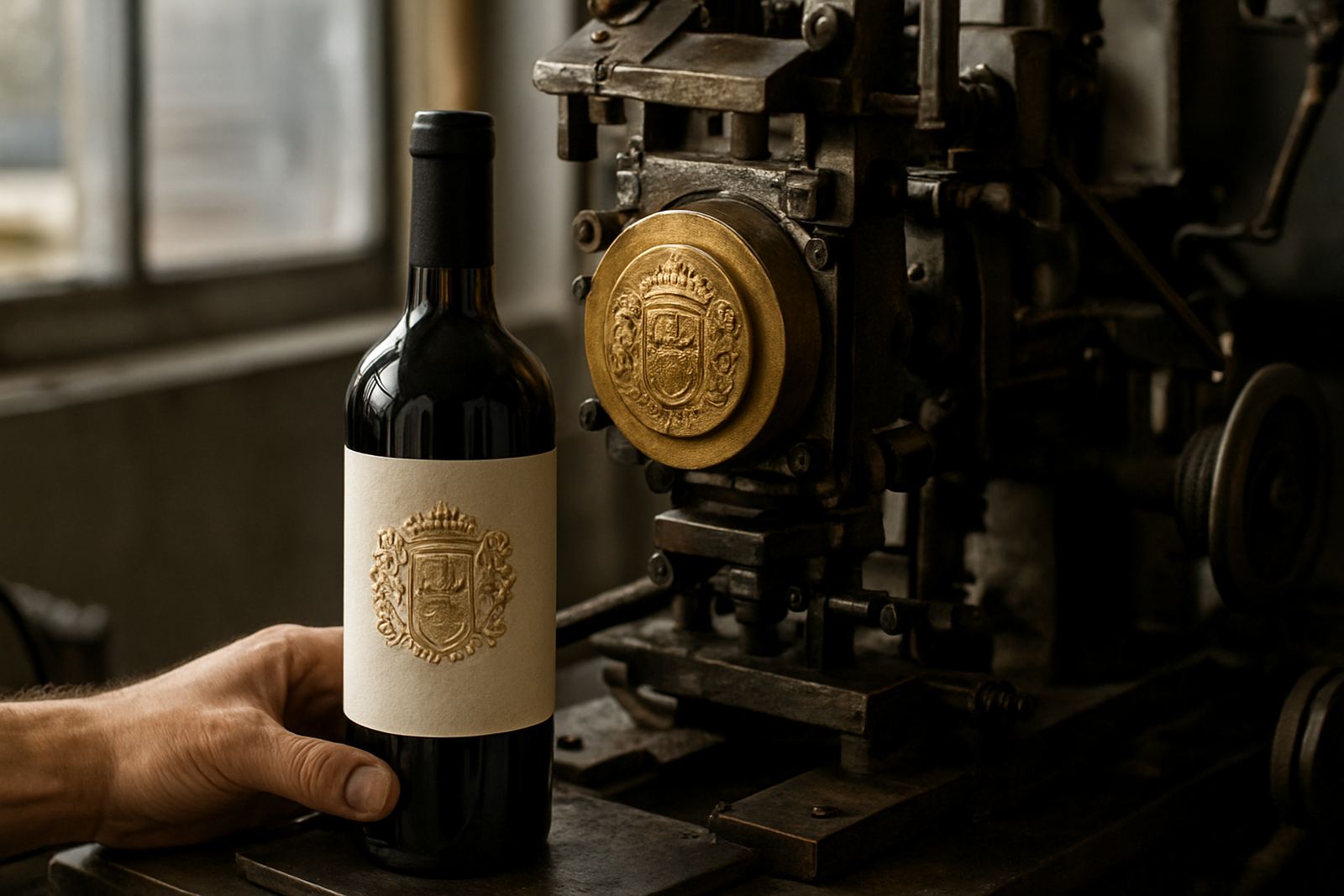
We make brass and magnesium hot-stamping dies and embossing plates for these jobs from our Industria base in Johannesburg, with courier dispatch to finishers nationwide. Brass is often preferred for longer runs, deeper detail and repeat use. Magnesium can suit simpler artwork and lighter production, especially where the finish is needed quickly. If the cover stock is awkward, thick, or the artwork is fine-lined, the setup has to be checked before anything goes onto press.
Typical tooling set for hard covers and diaries
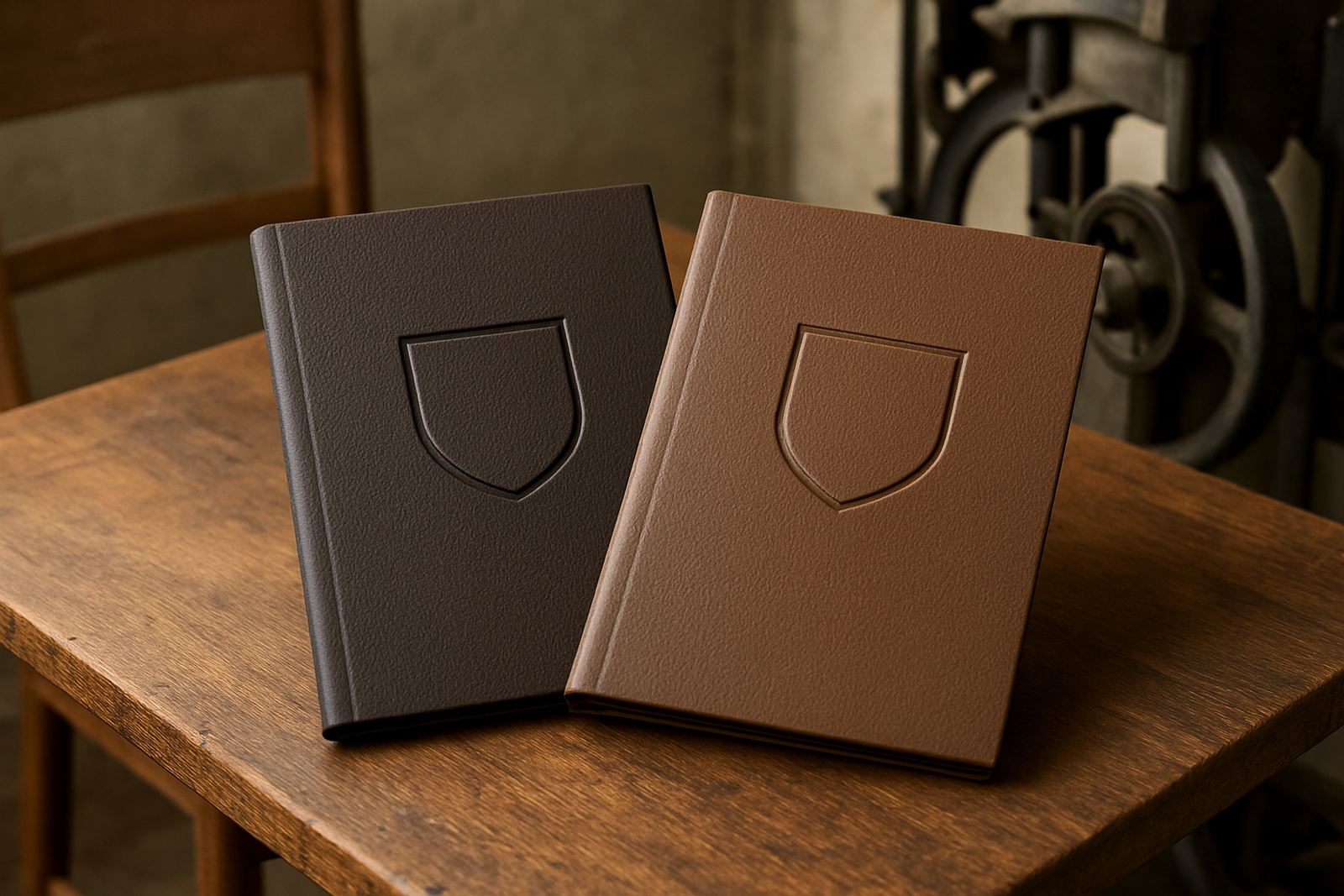
Most book cover jobs need more than one item in the tooling set. A title may need a foil die, a blind emboss plate, or a matched set for foil plus impression. On some presentations the spine, front board and inner sleeve all need separate positions. The key is to plan the set so the cover can be run without constant adjustment. That saves time and avoids rework.
- Brass hot-stamping die for long run titles, logos or fine serif detail
- Magnesium die for shorter runs and quicker turnaround work
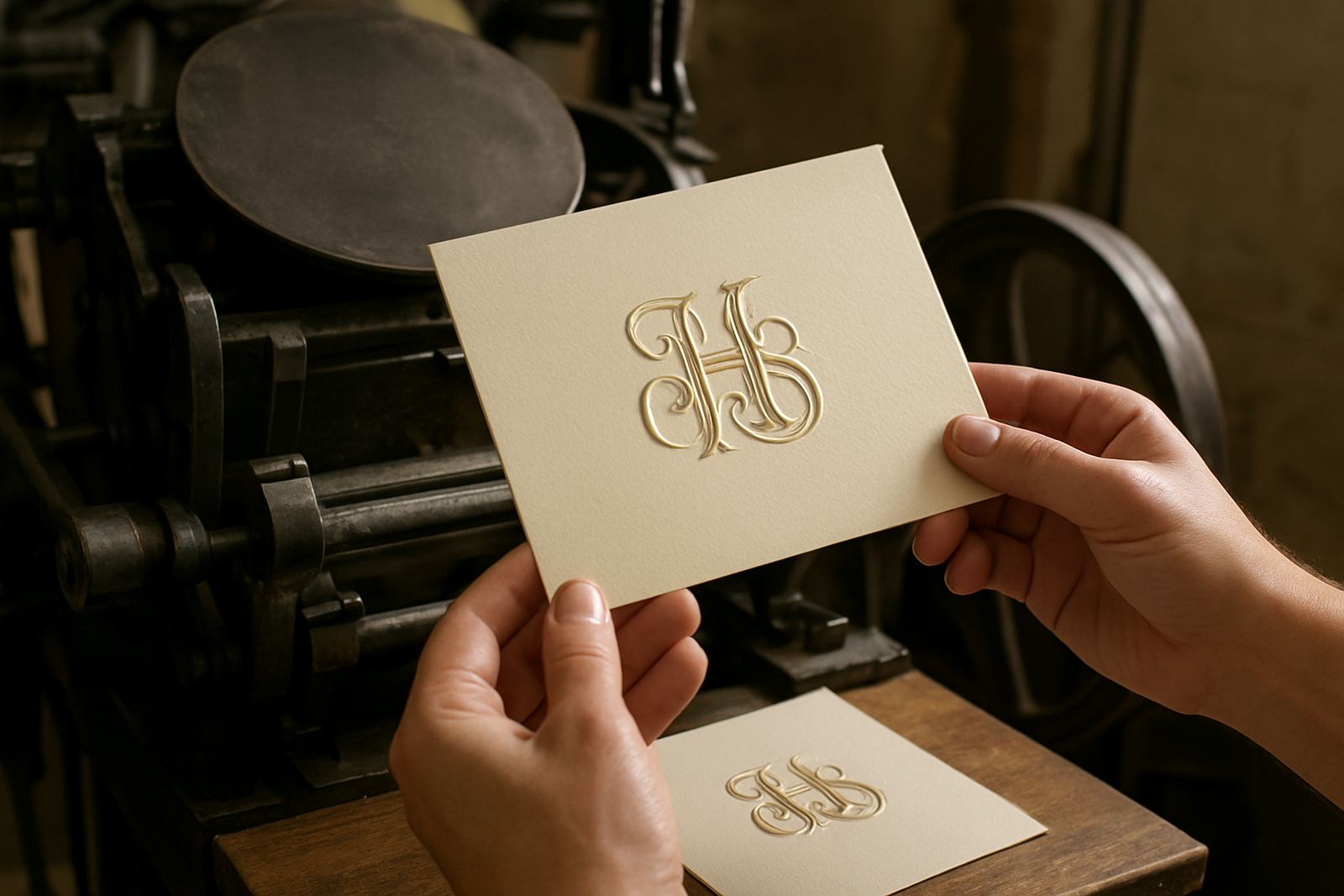
- Embossing plate or counterforce for raised or debossed cover marks
- Repeat die for matching diary series, annual reports or set editions
- Sample impression guidance before full production starts
If the job will be repeated each year, we suggest job filing and repeat ordering so the next run matches the previous one without guessing. That matters on annual diaries, board pack covers and membership books where clients expect the same placement and depth every time.
Layout planning before the die is engraved
The cleanest book cover results start with a good layout. Artwork should be supplied with exact cover size, spine width, hinge allowance and trim lines. If the board thickness changes even a little, the position of the title can move out of line. On hard covers, the spine is often the first place where poor planning shows up. A logo that looks centred on screen may sit too high once the case is wrapped and folded.
Before engraving, we check line weight, foil coverage and whether the artwork has enough open space for the chosen finish. Fine lines can fill in on textured cloth and small reverse text can disappear on dark covers. For foil and emboss together, the artwork must be planned so the impression does not crush the foil, and the counterforce matches the board properly. This is especially important for jobs done in humid coastal conditions or during load shedding, where press consistency can shift if the setup is rushed.
- Confirm board thickness and cover wrap allowance before artwork is final
- Keep small text open and simple on textured or coated materials
- Leave enough margin from the spine fold and turn-in edges
- Use separate layers for foil, emboss and any blind elements
Common mistakes on book cover jobs
The most common mistake is treating a book cover like a flat label. It is not. The cover bends, wraps and compresses, so a design that works on a leaflet may fail on a bound presentation. Another regular problem is sending artwork without the final spine width. That can push the title off-centre or make a repeated series look uneven on the shelf.
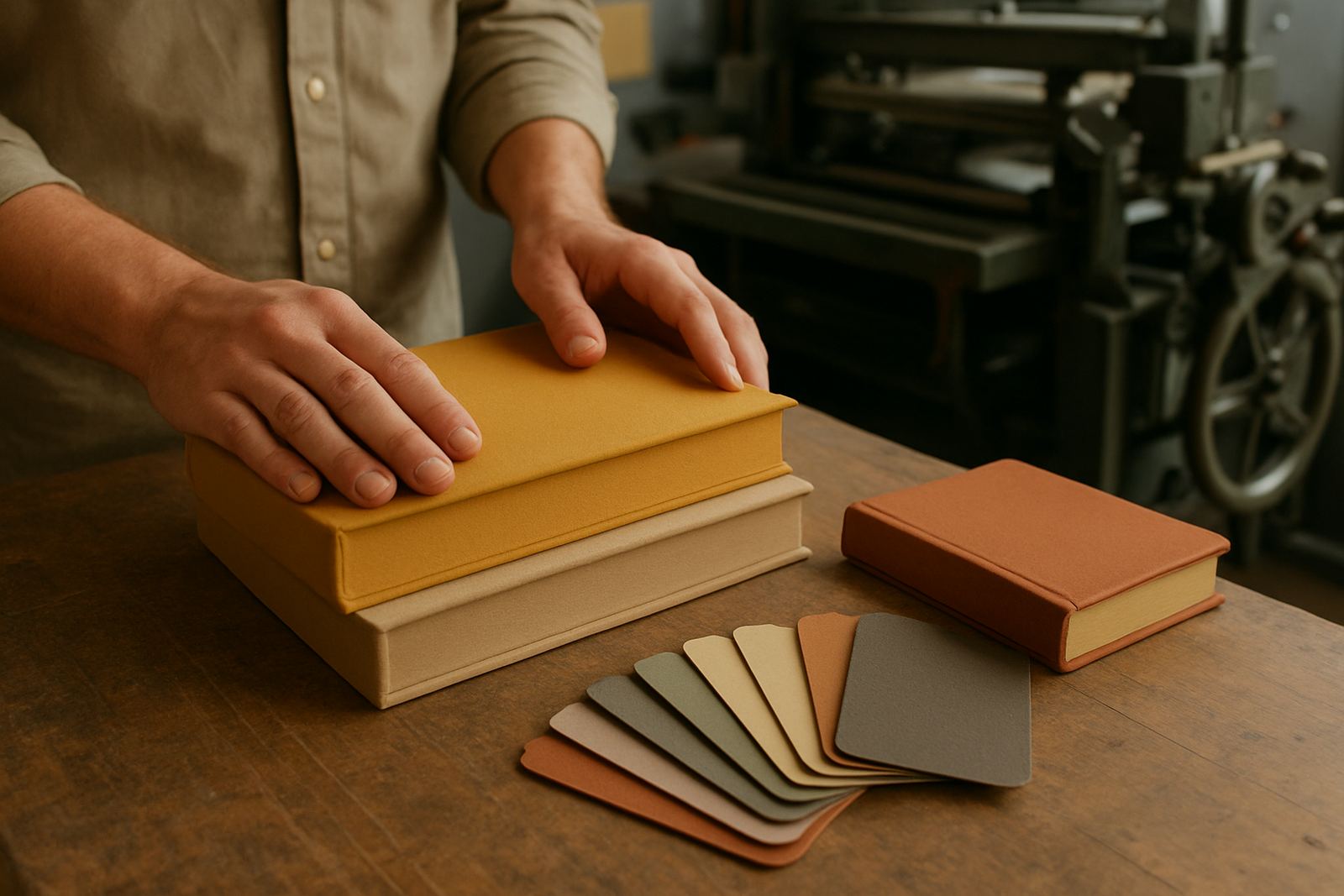
Clients also sometimes expect one die to work on very different materials. A brass die that performs well on a coated presentation cover may behave differently on heavy cloth or a soft-touch wrap. That is why we ask about the substrate, the press type and the expected run length. If the finish needs a deep blind emboss, we may recommend counterforce matching and a sample impression first. It is better to correct the setup before production than to clean up a batch of covers afterwards.
- Leaving out the final spine measurement
- Using artwork with thin hairlines on textured stock
- Expecting one pressure setting to suit every cover material
- Skipping sample impressions on a new board or wrap
Budget ranges for book cover dies and plates
Budget depends on size, material, detail and whether the job needs foil, emboss or both. For a simple diary title or small logo, a magnesium die may start from about R650 to R1 200. Brass tooling for a more detailed hard cover or a longer-running set is often in the R1 500 to R4 500 range, and larger or more complex pieces can go higher. Counterforce matching, altered repeats and urgent turnaround work will change the final price.
For binders and finishers in Johannesburg, Pretoria, Durban, Cape Town, Gqeberha, Bloemfontein, Polokwane and Mbombela, courier costs are usually added separately and depend on size and destination. If the job is part of a broader print run, we can help you group items for dispatch so the packing is neater and the set arrives together. Clear instructions at enquiry stage help keep costs under control, especially when the deadline is tight.
How we handle urgent and repeat book cover work
Book cover production often runs close to handover dates. Diaries for year-end, conference books and board presentation covers can all come in with little room to spare. We work from clear artwork, confirm the die type, and file the job for repeat use once it has been approved. If a die needs cleaning, damage assessment or a small alteration for a reprint, we can usually advise on the quickest practical path instead of starting from scratch.
Our production team, led by Thabo Mokoena with Ayesha Naidoo, Johan van der Merwe, Lerato Molefe, Sibusiso Dlamini and Megan Petersen, handles artwork checks, engraving production, packing dispatch and urgent turnaround support from Industria. For book covers, that means practical answers on placement, pressure and repeatability, not guesswork.
If you need a foil or embossed finish on a hard cover, diary or bound presentation, send the job details through the enquiry form on our contact page and we will help you plan the tooling set properly.