
When a business card needs more than print
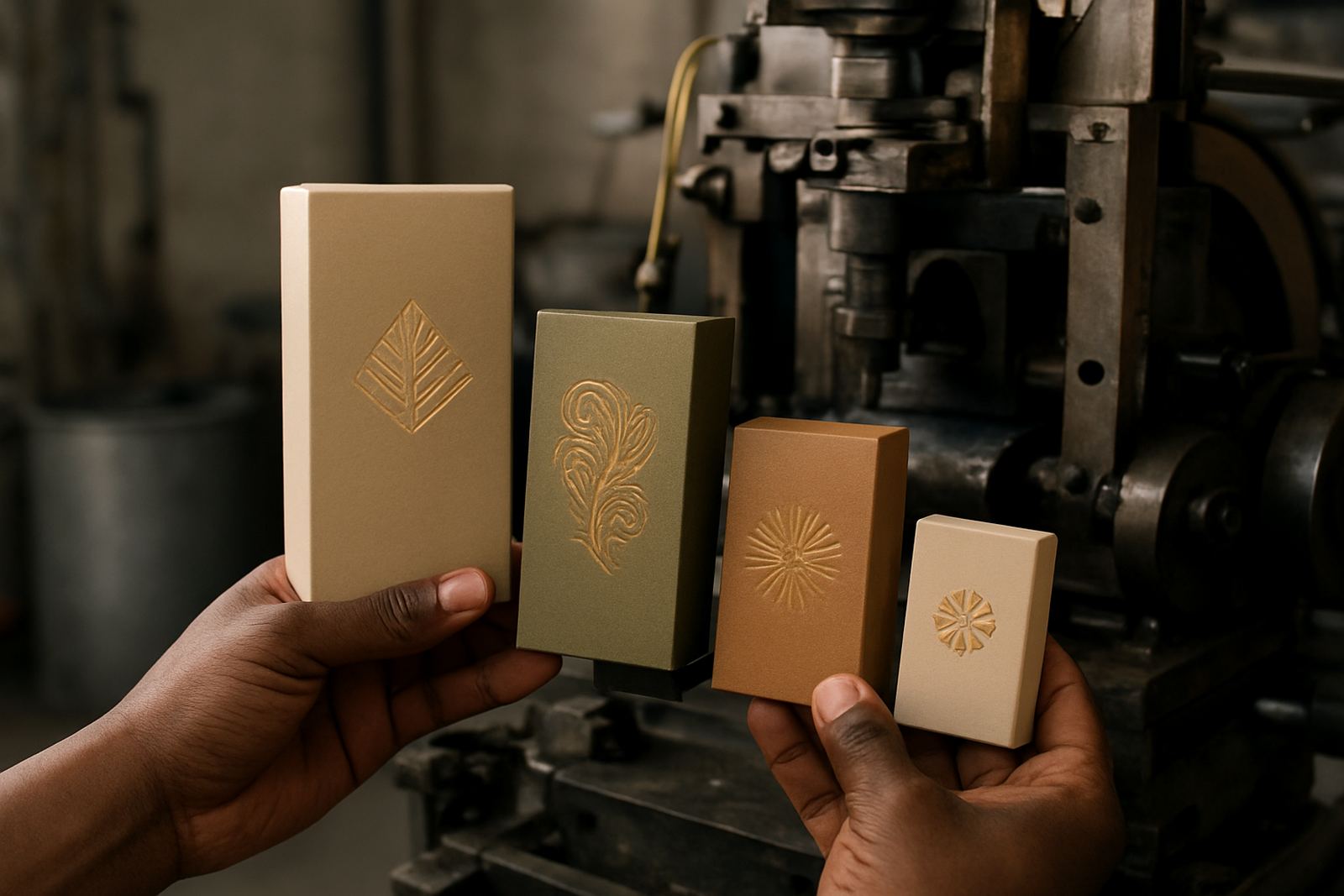
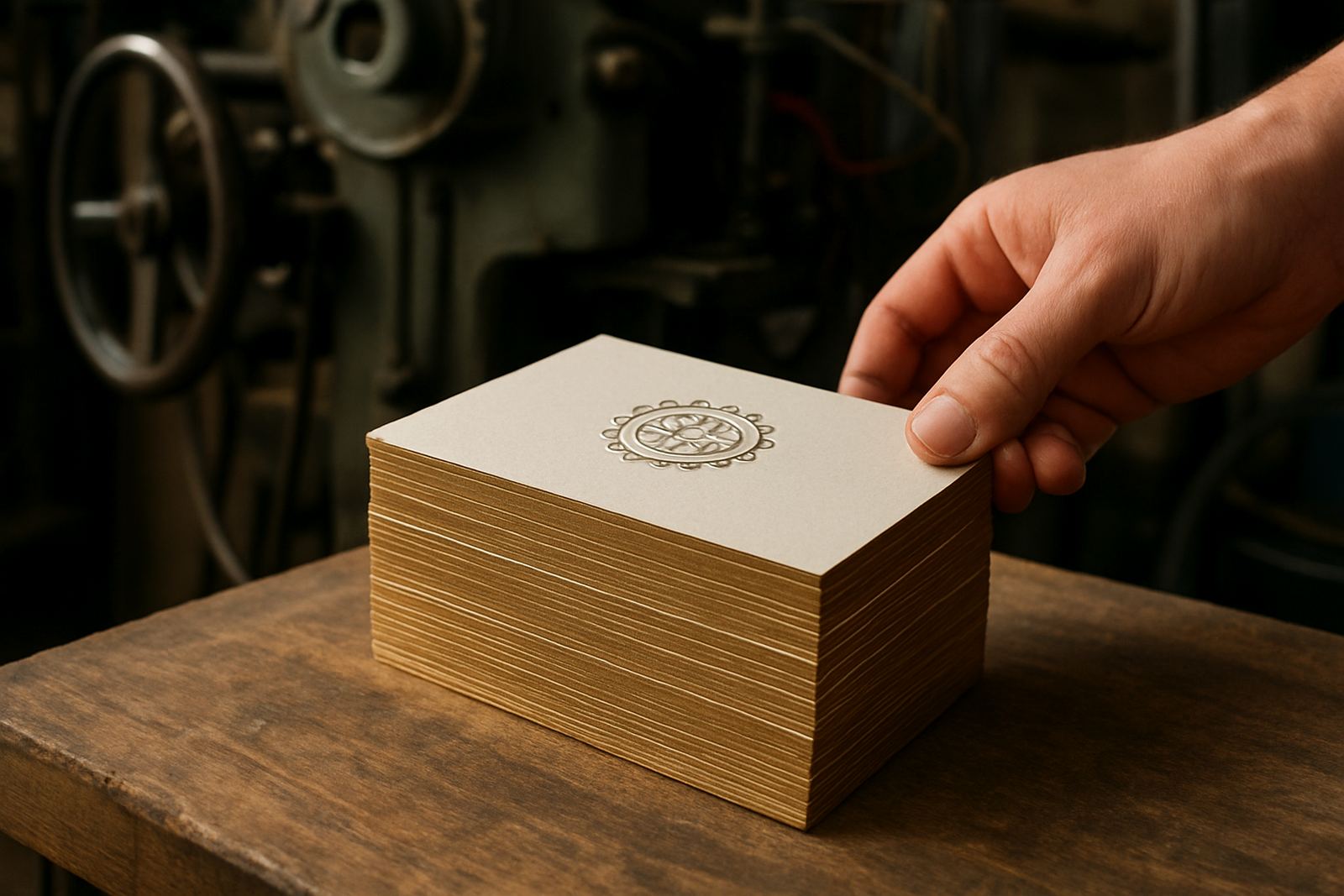
Business cards are small, but the finishing detail carries a lot of weight. A sharp foil crest, a deep blind emboss, or a clean debossed name can make a card feel considered instead of rushed. In Johannesburg, Cape Town, Durban and the smaller regional centres, printers and finishers often need cards that hold up in the hand and in the post, not just on a screen shot.
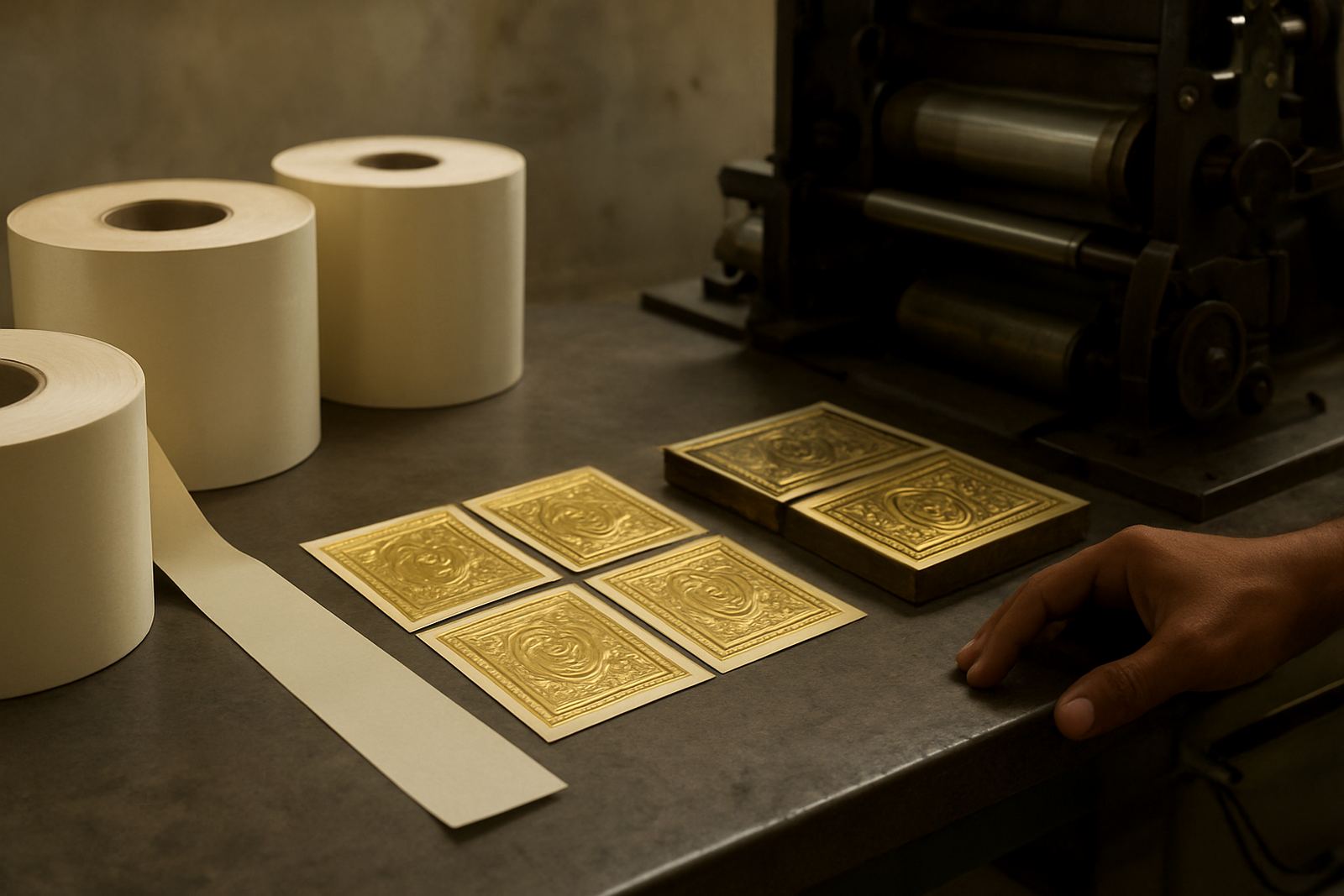
We make brass and magnesium hot stamping dies and embossing plates for card work where fine detail matters. That includes single cards, fold-over cards, thick cotton stock and coated boards, where registration and pressure need to be right or the result looks uneven. If the artwork is tight and the stock is well chosen, the finish can add real value without pushing the job too far out of budget.
Typical finishing set-up for card work
Most business card jobs use one of a few common set-ups depending on the effect and run length. We match the die to the press, the foil type and the stock so your finisher is not fighting the job on press. For local Pretoria or Industria collections, some clients want quick repeat work, while others need cartons packed and couriered straight to another province.
- Brass die for heavier production runs and finer detail
- Magnesium die for lighter to medium runs and quicker turnaround
- Embossing plate with counterforce matching for raised or pressed detail
- Simple foil areas for names, logos, borders or initials
- Combined foil and emboss work when the layout allows it
If the card has spot colour, soft-touch lamination, textured stock or a deep black board, the setup needs planning early. A poor die can leave shallow edges, patchy foil or bruising around the impression, and that is costly once the job is already on press.
Layout decisions that save time and money
The best business card dies are planned before the artwork goes to plate or press. That means checking line weights, spacing, size limits and where the impression will sit on the card. Small text can fill in, especially on coated or heavily textured stock, so the artwork needs to be built with real production tolerances in mind.
We often advise on the practical side of layout: keeping fine strokes open enough, allowing enough clear space around logos, and deciding whether the finish should sit proud or flat. A good rule is to keep the hot-stamped area modest on standard cards, because larger solid areas can show irregularity if the press pressure or temperature shifts during the run.
- Keep thin lines and reversed-out text to a sensible size
- Avoid placing key detail too close to the trim
- Allow room for guillotining and folding if the card is not flat
- Match the die size to the press bed and clamp area
- Check whether the stock needs counterforce or extra packing
For clients in humid coastal areas like Durban or Gqeberha, stock can move slightly with moisture, so a tight layout with no allowance can catch you out. In winter upcountry, dry paper can behave differently too, so a little room in the artwork helps. It saves time and avoids unnecessary rework, which is always better than trying to force a job back into line later.
Common mistakes on business card orders
Most card problems start with the artwork or the wrong expectations around the finish. A die is only as good as the information supplied. If the logo file is low resolution, the clearances are too tight, or the intended foil area is too large for the stock, the card can come back dull or uneven. That is usually avoidable with proper checking upfront.
Another common issue is forgetting that business cards are handled often. A finish that looks fine in one sample can show wear quickly if the card is too soft or the impression is too deep. We look at the job as a working piece, not just a presentation sample. That means checking file quality, the counterforce, the pressing pressure and whether the card will be packed loose or boxed for dispatch.
- Overcrowded artwork with too many fine details
- Foil areas that are too large for the stock choice
- Ignoring grain direction on thicker board
- Not allowing for trimming, folding or binding marks
- Rushing the sample check before the main run
Budget ranges for practical card finishing
Business card die costs depend on size, material and complexity, but most clients want a sensible spend that supports the rest of the print job. A small single-colour foil mark on a standard card usually sits at the lower end, while a detailed logo, multiple positions or a combined emboss and foil setup pushes the price up. For urgent turnaround or altertions to an existing die, there can also be a small extra charge.
As a working guide, simple magnesium dies for business cards may start from about R650 to R1,200, while brass dies for finer detail or longer life often range from about R1,250 to R2,500 and up depending on the artwork. Embossing plates with counterforce can add to that, especially when matching is needed for a deep impression. If the file is clean and the layout is sensible, the job stays more affordable. If it needs rescue work, the cost can climb faster than expected.
For large print houses, repeat ordering helps keep costs down because the file history and die specs are already on hand. We file the job details, so reorders are easier when the same design comes back months later or after a client changes branch details, phone numbers or title lines.
Couriered to print finishers nationwide
We are based in Industria, Johannesburg and courier dies to print finishers and packaging houses across South Africa, including Pretoria, Durban, Cape Town, Bloemfontein, Polokwane, Mbombela and Gqeberha. Business card work is often time sensitive, so packing and dispatch matter just as much as engraving. A clean, clearly marked parcel can save a lot of frustration on site.
Our process includes artwork checks, die design, engraving production, sample impression advice and dispatch planning. If a card job needs a quick correction, we can advise on die alterations or cleaning rather than starting from scratch where that is possible. For the printer, that can be the difference between making a deadline and missing a client handover by a day or two.
Use the enquiry form on our contact page to send through the job details, the artwork, stock spec and required turnaround. We will look at the finish, the press setup and the job size before advising on the next step. Thabo Mokoena and the team handle the practical side, so you get a straightforward answer and not guesswork.