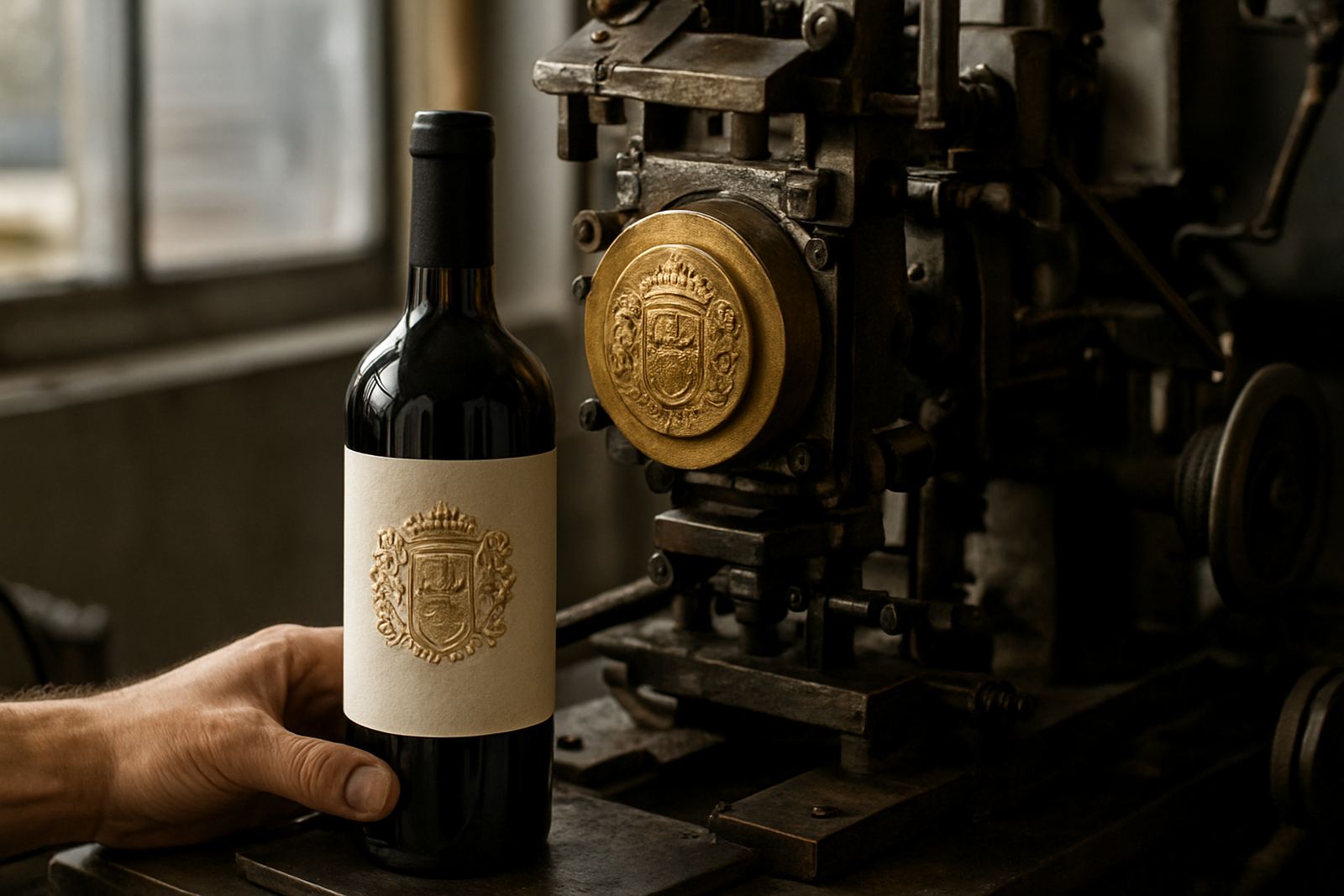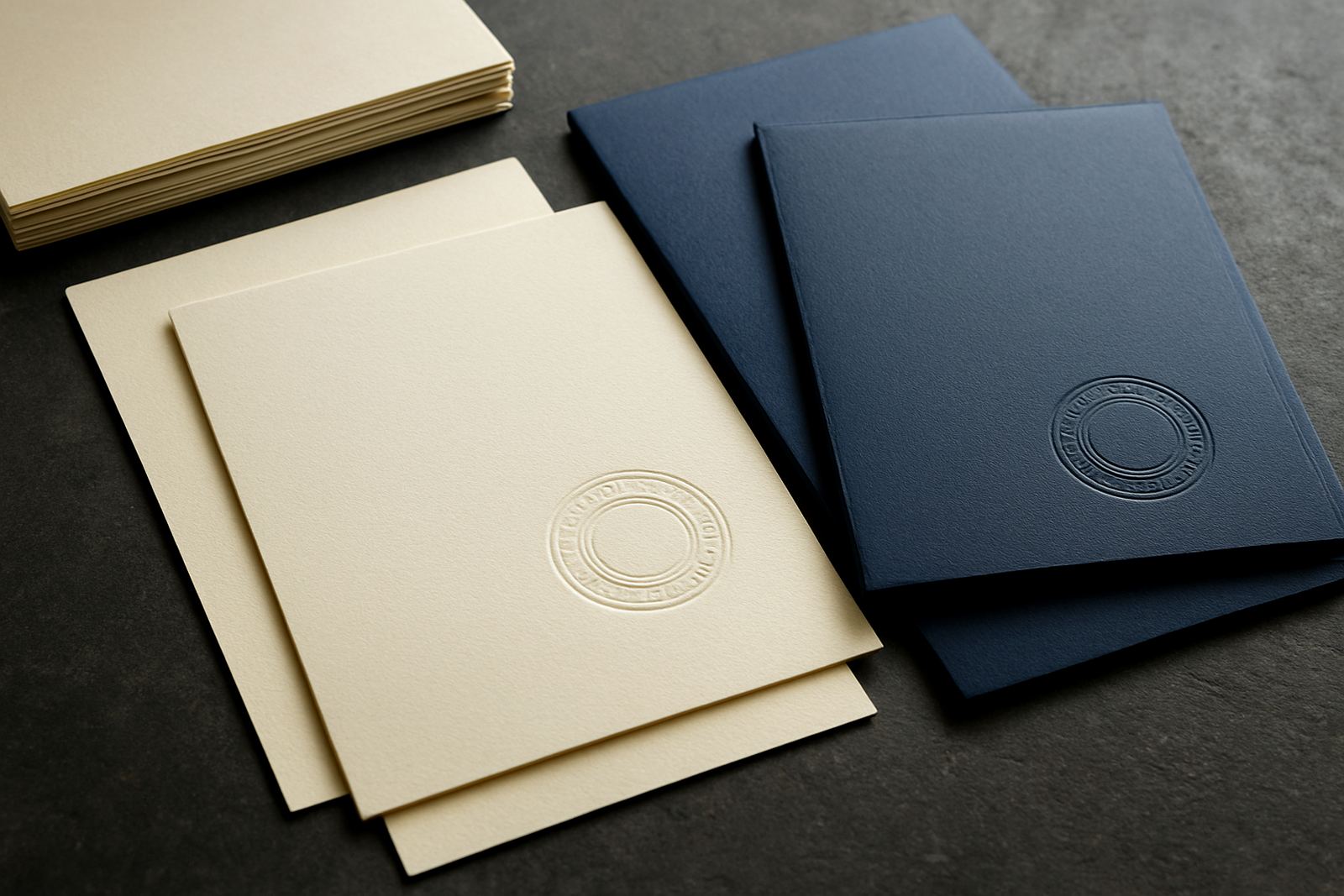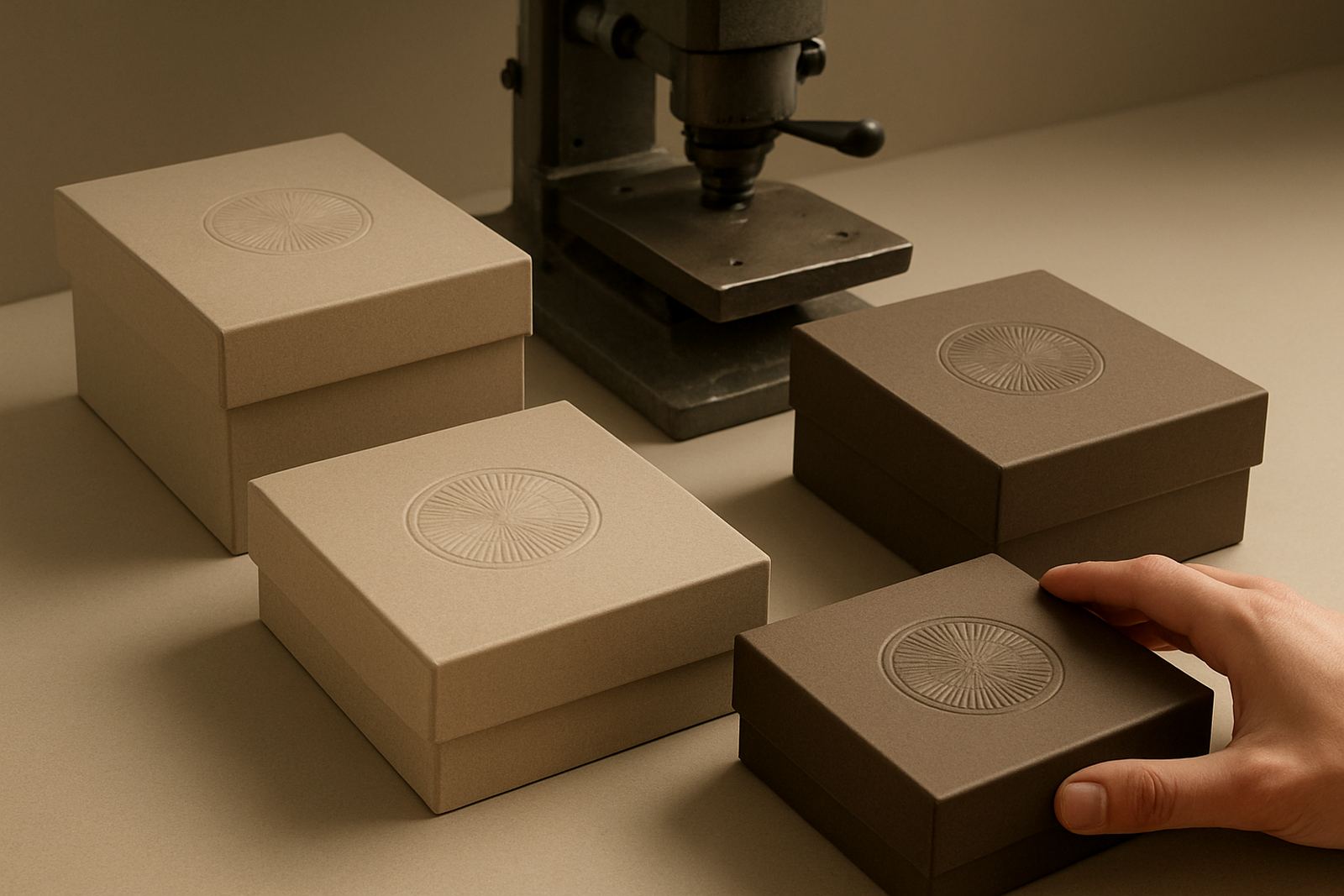
When rigid boxes need more than a standard finish
Rigid boxes are unforgiving. The board is thicker, the wrap can vary from job to job, and the brand panel often sits close to a fold, edge or magnet closure. If the die is not planned properly, foil breaks at the corners, emboss detail goes soft, or the impression lands too close to the tray wall. That is where a well-made die pays for itself.
For presentation boxes, gift packs, luxury retail sets and corporate boxes, we prepare dies for hot foil, blind embossing and combination work. Brass dies are often chosen when the artwork has fine lines or when the job needs repeated production runs. Magnesium can suit lighter work and shorter runs where turnaround matters. We work from your supplied artwork, or we can help clean up the layout before engraving starts.
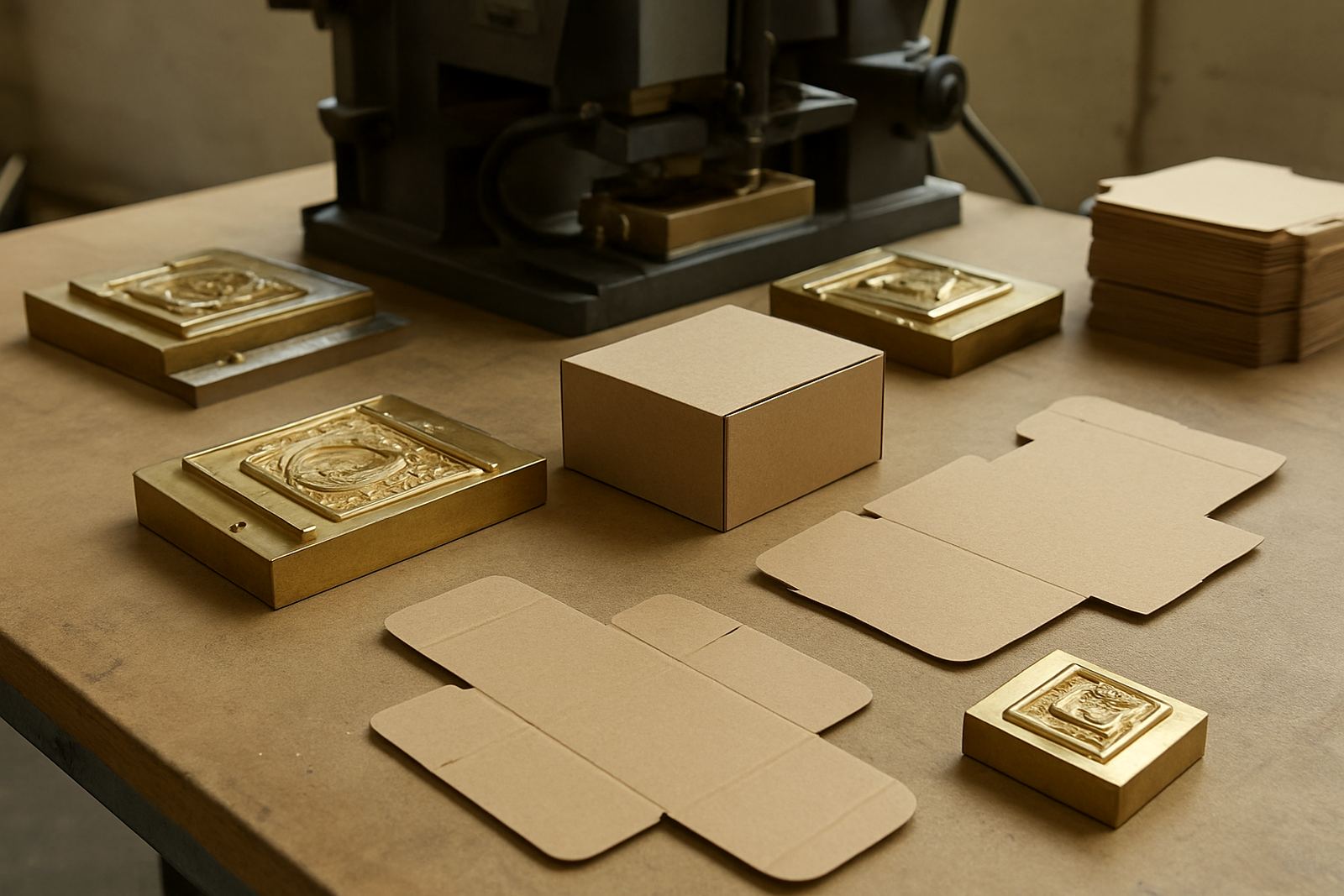
Typical equipment set for rigid box finishing
Most rigid box finishing lines use a heated press, a chase or platen system, foil supply, and a matching counterforce setup. On many jobs the impression also depends on the board build-up, wrap thickness, and whether the box is flat-packed or assembled before finishing. A good die must work with the machine, not fight it.
- Hot stamping press with controlled heat and pressure
- Foil suitable for board, coated wrap, or textured paper
- Embossing counterforce or male and female match where needed
- Clean artwork with final size, bleed and fold locations marked
- Test sheets or sample boxes for impression checking
If the job includes a logo on the lid, a date code inside the base, or a lifted mark on a sleeve, we plan the die size and engraving depth around that. For box makers in Johannesburg, Durban, Cape Town and the other main centres, we courier to the finishing floor or packing house so the job can move without delay.
Planning the layout before the die is made
Good planning starts with the carton style. A hinged lid box, magnetic closure box, telescopic rigid box and drawer-style presentation pack all behave differently under heat and pressure. The artwork should show the top panel, side panels, flap areas and any zones where the board construction changes. If the design crosses a crease, the stamp may need to be split or reduced slightly to avoid cracking or distortion.
We check artwork for line weight, spacing, converted fonts, and the size of fine details. Small text can fill in when foil and pressure are too heavy. On rigid boxes, larger solid areas often need careful balancing so the finish does not appear patchy. Where a job has multiple SKUs, repeat ordering and job filing make future reprints easier and faster.
- Keep important marks away from folds and corners where possible
- Allow enough space for the die to register on a flat, stable area
- Match the finish to the wrap material, not just the design concept
- Confirm whether the same die must work on more than one box size
Common mistakes that add cost on rigid box jobs
One of the biggest mistakes is sending artwork that has not been set up for the box shape. A logo that looks fine on screen can end up too close to a hinge or inside curve, which leads to rework. Another issue is choosing a finish without checking the substrate. Some wrapped boards take foil well, while others need a different temperature or counterforce arrangement.
We also see rushed jobs where the team leaves die approval too late. If the samples are checked only after the box run has started, any correction becomes expensive. In summer, storage conditions can also matter because humidity affects board performance and adhesion. On coastal jobs, especially around Durban and Gqeberha, keeping stock clean and dry helps avoid surface issues.
Load-shedding can interrupt machine scheduling too, so it is worth planning the finishing sequence early and allowing time for setup. A slight delay in die delivery is better than running an untested plate on a full packaging order.
Budget ranges for dies, plates and repeat work
Rigid box projects vary a lot depending on size, detail, engraving depth, and whether you need a single logo or a fuller layout. As a practical guide, smaller magnesium dies for simple box marks may start from around R650 to R1,500. Brass dies for sharper detail and longer life often sit in the R1,800 to R6,500 range, while larger or more complex embossing plates can run higher depending on artwork and finish specification.
Repeat orders usually cost less than first-time tooling because the file, sizing and job notes are already recorded. Alterations, cleaning and damage assessment can also keep older dies in service instead of replacing them. If the packaging house needs urgent turnaround, we can quote the job with speed in mind, but a faster route may add to the total because it affects production scheduling and dispatch.
How we support packaging houses and finishers nationwide
From Industria in Johannesburg, we work with print finishers, carton makers and packaging houses across South Africa. The team handles artwork checks, die design, engraving production, counterforce matching, packing dispatch and job filing. If a box sample needs advice before the full run, we can look at the impression and suggest what to change before the next batch goes out.
Clients in Pretoria, Polokwane, Mbombela, Bloemfontein, Cape Town, Durban and Gqeberha often need a reliable supplier who understands tight production windows and courier timing. We pack dies properly for transit, label jobs clearly, and keep records so repeat work is simpler. For rigid boxes, that sort of discipline matters because the packaging is usually heading straight to a customer who will notice every mark.
What to send with your enquiry
Use the enquiry form on the contact page and include the box dimensions, a PDF or vector artwork file, the finish type, and whether you need hot foil, embossing or both. If you already have a sample impression, send a clear photo and note the machine type if known. The more detail you give, the quicker we can advise on size, layout and practical turnaround.
For rigid boxes, small decisions at the start save time later. A clean die, matched to the board and planned for the real production setup, gives you a better result and fewer surprises on press.